Showing posts with label prog. Show all posts

Sunday, December 30, 2012

WORTH IT IN 2012: Langhoff's Top 40

TOP 10 SINGLES!

“We Are Never Ever Getting Back Together” - Taylor Swift
from Singles Jukebox:
Taylor’s always done teenpop — she’s effortlessly broadened teenpop’s scope to include country, or maybe vice versa, an accomplishment either way — but in taking on the classical teenpop template here, she’s produced a classic of the form, mostly because of her still-evident songwriting craft. The first ace line — “I remember when we broke up/The first time” — turns out to rhyme with “‘cuz like,” so she establishes the song as part parody, a tone that never lets up. Spoken interlude: bratty! (Shania’s were always so stiff.) Four chords: well-deployed! Whiplash plot developments: impossible to follow! At the end of each chorus, the extra “ever”: clever! And there’s real emotional heft, as well — mostly the giddy joy of a master excelling at whatever the hell she wants. We-EEEE!
[10]

“Mirando al Cielo” - Roberto Tapia

from TSJ:
The big swinging tuba is selling point #1 — this year I’ve hung onto some mediocre music for way too long, simply for the stunning tuba parts. #2 is Tapia’s tuba player interlocking with the rest of the banda, which splits into brass and woodwinds to comment like Pips on the action, deliciously messing around with the beat a couple times. Tapia’s singing is #3. He’s straightforward but heartfelt, warbling on the high notes but never cloying, leading out of the choruses on a hard-hitting string of syncopated rhymes right into the triumphant focal point of trumpet solo and horn tutti, #4, that feels like road and sky opening up and allowing us to take flight. Which is weird, since for Tapia the sky offers no escape, only a reminder that his lover exists only on his cell phone.
[9]

“One Thing” - One Direction

from TSJ:
The one thing I need is energetic young men singing in octaves over major seventh chords and efficient beats. The verses are utter crap — a moratorium, please, on kryptonite/Superman metaphors — so it’s no “I Want It That Way”, but then only a churl would dismiss Mission: Impossible III for failing to attain the heights of Sneakers.
[8]

“Springsteen” - Eric Church

from TSJ:
“Every time I think of you, I always catch my breath” … that’d make a lot more sense, but this song isn’t about that song. “That song” — the one that means freedom, lust, masculinity, tattoos, a Jeep, amateur astronomy, and a girl not wanting Eric to go — seems to be “Born In the USA,” which isn’t necessarily weirder than “Jack and Diane” for Kenny Chesney or “Sweet Home Alabama” for Kid Rock. Guitar sounds and unnamed drummers evoke what they will and who can understand the connections? Eric doesn’t try, just as he avoids forcing his specific reverie onto his listeners, sneaking the name of the song into the second verse. As an audio madeleine, “Born In the USA” would seem incongruous to most people, but “Springsteen” the song doesn’t even have to be about Springsteen, really, or sound like him — he’s just big and mythical enough to fade into the scenery of a song whose real subject is a night when every listener was seventeen.
[8]

“Dirty Dishes” - Mark Mallman

reminds me of dorky Christian alt-rock from the '80s, though obviously it is not

“Spring of Life” - Perfume
This reminds me of DDR, in that whenever I listen to it I imagine some dude shouting compliments at me for my dancing. Wish fulfillment!
TSJ

“Country Boy Fresh” - the Lacs
guitar sounds vaguely like "How Bizarre"


“Gente Batallosa” - Calibre 50 ft. Banda Carnaval
Shoup holla! Humongous brass, brawling accordion coming out of the key change.

“Mamireru” - Kimura Kaela
from TSJ:
Either that’s a really long chorus or it’s two choruses battling for supremacy. You’ve got your “HEY let’s go!” chorus and then the chorus where she reaches wistfully for high notes — I say “wistfully” not because I think Kimura Kaela actually feels wistful, but because the tune demands wistfulness, so she checks off her wistfulness box like a station attendant initials the bathroom door. You can tell there’s a verse sandwiched in there because it’s got words (about a rhino and mystery?) but it’s not a chorus. The two different instrumental breaks are also not choruses. Wistfulness is fine and everything, but who’s got time for it?
[8]


“Rooster in My Rari” - Waka Flocka Flame
We've all been there. One of the more FX-laden and dizzying songs off his current album, and a single, so hey!

TOP 10 ALBUMS!

1. Wadada Leo Smith - Ten Freedom Summers (Cuneiform) (indie, jazz) JAZZ-CLASSICAL MASTERPIECES
PopMatters review at bottom

2. Local H - Hallelujah! I’m a Bum (Slimstyle) (indie) RECESSION ROCK
(from P&J comments submission)
Instead of Japandroids, give me Local H’s Scott Lucas roaring “I smell like a brewery!” while he bounces another check and gets on his dog’s nerves. This all occurs in “Another February”, one of the many funny and/or sad blasts of bullshit-parting off their spectacular new album Hallelujah! I’m a Bum, which I’m hoping other people heard? As duo rock it cuts Japandroids, as recession rock it outdoes Springsteen. The album seized me that increasingly terrible December death week, the one that culminated in Sandy Hook, which still boggles my parental mind if I let it. Until that Friday, it was also a terrible week for many people throughout my various communities in Lake County, IL, coincidentally Local H’s old stomping ground. People just kept dying, making it the worst week ever for handfuls of folks I know, and so by the time Friday rolled around I was grabbing for Local H like they were booze. Lucas’s rage, his ability to be passionately cynical, his taste for beauty and off-putting experimentation all gave me permission to feel sad and angry, like any good catharsis should. (Some of us sicko Pollyanna types need permission, you know.)

Lucas refuses to allow easy answers -- mostly while discussing economics and politics, true, but despair is portable. “Your Superman, he says ‘Yes, we can’” -- hey, I have that guy’s bumper sticker! -- “but we’re grains of sand. We get set free in waves again. Jesus saves again. But no one wises up, so no one will rise up,” blah blah blah, that’s just how it goes and no matter how angry this shit makes you, what are you gonna do? (Maybe arm a bunch of teachers and clap like an idiot seal.*) The election and Obama’s first term showed that our country is riven by enormous philosophical chasms, and death is an enormous chasm, and if you pause to let this stuff boggle your mind, it will. So I admire a band who doesn’t pretend to have any answers, but can still make beauty from that. I’m guessing Local H’s favorite book of the Bible, like mine, is the beautiful existential downer Ecclesiastes. I wonder if Japandroids have read it? ‘Cause it’ll really slow you down, and right now Japandroids are busy with their self-importance, dressing up like hipsters and making fun of their exes. The sooner they learn they’re grains of sand, the better.


*this is unfair, both to the NRA and to idiot seals, who at least don't want to ARM TEACHERS

3. Skrillex - Bangarang (Owsla/Big Beat/Atlantic) (major, dance) BROSTEP
He is a big handful of snot extending a hearty handshake.

4. Taylor Swift - Red (Big Machine) (major, country?) NU-COUNTRYPOLITAN
from PopMatters:
Yes yes, Swift filled this album with a “dubstep” song, a U2-style stadium thing, teen-pop for 22-year-olds, and lots of modern rock. But she also wrote ace story songs about troublesome men, grace, partying, home, and fame’s perils—and they’re the same songs. The skills that brought her country fans she applies to new styles with a master’s ease. Her fanbase still loves her, and why not? She sets the intense break-up ache “All Too Well” beside the euphoric “22”, packs an entire world into each, and instantly beats whole genres at their own games. Her singing has never sounded better or more powerful. Her mopey British duet partners don’t take up too much space, and great songs quickly come along to wash them away. Whether Swift’s nĂ¼-countrypolitan remains her m.o., or whether Red ends up a Milsap-gone-disco blip, few musicians are packing this much color, craft, and sheer pleasure into their music.

5. Ja Rule - PIL2 (MPire/700 Hit Season) (indie, rap) EMO RAP
from PopMatters:

Eight years after his last hit, on his own tiny label that only releases mixtapes and Ja Rule albums, it’s fair to say nobody expected greatness from the incarcerated Queens rapper. As they teach you to say in job interview seminars, Ja Rule turns his weaknesses into strengths, crafting a first-rate emo-rap album with producer 7 Aurelius. The rapper spends the album hating his own fame and wondering what constitutes real life (a “Bohemian Rhapsody” sample was denied.) Sometimes he slurs his bark beyond comprehension, giving the whole thing a desperate and confused feel, especially when he starts praying in the middle of his sex jams (for reasons unknown, he also shouts out that wack Nine Days song, “Story of a Girl”.) But things still cut through the murk: the hook singers’ clear voices, the producer’s vivid production touches, and especially Ja Rule’s love of syncopation, making his syllables snap even when he seems to lose his tether to reality.

6. Adrenaline Mob - Omerta (Elm City/EMI) (major, metal) HAIR METAL
Solos are over-the-top, the cover of Duran Duran's "Undone" stomps, and they deploy tropes and arrangement gimmicks like the pros they are.

7. Thousand Foot Krutch - The End Is Where We Begin (TFK) (indie, CCM, metal) CANADIAN CHRISTIAN RAP-ROCK
More post-Rage post-Tool metal dudes fretting aggressively about their Christian walk, only this time they’re white Canadians and one of ‘em raps! None of this bodes well, but wouldn’t you know -- they pull it off. 12 distinctive singalong tunes with chunky riffs and tricky rhythms, and even their cartoonish aggression is endearing. (Just a courtesy call, brah: they get WICKED.) The melodies are catchy and the rapping’s only slightly embarrassing.


8. John Surman - Saltash Bells (ECM) (indie, jazz) NEW AGEY JAZZ
The obvious predecessor is Keith Jarrett's one-man multitracked Spirits, but I also hear a lot of Sonny Sharrock's one-man multitracked Guitar, without the noise but with just as much beauty.

9. Devin Gray - Dirigo Rataplan (Skirl) (indie, jazz) JAZZ
You want your free jazz to swing, get the drummer to lead it. Often sounds like strutting second-line stuff with all sorts of appealing gobbeldygook over the top. The melodies often sound like parodies of "angular" jazz heads.

10. El Doom & the Born Electric - El Doom & the Born Electric (Rune Grammofon) (indie, prog, metal) PROG METAL
Funny, heavy, and hairy.

THE REST OF THE STORY!

11. Various Artists - Giant Single: Profile Records Rap Anthology (Profile) (major, rap, reissue) RAP REISSUES
12. Various Artists - The Return of the Stuff That Dreams are Made Of (Yazoo) (indie, country, blues) OLD TIMEY REISSUES
13. Nas - Life Is Good (Def Jam) (major, rap) GROWNUP RAP
14. Heart - Fanatic (Sony/Legacy) (major) CLASSIC ROCK
15. Jerrod Niemann - Free the Music (Sea Gayle/Arista Nashville) (major, country) POST BIG & RICH COUNTRY
16. Waka Flocka Flame - Triple Life (Warner Bros.) (major, rap) SOUTHERN RAP
17. PO PO - Dope Boy Magick (Mad Decent) (indie) SLACKER ROCK
18. Vijay Iyer Trio - Accelerando (ACT) (indie, jazz) PIANO TRIO JAZZ
19. Van Halen - A Different Kind of Truth (Interscope) (major, metal) VAN HALEN

21. Sleigh Bells - Reign of Terror (Mom + Pop) (indie) INDIE ROCK
22. The Souljazz Orchestra - Solidarity (Strut) (indie, jazz) HORNY DANCE BANDS
23. Wiley - Evolve Or Be Extinct (Big Dada) (indie, rap) GRIME
24. System of Survival - Needle and Thread (BPitch Control) (indie, dance) MICROHOUSE
25. The Lacs - 190 Proof (Average Joes/Backroad) (indie, country, rap) COUNTRY RAP
26. The Coup - Sorry to Bother You (ANTI-) (indie, rap) COMMIE RAP
27. Various - The Karindula Sessions (Crammed Discs) (indie, African) KARINDULA
28. First Aid Kit - The Lion’s Roar (Wichita) (indie, country) ALT-COUNTRY
29. Damita - Anticipation (Tyscot) (indie, CCM) GOSPEL
30. Jon Lundbom & Big Five Chord - No New Tunes (indie, jazz) GUITAR JAZZ SKRONK

31. Todd Terje - It’s the Arps (Smalltown Supersound) (indie, electro) ELECTRO EPS
32. Hillsong Kids Jr. - Crazy Noise! (Hillsong/Sparrow) (major, CCM, children’s) CHRISTIAN KIDDIE MUSIC
33. Third Coast Percussion - John Cage: The Works for Percussion 2 (mode) (indie, classical) CLASSICAL CENTENNIALS
34. Ceremony - Zoo (Matador) (indie) PUNK
35. Flo Rida - Wild Ones (Atlantic) (major, rap, dance) POP RAP
36. Various - WOW Gospel 2012 (Verity) (major, CCM) GOSPEL COMPS
37. Graffiti6 -- Colours (NW Free/Capitol) (major, dance) BRITPOP
38. Batida - Batida (Soundway) (indie, dance, African) KUDURO
39. The Fresh Beat Band - Music From the Hit TV Show (Viacom) (major?) BUBBLEGUM
40. Los Dareyes de la Sierra - Mis Favoritas (Sony Latin) (major, Latin, reissue) NORTENO REISSUES


WADADA LEO SMITH REVIEW:

All those descriptions of “monumental” make sense. Wadada Leo Smith’s Ten Freedom Summers is first of all BIG: a four-disc 19-track monument to the Civil Rights movement, performed by the 70-year-old Smith on trumpet along with the nine-member Southwest Chamber Music ensemble and the latest incarnation of Smith’s Golden Quartet (or Quintet, if two people are drumming). Whenever he can corral them all to perform the thing live, the concert lasts three nights and covers audiences with heaps of music: free improv, modal jazz grooves, and classical composition including (why not?) a string quartet movement. Though bracketed by tributes to Dred Scott and Martin Luther King, Jr., the work is so sprawling it can’t even be constrained by its Civil Rights framework. Songs keep spilling off like free-associative ideas with ungainly titles: “Buzzsaw: The Myth of a Free Press”, “The D.C. Wall: A War Memorial for All Times”, and so on. Monuments seek to overwhelm, and Freedom does its best.

Is there precedent in jazz for such a work? Cecil Taylor’s box sets are even bigger, but they lack a connective framework beyond their performance scenarios. Wynton Marsalis has written extended works for large ensembles, notably the Pulitzer Prize-winning Blood on the Fields, but unlike Marsalis, Smith refuses to put too fine a point on his ideas. Freedomforgoes singers, and you never catch it winking at the audience; there’s no Marsalisian pastiche or cutesy humor here. Smith’s music speaks with a statesman’s seriousness. These pieces transform their subjects into musical invention and moods; they’re not literal or programmatic. Freedom‘s closest forebears are contemporary classical pieces—“Creative Music”, the AACM veteran might say—that invite meditation and make their points through abstraction.

This shouldn’t imply that you need a music degree to enjoy it. More than anything, Freedom is about sound: the tangible, physically beautiful sounds of Smith’s imperative trumpet and of different instruments in combination, testing their own limits. Most of the lengthy pieces are split into distinct sonic areas, with each area receiving the spotlight in turn. “The Freedom Riders Ride” (song 10, if you’re keeping track) builds from an uncertain opening, the Quartet scattered and thinking out loud, into a ravishing group improvisation. Anthony Davis’s lush piano chords coexist with stripped-bare dissonances, and tempos shift according to some precise telepathy. Then, four minutes in, an ominous stop-start section tumbles into a blazing free walk, with trumpet, piano, bass and Susie Ibarra’s drums all racing along in the sort of collective freedom that jazz exists to celebrate—beautiful beautiful beautiful. But it doesn’t last. Things fall apart, as things do, to focus on the different instruments—sawing bass, skittering drums—building until another fast walk ends the piece. If lightning-fast swing is the reason you turn to jazz, Freedomhas plenty such passages, but its explorations of space and stillness are just as crucial.

Other indelible moments:

—the fuguelike section in “Emmett Till: Defiant, Fearless”, where strings, harp, and quartet enter bit by bit and swirl into cacophony;

—in “Buzzsaw”, an aggressive, mournful groove, the contrast of John Lindberg’s bowed bass against propulsive piano, drums, and trumpet;

—in “Thurgood Marshall and Brown vs. Board of Education: A Dream of Equal Education, 1954” (whew!), the swinging bass groove that gradually disintegrates over the course of eight minutes;

—the smearing, sliding strings of “Black Church (String Quartet No. 3)”;

—the times that recall Miles Davis’s “In a Silent Way”, with Smith’s clear tone soaring over wobbly rhythm section drones, and sometimes fighting against them, in “America, Parts 1, 2 & 3” and “Rosa Parks and the Montgomery Bus Boycott, 381 Days”.

For all these and more, credit Smith’s musicians and his compositional methods. Like many modern jazz and classical composers, Smith has developed his own system for organizing improv. He calls it “Ankhrasmation,” a graphic notation that helps musicians coordinate their jumping-off points. While he doesn’t seem to have used that system in Freedom, his goal is similar. Pre-ordained motives move inexorably to moments of spontaneous creation and back again. Even during the slow parts, when the music threatens to crawl to a stop or turn into a hazy Terence Blanchard score, violin and cello and trumpet hold their notes slightly out of tune, vibrato and dissonance beating with portent, and the effect is riveting. Every instrument pops; sound and silences pulse with vitality.

If Freedom resembles a monument, at least in my mind, it’s the Gateway Arch in St. Louis—“just a big piece of modern art on the bank of the river,” a friend once affectionately described it. It’s abstract and even austere, sure, but that only makes it more universally accessible. A short walk from the courthouse where Dred Scott sued for his freedom, the Arch embodies different shades of symbolic meaning. Depending on your sympathies, it can be a soul-stirring paean to Western expansion, a costly reminder of American imperialism, or a fun place to go on a field trip. All sorts of stuff, good and bad, baked into an inverted steel catenary. Freedom lacks the Arch’s simplicity of line, but its takeaways are just as complex. It’s never simply a celebration or a lament, a history lesson or a big piece of modern art. You don’t have to choose, Smith seems to say; this music contains everything.

Freedom is even sort of shaped like the Arch; it climbs to a rarefied peak. The album’s 24-minute centerpiece, “Lyndon B. Johnson’s Great Society and the Civil Rights Act of 1964”, stretches austere abstraction to its limits, but it contains moments that rival Stravinsky’s famous Rite chord for time-stopping sound, moments you could reach out, touch, crawl inside, and settle down with. It’s quantum music theory: the strum of a harp contains the world. Live with this music long enough and it seeps into the rest of your life. These days I can’t look at Robert Caro’s massive LBJ biography, or even think about America’s elongated battle over health care reform, without hearing the roiling timpani that define “Great Society”, giving voice to slow-motion legislative wars in every age.

Monuments overwhelm, but they do so by speaking to us personally. Like visiting a sacred site or reading Tolstoy or Proust, listening to Freedom is an emotional and intellectual luxury, a chance to commune with greatness. Years after I’d taken my last field trip to the Arch, I graduated from school and moved back to St. Louis, for the first time living on my own in a cramped little apartment. One day I parked at the library and walked to the river, and as the Arch loomed before me I was overcome by emotion. Besides being a symbol of Western expansion, the Arch had become my expansion, at once my freedom and homecoming, my destiny tied to the country’s destiny. Ten Freedom Summers speaks like a great civic monument. In four and a half hours, Wadada Leo Smith writes one of America’s defining events in sound, and the story is all of ours.

Friday, March 02, 2012

This New Cursive Album Is NOT Worth It!


My negative review at PopMatters has been a fruitful source of angry comments from the Cursive Army. (Did you know they had an army?) I admire the commenters for using their full names rather than pseudonyms. Below, the I Am Gemini review in full, followed by some of the choicer responses.


Coquettes in concupiscent dress bat their eyes. Seriously.

When considering the failure of Cursive’s concept album I Am Gemini, it may be helpful to ponder the words of Stephen Sondheim. Or Friedrich Nietzsche. Or noted aesthetic philosopher Phife “Go get yourself some toilet paper ‘cause your lyrics is butt” Dawg. Any words, really, that distract you from those of Cursive lyricist/singer Tim Kasher, because his words are butt. Terrible, terrible butt. You can open the script to any page—btw, THE LYRIC SHEET IS A SCRIPT, COMPLETE WITH STAGE DIRECTIONS—and find gems like, “When the cat’s away / It’s said the mouse will play”. We all remember Nietzsche’s dictum: “Prefacing a clichĂ© with ‘it’s said’ renders it no less a clichĂ©, while rendering its user more an ass.” Kasher soldiers on, still babbling about cats: “Now the cat’s out of the bag and someone’s got to pay.” Imagine, if you will, the terrible dialogue from the movie The Happening, where Marky Mark talked to the trees but they wouldn’t listen to him. Now imagine that same dialogue full of halfhearted attempts at rhyme and assonance (pun intended), and you’ll approach the cringe-inducing cleverness on display here. Also you’ll bang your head against furniture.

Gemini’s “plot” revolves around two estranged twins, named Cassius and Pollock by their smug hipster mother Edith Hamilton. (She’s not a character.) Cassius was that dude talking all the smack about cats. At the time, he was getting ready to kill his sleeping “doppelganger” with a knife. (Phife: “Sucker MCs go and use the word ‘doppelganger’ / Now their song won’t never be a banger.”) You can’t really blame Cassius. Pollock had earlier shackled his brother and cut his head open, a misguided attempt to delve into the secret world of twins. Most of this action takes place in a big old creepy house, though for imagination’s sake, there’s one scene at a creepy sideshow carnival, where creepy Siamese Twins teach our heroes about life. That’s after the brothers’ past crimes appear dressed as Skeletons, but before we learn that It Was All A Dream. At one point the brothers travel through a looking glass—THAT’s the dream!—“into a world similar, although somehow askew”. Sounds like a challenge for Art Direction.

In The Man Who Mistook His Show For a Hat, Stephen Sondheim praises Porgy and Bess, writing that lyricist DuBose Heyward “understood the difference between character and characteristics; the lyrics sounded like heightened natural speech rather than self-advertised ‘poetry’.” Kasher doesn’t understand the distinction. His line “Albatross necktie / Looks so dignified / But you gotta loosen it up!” fails both ways: it’s not poetic, nor does anyone talk like that. The line doesn’t even help to establish character, which would have been helpful since Kasher sings both brothers exactly the same. Without the script, it’s impossible to differentiate Cassius from Pollock; both just sound like facile indie-rock singers making awful allusions and puns.

This seems a good time to share the dodgiest line from I Am Gemini: “Out cold, run over by the boulder of Sisyphus / Doesn’t it seem to get a bit repetitive? / Overandoverandoveragain…” High school mythology students in Cursive’s audience grin knowingly.

Believe me, I understand: writing a rock opera is hard work. The Drive-By Truckers only attempted it once. Look, I like the Who as much as the next guy. (Next guy: “What’s an Eminence Front?” Roger Daltrey: “IT’S A PUT-ON!”) But nobody pretends like the lyrics to Tommy are good, with their painful exposition and their supple wrists. Tommy gets by on its songs, which have held up to decades of radio play, endless cover versions, and armies of high school students singing them on the bus to speech contests. I Am Gemini falls into every rock opera trap—even its title is exposition. But if Cursive had brought the tunes, all would be forgiven. (Well, except for “I’m gonna paint this bloody town black and blue”.)

Sadly, the band chokes on the albatross necktie of Kasher’s lyrics. From the press release: “Kasher… wrote album lyrics in a linear fashion, in order, from song 1 to song 13.” Hooks appear during Act One—the “Come out, come out” chorus of “Warmer Warmer” is pretty catchy—only to get chased away by the all-important storyline. The band alludes to rock music without fleshing it out into self-reliant songs. “The Sun and Moon” is probably the best, with its organ-driven New Wave momentum, but even that’s killed by Kasher’s mythological asides. And if Act One is where hooks go to die, Act Two is a wasteland. Kasher briefly tries to play the resurrector and give the dead some life, handing his band an actual EXPLOSION to play—“We’re gonna blow this unholy house to dust!”—but they just sound like some guys playing an explosion.

Back in 2006, Cursive released the extremely likable concept album Happy Hollow. Lyrically it was more transmissions from the Kasherian sphincter, something about religion and The Wizard of Oz, but the music had so much life and so many bizarre horn lines, the words hardly mattered. Realizing that storyline was their least important concern, Cursive built their concept from discrete hooky songs. I Am Gemini gets its priorities backwards and lacks horns. For all its tempo shifts and attempts at fun,Gemini sounds like the work of an ascetic band scared of pleasure. When Cursive attempts another one of these things—and you know they will—they’d do well to heed Sondheim’s dictum from his manifestoBrainyQuote.com: “If you’re dealing with a musical in which you’re trying to tell a story, it’s got to sound like speech. At the same time it’s got to be a song.” Just one of those goals would suffice.


In response, Cursive fan Erik sez:
First of all, you're not funny.  You're the only one laughing at your "quips."  You don't even review the album, you just show how many references you can make to either rock-opera albums or philosophers. Your review is terrible, one-sided, and makes poorly-supported (or completely uninformed) claims. Also, you obviously wasted a good portion of time writing a review on a website I've never heard of, probably for no money at all.  Continue writing negative reviews in an effort to feel superior, since you're a hip writer and all.  However, a writer should at least know that art direction shouldn't be capitalized.  I hate it when Writers capitalize Nouns when they're not supposed to be.  How about stick to being a church musician - sorry, I meant Church Musician - rather than write scathing reviews for an album that is in no way as bad as you say.  2/10 rating?  Wrong.  Just wrong.

And Glenn sez:
I read [reviews] to get an actual description of how good or bad an album is.  This album is an A+.  The time you spend analyzing every little word of the lyrics is quite tiresome.  The guy wrote a play, then set it to music.  It is a peice of literature and here is what you say: "Go get yourself some toilet paper ‘cause your lyrics is butt”".
So your critisizing someone's art while bastardizing the English language it was written in.
and this "Believe me, I understand: writing a rock opera is hard work."  Really when did you write one?
The words don't have to be poetic as you want them to be, like rock music is meant to be perfect prose, free of the cliche's that you don't like.
The fact is that this album is over your head.  Any person who appreciates music would recognize the thru composed nature of this cd, YES WITH KEYBOARDS, NOT HORNS, (sorry they didn't pick your favorite alternate instrument this time) and recognize that it is A) amazingly complex  B) Addictively memorable  C)something no other band could ever create.
This site is butt, I'm out of here.

Sunday, January 15, 2012

Worth It In 2011: #8 - Cheer-Accident

Cheer-Accident are:
1. the second-oldest musicians in my 2011 Top 10, although the oldest is also dead, so I should say "oldest living";
2. the only Chicago musicians from my geographically diverse Top 10; I salute both them and Thi'sl with a hearty "Hometown!";
3. pretty much the only new prog I enjoyed this year, but that's not saying much considering I haven't even heard the new Opeth, and Opeth are great, so don't listen to me about The State of Prog;
4. another Kris N. endorsed band;
5. the most prolific musicians in my Top 10, possibly excepting the aforementioned old, dead musician, to be named later.


#8
Cheer-Accident
No Ifs, Ands or Dogs
(Cuneiform)


The PopMatters review:

My friend warned me not to mention Henry Cow.


It’s tempting, but possibly meaningless, to say that Cheer-Accident’s gonzo synth-horn prog rock couldn’t have happened anywhere but the Midwest. In one sense, sure—they come from Chicago and its suburbs, and they’ve worked with a whole host of Chicago musicians, including Steve Albini and more than one Flying Luttenbacher. But in the musical sense? Well, maybe some coastal band would’ve eventually hit upon Cheer-Accident’s blend of ‘70s AOR hooks, unfussy chops, stone-faced humor, math-rock time signatures, overdubbed horn lines, collective humility and patient willingness to chase musical ideas to their inevitable conclusions. But probably not. In fact, on their 17th album No Ifs, Ands or Dogs—no highfalutin’ Oxford comma for them!—Cheer-Accident’s music often seems like the inevitable nexus of half a century’s worth of Chicago music, Styx meets the AACM meets SKiN GRAFT noize. I suppose you could call them “post-rock” if they didn’t, in fact, rock.

Though their musical ideas come from all over the place, Cheer-Accident put those ideas together in ways that approach the ideal of ears raised on radio: one kick-ass sound after another, a never-ending string of rad shit. “Trial of Error” opens with a booming drum strut from founder Thymme Jones, then adds a blaring synth melody that wanders through two distinct keys before returning home. Imagine ELP with better beats and a yen for German neo-tonal composer Paul Hindemith. After repeating that melody many times amid escalating levels of synth buzz, the noise falls away, leaving the guys singing a different sinister melody over funky guitar scratching. Then the synth melody returns, only this time with an even MORE exuberant synth counter-melody howling over the top. Fibonaccian fans of the golden ratio, take note: this climax occurs a little less than ⅔ of the way through the song, roughly where you’d find the climax of a classical etude. After that euphoric moment, the band rounds things out with a charming coda of disintegrating piano chords. “Trial of Error” is one basic musical idea, examined for four and a half minutes, and all of its 274 seconds sound cool.

If you’re NOT a fan of neo-classical etudes, Cheer-Accident does plenty of other stuff, too. Sometimes they do straight-up guitar rock. “Drag You Down” kicks off the album with a chugging riff, the hairy man-child of Led Zeppelin’s “Houses of the Holy” and Lenny Kravitz’s “Lady”. They also do Super Sounds of the ‘70s pop, like the sweet horn-and-fake-strings number “Cynical Girl”. (Unlike that smug bastard Marshall Crenshaw, Jones wants to cure his girl of her cynicism.) At various points you’ll also find nods to minimalism, maximalism and motorik. They’ve played around these sonic extremes for decades. Their 1997 album opened with a droning ode to a vacuum, but four songs later, “Failure” resembled whatever Ben Folds was churning out the same year.

Like any good prog band, they also do multi-song suites—or mini-suites, as befits this modest 48-minute album. No Ifs features three such, on the subjects of sleep, Pollyanna and a province. At album’s end, the driving five-note riff of “Empty Province” leads into “Provincial Din”, which starts with everyone belting some starchy provincial anthem, only to dissipate into noise and sirens. Fellow heartland weirdo David Lynch achieved a similar effect in his movie Mulholland Drive, when a happy jitterbug contest dissolved into chaos.

The only problem with No Ifs is that it doesn’t threaten chaos more often. This music isn’t stiff—Cheer-Accident plays too well for that—but it’s a little polite, a little too-obviously planned. The vocal melodies often resemble vocalese, that Midwest-born jazz practice of setting words to instrumental lines. This usually works out well, because Cheer-Accident writes interesting and unconventional melodies, but hearing them as vocal melodies requires some suspension of disbelief (that is, unless sometime-vocalist Carmen Armillas is singing—she can pretty much barrel through anything). And although the band rocks plenty, Cheer-Accident never cross the line into pure scary heaviness. There’s never the sense of danger you find in similarly complex bands like Zep, King’s X, or Cathedral—the sense that a crushing guitar is about to liberate your brain from its skull and your organs from their solidity.

So more liquefied organs! That is my wish for Cheer-Accident, or at least for all of us who dig their music and find it endlessly fascinating. And there are… well, some of us. I’m a relative newcomer, but heed the wise words of Matt DC over at the I Love Music message board:

“btw I wasn’t kidding about Cheer Accident, they are a band i think lots more ppl would love if there weren’t relegated to the weirdo midwest skronk rock skin graft records ghetto…they are TOTES prog and very unique and distinctive”.

Seriously, you should listen to ‘em.

Friday, September 30, 2011

This Cheer-Accident album is TOTALLY Worth It!!!

Exactly how many of them ARE there?

At the world-famous PopMatters, I reviewed Cheer-Accident's new album (on Cuneiform Records) and said things like this:

It’s tempting, but possibly meaningless, to say that Cheer-Accident’s gonzo synth-horn prog rock couldn’t have happened anywhere but the Midwest. In one sense, sure—they come from Chicago and its suburbs, and they’ve worked with a whole host of Chicago musicians, including Steve Albini and more than one Flying Luttenbacher. But in the musical sense? Well, maybe some coastal band would’ve eventually hit upon Cheer-Accident’s blend of ‘70s AOR hooks, unfussy chops, stone-faced humor, math-rock time signatures, overdubbed horn lines, collective humility and patient willingness to chase musical ideas to their inevitable conclusions. But probably not. In fact, on their 17th album No Ifs, Ands or Dogs—no highfalutin’ Oxford comma for them!—Cheer-Accident’s music often seems like the inevitable nexus of half a century’s worth of Chicago music, Styx meets the AACM meets SKiN GRAFT noize. I suppose you could call them “post-rock” if they didn’t, in fact, rock.

Friday, April 01, 2011

Live ELP is NOT Worth It.

 
Geez Louise, the show really NEVER ENDS.

Everyday mediocrities may be swept away by time, but great atrocities must never be forgotten. So in the spirit of the Shoah Foundation, Shout! Factory has unearthed this two-disc 1978 ELP concert, that its horror may live afresh. The sound, “meticulously mastered from the original analog tapes”, is terrible—thin and watery with a murky low end. These songs simply didn’t transfer well to a stage free of overdubs. The song selection is hit or miss (“Pirates” = ARRRRGGGGHHHHH). Indeed, the only thing that’s truly exceptional here is keyboardist Keith Emerson’s ego. From his liner notes: “This particular performance proves what a defining influence ELP had over classical, jazz and folk musicians all over the world.” Please. If you want your local jazz musician to quit in disgust, tell him he plays like Keith Emerson. A few lessons of Emersonian self-reliance: Pitch bend and laser fire effects sound awesome, no matter which song they interrupt; quoting the Close Encounters theme is even funnier right after you’ve quoted the Star Wars theme; and punchy Aaron Copland tunes are in no way derailed by a bunch of aimless diatonic noodling. To be fair, the cheering crowd seems to lap it all up; but as my friend Kyle points out, they were probably enjoying a light show on acid.

(All of the above ran at PopMatters. Hateful comments about church musicians may start appearing in their comments field at any time.)

Monday, September 13, 2010

Best Thing I Heard Today: Cathedral doing "Funeral of Dreams"

The human brain may be insufficiently developed to digest this song's grandeur.  Loyal readers, if you enjoy smokin' multipartite songs about secular humanist revelations imparted by scarecrows (!), here's your freakin' single of the year:


Here's the blow-by-blow:  our allegorical friend Lee Dorrian, ex-Napalm Death, sets off on a chugging Foo Fighterish journey through Fields of Innocence, when he unexpectedly encounters a Scarecrow (!!) who makes him recite Word Jazz (!!!).  Inspired by this meeting, Dorrian builds a House up in a Tree from whence he can view reality and either an "avatar" or "abattoir" of his mind.  (I totally hope it's the latter!)  He sees that we're all enslaved inside the Matrix, basically, and then the background chorus comes in to chirp "Laaaa, lalala Laaaa!"  How lovely to be enlightened.

Ooh, but then comes Verse 2:  THE EVIL PRIEST!  The priest, a slave to worldly wisdom, misinterprets the beatitudes and tells poor Dorrian that he should submit to the powers that be and sign up for the draft.  Or something.  It's all very "Fortunate Son" at this point, and I'm sure Dorrian would tell me that I shouldn't blame the priest, it's the flawed philosophy of Christianity that's to blame, and the priest is correctly toeing the party line.  Well, whatever.  (The point of "Blessed are the meek" is not that you submit to the first powermonger who tries to exploit you; it's not that you strive to be meek because if you're not meek you're doing something wrong.  No no no, Lee Dorrian--the point of "Blessed are the meek" is that, when you find yourself meek, AND YOU WILL, you also find yourself in a state of blessedness.  If you know where to look.  So next time you're feeling meek, AND YOU WILL, I don't care if you're, um, Bill Gates or whoever, just take a deep breath and read some beatitudes, relax your mind and let your conscience be free and watch blessedness reveal itself to thee.)  Whether you agree with Dorrian's exegesis or not, you cannot deny the searing solo that obliterates your very mind right after this verse, FOLLOWED by the thundering drums + riffs that rock like a mastodon herd.  And then the mastodon beat continues, WITH A MOOG.

In Verse 3 the Scarecrow returns to stage a war protest and pass around drinks.  (I think.)  The song ends with a real scorcher of a coda.  Aside from all the freakiness and multipartiteness that these dudes put into their music, the thing that really stands out is their devotion to great sound.  And not just one great sound, like "oh yeah that's Santana's guitar sound" or something.  No, in addition to their great guitar sounds, Cathedral add goofy sound effects during the Word Jazz parts--mallet percussion and a flourish that sounds like a sitar.  They also like background vocals and keyboards.  There's so much color and play on this album, it's really a worthy successor to Sabbath's Sabotage.  "Funeral of Dreams" is a standout, but the whole Guessing Game album is worth hearing, and possibly the best album you'll hear all year.  Just check out those Youtube comments:

"I can't stop listenning to this album. The only downside is that nobody, not even Cathedral will ever be able to surpass this."

"These guys must really like ELP. This is one of the weirdest songs i have ever heard and it is a work of pure genius."  [Come on, AN ELP COMPARISON!  What else do you need?]

"This album is incredible. May go over most people's heads, but I really dig it."  {Well, THAT'S a little smug.  Surfing in Babylon does not, of course, think The Guessing Game will "go over" your pointy little heads.  At least, not any more than does Ke$ha.  On the other hand, the human brain may be insufficiently developed to digest this song's grandeur--I do not exempt myself.}

Sunday, August 08, 2010

Cathedral and Grong Grong are Worth It! Ariel Pink, Toro Y Moi, and the Newsboys just plain suck.


Cathedral
The Guessing Game
(Nuclear Blast)

Determined to exploit every conceivable nook of Prog, pseudo-Prog, brutal Prog, and (this being Nuclear Blast and all) Prog Metal possible, this bunch of British vets have created a double disc album-of-the-year contender that sounds effortless. They're Prog because their songs are shape-shifting organisms with new elements busting out all over, ignoring conventional song structures. (Also there's a Mellotron.) The pseudo-Prog is audible in their weird debt to jazz rock shuffles and Ken Nordine. You can hear the brutality in Garry Jennings's crushing doom riffs, though the band use that sound more for the joy of its sonic kickassery. And the Metal holds it all together. Leader Lee Dorrian (ex-Napalm Death) ensures that every fill, solo, and flourish sounds as good as what's come before it, all the while drawling out his sprechtstimme with a sense of detached cool. Ultimately, the whole thing is a celebration: of how much ground you can cover with a rock band, and, in closing song "Journey Into Jade," of what such a band can mean to the world, even if it's all ultimately a guessing game.


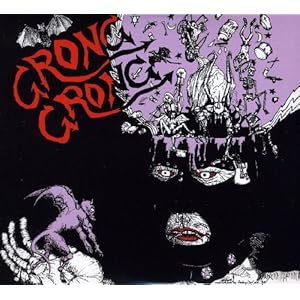
Grong Grong
To Hell 'n' Back

(Memorandum reissue)

This '80s Australian sicko-punk band had a pretty good sense of what they WANTED to mean to the world; they just had a strange way of going about it.

Guitarist Charlie Tolnay on Grong Grong's songwriting process:
“It was just so simple. Dave [Taskas] would think of a bass line, or I’d think of a guitar line, then we’d put drums to it, and then think of some lyrics and that would be it.”
Maybe the weirdest thing about Grong Grong--aside from their lurching monoriff "songs," tin can production values, and squawl that sounds like guitar strings scraping the scales from a screaming eel--is the fact that they actually had some showbiz acumen. Singer Michael Farkas might have barked out every grotesque image that popped into his head, but he also hired a sax player and led his combo to a Battle of the Bands victory on the radio. Amid the odes to "Vlad the Impaler" and a "Meat Axe", they made room for a band theme song ("Grong Grong") and a dedicated show opener ("Club Grotesque"). As far as it's possible for a group like this, they almost hit the big time, derailed only by Farkas's overdose and subsequent coma. (He recovered, partially paralyzed.) Like most good post-punk bands, they had arresting grooves and a singer who could bellow like nobody else. So God bless Memorandum for this collection of live stuff and demos. It sounds great driving through a summer heat haze or trying to endure a bad campground.

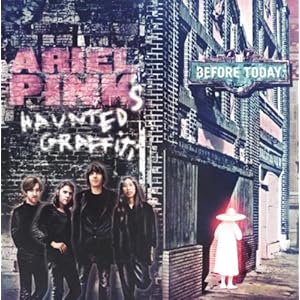
Ariel Pink's Haunted Graffiti
Before Today
(4AD)

These guys are prog too, right? Because they keep changing time signatures, and they let their cleverness get in the way of their tunes? The disjointed songs sound like they'll fall apart any second, which may be what Ariel Pink was going for. Only, where sometimes that's a good thing--like with Cathedral or early Weezer--here it's pretty terrible. Cathedral thunder like the carousel-gone-wild at the end of Strangers On a Train; the Haunted Graffiti sound like wet tissue paper in a fan. Mr. Pink's voice and his drummer hardly bother to show up. "Butthouse Blondies" at least has the courtesy to rock--for almost half its running time!--but nothing else is compelling, even when the band manages to land on a pretty chord. When Pitchfork's Mark Richardson calls "Round and Round" "one of indiedom's most unifying and memorable songs in 2010," and also "endlessly replayable," I honestly have no idea what he's talking about, unless he means it's replayable as a torture device for some common enemy. So, while I'd be happy to blast it Cusack-style outside Sarah Palyn's window, I'd be sure to demand some earplugs for my trouble. Indiedom can do better.

But wait, there's more! Apparently Mr. Pink is a big influence on:


Toro Y Moi
Causers of This
(Carpark)

As a work of production prowess it's pretty flawless, seamless, facile, all that kind of stuff, and I SUPPOSE could serve as swank mood music for your next Espana y Gaul dinner party, because Lord knows the musical substance wouldn't distract anybody from their conversations. (Trust me: when you're proffering educated opinions on the new Rick Bayless restaurante or your latest homebrewing discoveries, you don't wanna be derailed by the crass sound of a hook!) T Y M is the nom de glo of Chaz Bundick, who's part of this new chillwave scene that WE WILL ALL STILL CARE ABOUT NEXT YEAR, assuming nothing else happens between now and then. I enjoy my hazy '80s memories as much as the next huppie, but I prefer to re-enact them by chilling to actual pop songs, whether by Groove Armada, Diana Reyes, my beloved Kylie, even the ol' Vampire Weekend boys. And strangely enough, all those schlockmeisters boast more interesting "soundscapes" than Toro Y Moi. So there!


Newsboys
Born Again
(Inpop)

At this point the NEWSBOYS are only 1/4 Australian, and sound NOTHING like Midnight Oil. Or Grong Grong.

CD's called Born Again, and it's a concept album about Nicodemus. JUST KIDDING! You'd like that, wouldn't you, people who don't read this blog? (That's OK, you don't have to start.) First song sounds like ALL OTHER MODERN ROCK SONGS FROM HOT ac RADIO STATIONS LIKE 101.9 "THE MIX"--Michael Tait (formerly of DC Talk) is putting it all out there to let us know "where he stands," i.e., that he's a Christian, like we didn't know. Now the guitar solo. That was a guitar solo? The guy played one note. What is he, the Edge? (Answer: no he is not.) Yeah, that song sucked. Wellness does not bode.

"HEY!" They're excited, you can tell. OR CAN YOU? (No I cannot.) Tait seems to be singing about how he came up in "the industry" now. You've only got ONE SHOT--to prove what you're all about! That's a harmful message to send today's youth--isn't the message of the God of Grace that you get shot after shot? That, while our missioning message should be fueled by an existential urgency, we need no longer fear the grave, the ever-rolling stream of time culminating in DEATH, because Christ has conquered death and the grave forever and ever? (All around the world every boy and girl!) What would Grong Grong do? (WWGGD?)

"Even though you brought this world to shape/ You love me in a personal way." I guess I'll let 'em get away with that--that's sort of one of the crucial paradoces, right? (I just noticed that "crucial" is derived from "crux.") Mr. Tait is seeking something "way beyond [him]self." Though storms come his way, though Kid murder Play, though bishops be gay, Tait will persevere. "Like the wind that moves the leaves, Lord you move me to my knees." This is an awful CD, by the way.

Here's the one where God gives us strength. The strength to waltz, apparently. You ever try to waltz? It's a strenuous endeavor, I gotta say, especially if you're supposed to be leading. (With G's help, Tait can "do the impossible.") Anyway, waltzing. You gotta know where you're going and be keenly aware of spacial relationships, because it's not just YOU that's gotta stay out of everyone's way, it's HER too (or HIM, if you're a gay bishop), and S/HE will be more keenly embarrassed than you if you ram into another couple. There's not much that can save face in that situation. If you're lucky, nobody's hurt and you all head over to the punch bowl, which some punk kid has (again luckily) spiked, and then you can imbibe and jibe, and maybe bribe the picture-taking lady to erase any record of this humiliating incident. As I say, luck plays a big role. We can call it "providence" if you prefer.

Whoa, new song! They don't mean to brag, don't mean to boast, but... actually, that's pretty much it. "When the boyz light up, who gets the praise, who owns the show? We ain't nothing but the conduits." This is where Tait and the boyz deflect the inevitable adoration of their audience to the One who has so blessed them with the ability to rock bellz. I refer, of course, to Hal Leonard. His influence is immense.

Ooh, now we're chuggin' like Muse. Not quite as dramatic, but still, best or second-best riff on this turd.

Do the guitarists know how to do anything other than play chords? Or play rhythms that aren't straight eighth notes? There's no modulation or variation or amelioration or animals-we-ation of anything here. Well, I guess they DO get soft and then they get loud again, whoop-de-doo. Tait's running to God, fantastic.

Does God like this music? Well, look, you can't really put God onto that plane--the "music-digging-or-not" plane, let's call it. God hears music. God doesn't hear music. God is music. God is not music. (I'm doing my non-personifyin' exercises; they're like kegels for the soul.) Whether God does or not, I DON'T. And I don't say that about all Xian rock, you know that, whoever nonexistent reader you are. "Get on your knees!" bellows Tait. HE MUST WIN US OVER. HE IS CONDUIT (for sale).

Here's my dilemma. I really don't want to listen to any more of this album, but they're going to cover DC Talk's "Jesus Freak," which is a really good song and it'll be either the best thing on here or a train wreck beyond comprehension. So I've gotta stick it out. (Current song sux, stopped keeping track. Mountains, mighty like you know who...)

Here it is. Why is "Jesus Freak" better than anything else that sounds remotely like it? Better riff, for one thing. We'll see how the rapper does. Sounds pretty good, gives me chills. Why do I have no control over my senses when I hear this song, even a remake of this song? Probably because I have a history with it, plus some sense of its historical significance. Please, God, let that be the end of the album.