Oddly enough, Surfing in Babylon has never really considered Mr. Marley, even though he's a cornerstone of the Babylon Symbol Repertory. This PopMatters review does little to correct that, but it may provide food for future thought, if indeed Surfing in Babylon ever gets back to studying Babylon songs. Sample paragraphs:
And for those who’d complain that Marley sings everything the same way—well, that’s sort of the point. He delivers the tender “No Woman No Cry” with the same stern deliberation he gives the militant rhetoric in “War”. “No Woman” is maybe a little more legato, but the briskly enunciated “cornmeal porridge” line and the chanted “everything is gonna be alright” belong to the same worldview as H.I.M. Haile Selassie’s powerful “War” speech. You buy Marley’s messages of hope because they don’t turn him all lovey-dovey. He remains a clear-eyed revolutionary, a powerful dude you don’t wanna mess with even when his lyrics and band are giving you a musical hug.
Marley’s straightforward messages gain depth through juxtaposition in the setlist. “Everywhere is war” is one thing, but it becomes something else butted up against “we don’t need no trouble; what we need is love”. And that medley becomes something else again as a prelude to “Zimbabwe”, a call for armed revolution in the African nation. Six months before this show, the revolutionary leader Robert Mugabe had been elected prime minister of Zimbabwe, and the song sounds like a thoughtful celebration. 30 years later, Mugabe has a reputation for incompetence and brutality, but Marley’s songs sound as true as ever. The lesson for you kids: write songs, protest, but don’t go into politics. Seriously, have you looked at the news lately? EVERYWHERE is war.
"Babylon Makes the Rules" must be the bounciest song to contain the sentiment, "You've brought fire on my head and now you must pay." (Don't mind if I do!) "Babylon" is a call and response between David Hinds and his bandmates. Hinds is great, but his backup singers and their Pips-ish cheer sell the song. Resisting Babylon is gonna be tough, they seem to say, but what we really want to do is SING! And oh yes, have you tried the Jah herb?
The words of "Babylon" are uncompromising; plenty of reggae's Babylon songs advocate passive protest, but Steel Pulse don't mess around:
And now I say we must create a scene (WAR, WAR, create a scene!) We must recapture our culture by any means (Recapture our culture! Recapture our culture!)
They sound like the Moral Majority, with their belief that direct political action can take back The Culture. (Not so much with their communal pot smoking.) Even so, the song swings wildly back and forth between force and resignation. No matter how fired up Hinds and his mates sound during the verses, they always return to the more subdued, minor-key chorus:
Babylon makes the rules
Babylon makes the rules
Babylon makes the rules
Babylon makes the rules
Where my people suffer ...
The only attempt at resolution comes at the end, when Hinds starts singing "Jah love... will carry I home." Well, sure, but that still doesn't tell us how to deal with Babylon in the meantime. Do we put up with Thatcher until we can vote her out, or do we order her to Stand Down? The sound of "Babylon Makes the Rules" offers an even better option: SING! Preferably with one another.
It sure wasn't anything off that Ariel Pink CD, I can tell you that!
Distant Relatives, the recent collaboration between Nas and Damian Marley, deserves its own Babylon analysis. The album's equal parts reggae and rap, so Babylon comes up quite a bit. For now though, here's a pretty tune with Stephen Marley on the hook, Damian on beats and toasting, and Nas doing a couple verses:
Nas barely reveals what he's capable of, but he does have some interesting lines. For instance, he sees God's face in the shapes on his vintage designer clothes. Must be nice. He also sees God in the billboards, which is a little better but further evidence that Nas is often high--a suspicion backed up by this couplet:
"Through my perspective I can see Jah reflection/ In the highest definition getting high with my brethren"
OK, so we don't turn to Nas for dogmatic Christian orthodoxy. Probably not even dogmatic Rasta orthodoxy, if such a thing exists. But Damian! If you ever need beats, turn to Damian. The guy's catchy as all get out, and he comes up with a number of memorable creations on this album. I like how the acoustic guitar in "Words" starts stop-starting during the final refrain, reminiscent of Madonna's "Don't Tell Me" and probably lots of other stuff.
Distant Relatives isn't perfect. Nas, while still sounding better than 75% of other MCs, is fairly humorless and doesn't do anything astounding. There are too many slow, uninteresting reggae songs, but at least they're dispersed throughout the album, and there's enough good tunes to recommend it overall. Definitely stronger than that Ariel Pink CD.
P.S.-- I do take issue with the highly rated Youtube commenter who observed of this song, "Amazing man, to hell with mainstream rap!!!!!" You might not hear anything from Distant Relatives on the radio, but it's on Universal and debuted at #5 on the main Billboard chart, and #1 on the Rap, R&B, and Reggae charts. If that's not mainstream rap, I dunno what is.
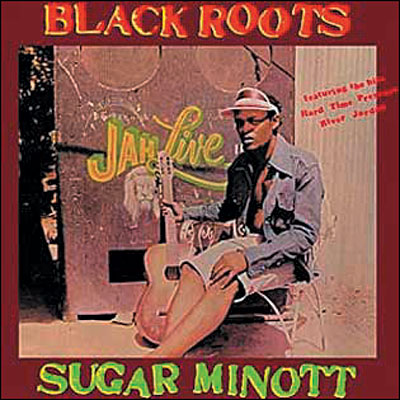
Sugar Minott worked three different reggae styles in the late '70s/early '80s, and actually originated one of 'em--studio dancehall. After starting a singing career in 1969, he spent about a decade doing roots reggae, like "Mr. Babylon Man" from 1979's Black Roots album. It's a simple plea for the agents of Babylon to leave him and his Rasta brothers (and sisters?) alone:
Around that same time, Minott started innovating. Working as a session instrumentalist at the fabled Studio One in Kingston ("the Motown of Jamaica"), Minott and his boss discovered that Minott had a knack for singing original tunes over the tracks of other songs. Now, before he started singing, Minott had come up through the sound systems of Jamaica, where DJs would spin records and audiences would party. Since 1970, some of the DJs (notably U-Roy) would toast along with the records they played, rhythmically exhorting people to Get Up On It and whatnot. (New York's pioneering hip-hop DJ Kool Herc came out of this scene, so we have these guys to thank for much of today's pop radio.) U-Roy had recorded his toasting act in studios, but Minott was arguably the first to sing new songs over existing riddims. Throw in some very au courant synth drums, and you've got the sound that'd be known as "dancehall." Here's "Rough Ole Life (Babylon)", a 1983-ish (maybe) track based on one of the most popular Jamaican riddims, the "M-16":
These riddims make up a unique oral culture in Jamaican reggae music. (Somebody, probably not me, needs to write a comprehensive study of the relationship between all the songs based on the same riddims.) U-Roy himself used the M-16 in the late '60s, for the song "Scandal"--you can hear the difference between his toasting style and Minott's singing style, over what I BELIEVE is a Sly & Robbie rhythm track.
Minott's third style was the lover's rock reggae of England, where he lived for a bit in the '80s. I don't think any Babylon songs came out of that period, but this Michael Jackson cover sure did!
As you can hear, the guy was smooth whether he was singing love songs or raging gently against the machine. His anti-Babylon stance was one of faithful presence and quiet resistance. At the end of "Rough Ole Life," starvation and jubilation coexist, and Minott seemed to accept that duality as the lot of Jah's follower, working inside Babylon system.
Culture seem like a good entry point into discussing the Babylon symbol as it's used in reggae. After all, they have NINE songs with Babylon in the title, and plenty more that contain Babylon deep within their grooves and words. In reggae, the Babylon symbol is always present, if only between the lines, and its meaning is pretty consistent--it's the system that's opposed to the will of Jah, and that keeps Jah's people (the Rastafari) from fully experiencing the divine life. Reggae is more nuanced when it asks the question, "Given its existence, what do we do about Babylon?" Joseph Hill, Culture's head honcho and chief lyricist, railed against the symbol in various ways, so Culture's stuff can serve as a lens through which to view the rest of reggae's "Babylon" symbology. It's not an exhaustive lens, but a useful one nonetheless.
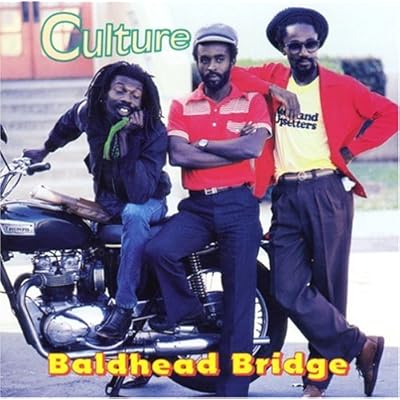
Their earliest Babylon song (going just by songs with "Babylon" in the title) was 1978's "So Long Babylon a Fool I (and I)", from the album Baldhead Bridge. To my ears, it's also their best--a slow elegy based on the older Nyabinghi drumming style, with some gentle horn and organ lines drifting along. (Nyabinghi drumming is built around three drums: the low Thunder, hitting on one and three; the mid-ranged Funde, sounding like a heartbeat; and the high Repeater, the song's lead instrument, improvising throughout. You can hear 'em all in this song! More familiar reggae beats and instrumentation grew out of this configuration.)
Lyrically, "So Long" has an ambiguous double-meaning. Sometimes Hill uses the title phrase to mean "farewell, auf wiedersehen, adieu"; sometimes he means, "MAN, we've been stuck in Babylon a long time!" He'd echo this theme of leaving in 2000's "Nah Stay Inna Babylon," and the "leave Babylon" strategy has been operative since the time of Marcus Garvey's Black Star Line (or since Israel's exile, depending how far back you wanna go). So there's one option.
Another option, also considered by Culture, is to "chant Babylon down." They advocate this move in 1997's not-so-ambiguously-titled "Chant Down Babylon," and also 1979's "Blood Inna Babylon." Note that they never advocate direct violence, and indeed I can't think of any reggae songs that do, though I'm sure they're out there. (Leave your requests and dedications in the comments, please!) Instead, Rastas tend to go for non-violent options. "Chanting down" is popular, and recalls Joshua circling the walled city of Jericho (though of course Joshua also proved to be a non-non-violent genocidal maniac). The chanting can also refer to calling down curses upon Babylon, as in "Blood": "I hail if Babylon kills one more Rastaman, I say / The sun will stop from shining / The grass will stop from growing." So ending Babylon is something we do, but we do it through Jah's hand.
If those don't suit ya, you can always simply MOCK Babylon. This seemed to be Hill's M.O. in the '80s, with 1980's "Babylon Can't Study" (...the Rastaman because he's bigger than Babylon) and 1982's "Babylon's Big Dog." Here's an interview with Hill that explains the inspiration for the latter tune:
“Well 'Babylon Big Dog' is a song created from the unnecessary worries that babylon gives me. It's like I was coming from a place in Jamaica called James Mountain, in a very old car belonging to one of my brethen called brother Honey... Instead of coming in, in peace, there was a murder somewhere down the road. And then we realised that Babylon [THE MAN] and his big dog [A COP] was there. As we pass through, babylon tried to catch us, but this old car was modified, and was too fast for them... So while we was chasing away from babylon, I just start singing the song and brother Honey crouch over the steering wheel and start pushing the old car down," Joe laughs again. "And they never catch us. So it really means it was making me feel more victorious making the song triumph over them."
And then sometimes you can simply ride it out. I'm thinking of '96's "Down In Babylon," which isn't so much about Babylon itself, as it is a lament for any sort of stable resistance to Babylon. Around a plaintive trombone solo, Hill asks, "Where are all the Rastamen who used to teach human rights and stand upright and lead and feed our nation?" [I paraphrase.] This presupposes that we're staying in Babylon, at least for the time being, and are organizing systems of our own to help bring about a society that Jah would like better.
(I'm too lazy to link to all these, but you know how to use Youtube.)
There may be other answers to the question, "What do we do about Babylon?" These four are certainly not mutually exclusive, but they also indicate that reggae answers its fundamental question more symbolically than politically. I may be wrong, but I'm not sure any reggae since Bob Marley has had measurable political effects. But that's not to say the situation's hopeless, that a symbol can't make a difference.
For one thing, the ideas of "leaving Babylon" and "chanting down Babylon" can empower individuals to change their everyday lives, even if it only means getting through the day a little happier. And for another thing, these symbols aren't just PREscriptive, they're also DEscriptive. Trevor McNaughton of the Melodians told me a couple years ago, "Babylon fall every day, man." You see this in every act of justice, whether it's one person sitting down to a meal with a homeless guy, or the SEC fining archenemies-of-the-people Goldman Sachs. God's/Jah's Kingdom breaks in where it will, and we do what we can to hasten it.
And in the meantime, Joseph Hill would advise, we can make fun of Babylon as we ride it out.
SOJA (Soldiers of Jah Army) are a competent middle-class white reggae band from Washington D.C. Simply keeping their noses to the grindstone, they could have had a respectable career playing UB40 covers on cruise ships, or maybe busting out their roots repertoire at frat parties seeking a modicum of "authenticity." Instead, lead singer Jacob Hemphill seems bent on "self-expression." This is unfortunate, considering his skill at expressing himself in interviews:
Granted, musicians often sound like idiots in interviews. (See Sheryl Crow.) Usually they can muster some clarity in their songs, though--that's what we pay them to do. True to form, Hemphill's "Born in Babylon" is CLEARLY the rant of a man who's been lambasted by critics, doesn't appreciate it, and sees in his bad reviews a parallel with the physical and economic enslavement of the Jamaican people. Why? Because these authoritarian critics are stifling His Voice!
Attacking critics is certainly nothing new--Eminem and Toby Keith have done so in fairly entertaining ways, Akon more passive-aggressively. (I'm conflicted about increasing nu-Idolator's hit count, but this is right on.) SOJA wisely choose the latter method, particularly during Jacob's priceless closing scat:
"If I never tried to do this at all/ I think he [the critic]'d be out of a job/ And maybe I just should've stayed in bed/ Stay out of the booth and put all these guitars in the closet."
Perish the thought! If you did that, we might never get to know your attractive self-righteous side:
"Saving this world just come with a cost..." "I'm too busy to judge another man/ I'm tryin' to write the blueprint for all the world to understand."
Good luck with that, Jake! In the meantime, you might want to decide whether you want people to actually read that blueprint, or simply look into your eyes and divine your saving heart:
"While they were aiming at my words/ they missed the rest of me."
Well, your words provide a big target. The idea of "Born in Babylon" was born when Hemphill was shooting the breeze with his buddy, Redskins quarterback Colt Brennan, who has also faced the abject, soul-killing adversity of people telling him he'd never make it to the NFL. In what could have been a misplaced Punky Brewster episode, the two sat around one day bemoaning their lot in life. According to The Star:
"Me [Hemphill] and [Brennan] were sitting there talking one day like, `Dude, nobody wants us to f--king make it because of who we are, it's so f--king Babylon.' He said, `I came from a good family and good house, but because of who I was everybody says I can't make it; so it's like I might as well have come from nothing and pulled myself all the way up.'"
Not exactly. COMING FROM NOTHING is like coming from nothing. Overcoming discouraging words to become an NFL QB or a professional musician is admirable, but not unthinkable when your parents have had the good fortune to raise you in a middle-class suburb like Arlington, VA. I'll grant you, worrying about bands' authenticity and whether they've "paid their dues" is one of the biggest bugaboos around; a more real concern is when some yak from "a good family and a good house" makes a living in a touring band (behind Matisyahu, no less!), but still compares himself to this guy:
Once again I lodge my complaint that you can't find lyrix for any of these roots tunes online. This one's a little easier to understand, though. After that awesome high "DREAAAAAAAAAD!!!", Mr. Youth sings about a "lion in the jungle, the concrete jungle," which is Rasta code for a dreadlocked fellow--whose hair makes him look like a LION--in Babylon, the "concrete jungle."
Except there's an interesting difference: lions live in the savannah, yes yes Dr. Science, but are commonly known as the "kings of the jungle." Presumably Mr. Youth is playing off that cliche rather than naturalistic fact when he sings about his "lion in the jungle." But if a lion is "king of the jungle," you'd think it'd feel comfortable in the jungle, part and parcel, like it BELONGS. The dreadlocked Rasta, on the other hand, does NOT feel part and parcel of the concrete jungle, Babylon. Instead, he wants to chant it down (and whatnot), and ride the Black Star Liner back to Ethiopia (or whatnot).
Perhaps Mr. Big peers more deeply into the leonine nature than I initially gave him credit for. Maybe he realizes the lion is a reluctant ruler, uncomfortable in his own domain, if not inside his own skin. When the Rasta cultivates his unwashed mane, is it with some reluctance? Does he take up this mantle of rebellion knowing that capitulation to Babylon would be easier? Is the Dread inna Babylon secretly tempted by a metrosexual Chandler Bing haircut, one that would enable him to land a sweet job in the advertising biz and a comfortable middle-class lifestyle in Kingston, rather than this heavy yoke of resistance? That's something to chew on, brother. (Aside from that gazelle you're working on...)