Showing posts with label freedom. Show all posts

Tuesday, January 26, 2010

Surfing With White Heart and Steve Taylor


Since Surfing in Babylon has allotted blog space to Satanists and metaphorical Satanists, it's time we offer the Christian rock community a forum for rebuttal. First up: White Heart, from their excellent excellent '89 album Freedom, this is "Bye Bye Babylon":


As you might expect from Christian rockers, White Heart give us a little sermon-in-song. In verse one they look back at historical Babylon; in verse two they apply the lessons of Babylon to today's world. (Steve Taylor will do something similar below, only more subtly and less well.) Interestingly enough, the 'Heart's take on Babylon isn't particularly Biblical, except for its Judeo-Christian bias. That is, they don't focus on the Exile or on any other specific Biblical texts; Babylon is just a big impressive civilization that didn't worship God, and today lies in ruins. If this song was your only frame of reference, you'd never know that Babylon enslaved the Israelites. White Heart's Babylon could just as well be Assyria or the Persian Empire, and it wouldn't make a bit of difference to the song.

Well.... maybe a BIT of difference, for two reasons:

1. White Heart's Babylon is a "monument to pride," which alludes to the Tower of Babel story and its most common interpretation.

2. Since Babylon is the Bible's second-most-mentioned ancient civilization--right behind Israel--White Heart's Christian fans can more immediately relate to the image. White Heart are sort of exploiting the free-lunch symbolic associations we already give Babylon, thanks to the fact that John the Revelator and his prophetic predecessors imbued the place with oppositional symbolic meaning centuries ago. They did the work so White Heart wouldn't have to.

What's White Heart's main takeaway message? "Don't be Babylon!" (Did I get that right, guys?) Though again, it's not QUITE what you'd expect. They're ambivalently didactic with their advice. Here's verse two:

"Rocket ride through time and space,
It's 2088--
They're diggin' around in the dust of what we've done.
Now people study me,
I'm a part of history;
Oh, did we leave them another Babylon?
Is there evidence of spiritual revival,
Or did we leave a land of broken idols?
"

They're not pulling a Pat Robertson, saying "If we worship idols, we'll be destroyed." In White Heart's theology, you get destroyed regardless of who you worship. (And apparently, America will be dust by 2088. Good times.) But wait: then they sing this in the chorus:

"If God is not our strength and song
It's good-bye Babylon!
"

Unless I'm misreading them, White Heart seem confused about providence, about causality and their own Deuteronomic convictions. (Whatever the case, "Bye Bye Babylon" is certainly more coherent than Cryoshell's song of the same name.) I could very well be misreading the White Hearts; doing so makes them sound SO much more reasonable. An alternate reading might say that if God IS our strength and song, the future people sifting through our dust will be fellow Americans; whereas if God is NOT our strength and song, America will lie in ruins and when the Chinese finally arrive to collect on their debt, they'll be in for a very big surprise.

This theme, of Babylon as Dead Civilization, is fairly common. It notably appears in Celtic Frost's "Babylon Fell" ('87), which we'll get to someday.

Next up is Steve Taylor's "Babylon," from his '87 album I Predict 1990. "Babylon"'s not very good; Steve's often sarcastic and funny, or at least catchy, and this song is none of the above. (Other songs on 1990 include "Since I Gave Up Hope I Feel a Lot Better" and the brilliantly titled, apparently controversial "I Blew Up the Clinic Real Good," about an ice cream man who's an anti-abortion zealot for financial reasons.)


Taylor's Babylon seems to depict a Hebrew child of the Exile, torn between the lure of Babylon's worldly expertise ("Come and learn," she beckons) and the promise of something better from "the heavens." Does this not parallel our contemporary life? Aren't we torn between vicissitudes of science and faith? Do we not dance around with light sources both spot and torch, if you believe the very dated video?

According to both Taylor and White Heart, Babylon has walls and idols, and they could very well be the same place. Both Babylons seem nice from a worldly point of view--White Heart's offers "strength and security, comfort and safety", while Taylor's has learning, or something. Taylor's seems more negative because his narrator is in the final throes of disillusionment, but the two are still compatible--you could imagine Steve Taylor showing up in White Heart's song to wave his light sources around. Most importantly to their meaning, both songs see Babylon in contemporary America, and both say God provides more than what Babylon's got to offer. If you confuse your country with God, you do so at your peril--which is a refreshing lesson to hear from Christians, especially if you've been watching too much Fox News.

Wednesday, September 30, 2009

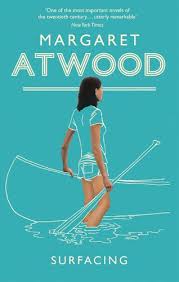
Best Thing I Read Recently: "Surfacing" by Margaret Atwood (and 2009's Summer of Discontent) (BEWARE: SPOILERZ!)

"When they say Freedom they never quite mean it, what they mean is freedom from interference." --from Surfacing, 1972, p.56 or so


That line really resonated when I read it during August of 2009. Fondly recall with me the Freedom Fighters of '09's Summer of Discontent--yelling about government takeovers of healthcare; carrying guns to town hall meetings just to demonstrate that they could; divining a creeping fascism in everything from the President addressing schoolchildren, to the government channeling money toward road construction projects. All these protests meant to combat government "interference" in people's everyday lives, I suppose; all of them evinced a pretty shallow understanding of Freedom.

I'm convinced the Freedom quote could serve as an epigraph for this entire mysterious book, Ms. Atwood's second novel, but of course it doesn't--it appears on p.56 or so, and "they" are specific libertarian Canadian settlers of ages past, the precursors to Atwood's unnamed narrator and her parents: godless pacifist survivalists who have disappeared from their daughter's life. When we meet our narrator, she's returning to the remote cabin of her childhood, hidden way out in the Quebec bush, to search for her father who's gone missing. You might say she's feeling ambivalent about "their" legacy.

Atwood's narrator implies, on p.56 or so, that capital-F "Freedom" encompasses more than simply the Libertarian "freedom from interference" sought by the survivalists of yore. My implication, from August '09, is that there are more things in heaven and earth than are dreamt of in small-government ideas of freedom. You could argue, of course, that freedom from interference is a necessary precursor to capital-F Freedom--the freedom to do--what?? (In fact, you should argue it!-- because if the government's interfering in our lives by putting senior citizens to death and, I dunno, declaring war on Christmas or whatever other nefarious ways they encroach on our rights, then how can we envision the Freedom to do anything more? Right? If Grandma can't celebrate Christmas because she's visiting the Death Panel for "the holidays"?) But the two freedoms are certainly not the same thing, and I betchya any number of historical mystics and artists would tell you that Freedom is possible even in the presence of interference.

The Freedom to do what? Here's something closer to Freedom: after a week's stay in the family cabin, Atwood's Narrator abandons the three city slicker friends who've accompanied her. While her friends return to town, Narrator declares, "There are no longer any rational points of view," and slips into an extended forest reverie that comprises the last eighth of the book. During this period she summons and speaks with her dead parents, digs a burrow near the woodpile and sleeps inside it naked, and basically reverts to an animal-or-Nell-like state. Ms. Atwood gives her thoughts like these:

"I stay on the bank, resting, licking the scratches; no fur yet on my skin, it's too early."

"From the lake a fish jumps.
An idea of a fish jumps."

"I'm ice-clear, transparent, my bones and the child inside me showing through the green webs of my flesh, the ribs are shadows, the muscles jelly, the trees are like this too, they shimmer, their cores glow through the wood and bark."

"I lean against a tree, I am a tree leaning."

"I am not an animal or a tree, I am the thing in which the trees and animals move and grow, I am a place."

What I get from stuff like this, beyond the gnarled perfection of its construction, is Atwood celebrating her Freedom as a writer. We live in a world full of unpaid Web writing, where people who can publish whatever they want nevertheless often sound like they're churning out ad copy or auditioning for Entertainment Weekly--I do not exempt myself! With Internet Freedom ours for the taking, why do we not all make observations like "I am the thing in which the trees and animals move and grow, I am a place"? The last eighth of this book is WEIRD, punctuated but WEIRD, and we should seek observations like these, that defy normal linear thought, on a daily basis. They further life and are the antidote to endless healthcare debates.

Or abortion debates; this book is also about abortion, partly. (As if you needed more incentive!)

By celebrating Freedom, I'm not saying I necessarily want to read your "creative" and deeply-felt free verse online, especially if the words are grouped into weird shapes. Atwood, who realizes she can write whatever she wants, gets away with these flights because she also crafts such compelling sentences and articulates such an unforgettable vision. Likewise, Atwood's Narrator doesn't just meld her body to the woods on a whim. She's the only one of her friends who knows how to fish, navigate the forest, forage for food, etc. Her skill set gets her through; her craft enables her Freedom.

But even though her anti-rational Freedom depends on years of childhood nature education, it also flies in the face of much of her parents' belief system. They were rational atheists; Narrator consults the gods and her own spiritual power. She destroys much of what they'd left in the cabin, and burns pages from her father's beloved books. Likewise, this Freedom doesn't just fly in the face of the shadowy American imperialists who keep boating around the lake throughout Surfacing. The most villainous character is Narrator's friend David, a left-wing avant-garde filmmaker who keeps decrying "capitalist pigs" and spouting meaningless nonsense, until we finally witness his casual emotional brutality. Narrator even considers them kindred spirits for a while, until she rejects him, as she must reject all rational points of view.

And so what's she left with? The trees, for one thing. Last sentence: "The lake is quiet, the trees surround me, asking and giving nothing." Open to almost any random page and you'll fall into a nature poem. I'll demonstrate:

p. 85--"We wavered around the stone point where the trail goes; then we were in the archipelago of islands, tips of sunken hills, once possibly a single ridge before the lake was flooded."

p. 141--"The shape of a heron flying above us the first evening we fished, legs and neck stretched, wings outspread, a blue-gray cross, and the other heron or was it the same one, hanging wrecked from the tree."

p. 29--"The lake jiggles against the shore, the waves subside, nothing remains but a faint iridescent film of gasoline, purple and pink and green."

I could keep going! But you get the idea. The entire book is suffused with the sights and smells of the woods, and it captures all the skanky itchiness, the death and decay and human stains on the water, along with the more typical pastoral beauty.

And finally, our Narrator is also left with a choice: return to civilization or stay with the trees? Hard to say what she'll choose, but she seems to realize that the Freedom she's tasted isn't an either-or proposition. As with God, it's easier to say what Freedom isn't than what it is. You could even make the case that, if you're able to pin it down with words, it's not the real thing. Rational points of view have their place, whether in political debate or scientific exploration or arts criticism. But if we confuse them with the ultimate, the thing itself, the capitalized words, we do so at our peril.