And from there, we draw conclusions about the entirety of Christian AC radio! The Burnside Writers' Collective will tell you more. I'll just emphasize that the Sunday morning radio show "Street Sermonz With Keno" is great great great great. (7-10am on 92.3, playa. That's Keno up top.) Keno's playlist is right there with pretty much any secular rap/R&B that's being made.
If Glasvegas have taught us anything, it's that Scottish people can get away with lyrics the rest of us can't. Maybe Scottish music fans don't feel the same way, maybe such an attitude is culturally condescending, but this guy... let's see... SCOTT HUTCHISON delivers his pitiful little lines with some kind of irony. He seems to know that things aren't really as bad as he's making them out to be. It's like when God asks Jonah if he's angry, and Jonah says "Yes; angry enough to die." So our Mr. Hutchison sez this:
"And the rest of me is a version of man built to collapse into crumbs"
And we know he's just being silly and he'll get over it. Come on dude--are you a man or are you a bag of sand?
If you're analyzing the decline of MySpace, look no further than this damning sentence:
"We're sorry but we didn't find any results for 'Iron City Houserockers' when we searched in Music on MySpace."
As any presidential candidate could tell you, you can't win if you don't suck up to Pennsylvania! To be fair, Pittsburgh's favorite son and Houserockers leader Joe Grushecky does have a myspace of his own; but to get the full story, you have to hear this band. More and more, it's looking like you have to scrounge around in used vinyl bins to do so. (Or you can buy remastered CDs, yes. That's the best way to make sure Grushecky gets paid.)
"We're Not Dead Yet" depicts the Houserockers raging against the dying of the light with fire and panache. Since that particular song is dead to the Internet, here's "Junior's Bar" instead. It depicts a desperate loser trying to score with a 17-year-old, with anything BUT fire and panache.
Grushecky was and may still be a special-ed teacher in Pittsburgh, probably an even tougher job than trying to make it in the music biz. (He's also still making well-received music.) The Houserockers were on MCA and came tantalizingly close to hitting it big, but got dropped after three albums. They were sort of the missing link between two strains of drinking rock: the new-wave British pub-rock of Graham Parker, and the throwback American bar-rock of Springsteen. Their second album, Have a Good Time But Get Out Alive!, pulled those strains together with production by Springsteen sidekick Steve Van Zandt and glam hero Mick Ronson, among others. Grushecky sang with the passion of all those guys, and he wrote some really good songs to boot.
Chuck Eddy on the Houserockers: "Listening to radio in Detroit in 1980, I deduced that Iron City Houserockers' blues-rock was new wave and Herman Brood's blues-rock wasn't, but history proved me wrong on both counts."
And Jimmy Guterman: "All [the Houserockers'] characters... end up crushed, muttering warnings for those about to face the wheel. This bloodied defiance linked the Iron City Houserockers to punk..."
The Truckers have a real knack for cool guitar tones, clouds of noise, and musical atmospheres of foreboding. Take "The Fourth Night of My Drinking": it's a song about four nights of drinking and their effect on Patterson Hood's "disposition". They could've played the lyrics for laughs, or for that classic country stance of tight-lipped impassivity. Instead, Hood and band get a real sense of longing and dread out of their drinking song. Credit goes mostly to the lead guitar tones of Mike Cooley and John Neff, and especially to the impressive extended chords--9ths, 11ths, whatnot--of whoever. (Bassist Shonna Tucker? Maybe we can credit her with the chord inversions, at least.) This song sounds really good when you play it on the piano, like some romantic wastrel cabaret. So naturally, it sounds EVEN BETTER with three electric guitars blasting it out.
(I should really keep up with these guys, because The Big To-Do sounds fantastic. Better than 90% of the music I've heard this year. In fact, it's probably got the most purely beautiful sound of anything I've heard. It's go too many slow songs; but what doesn't?)
The Boy and I spent an enjoyable morning watching a DVD of vintage LiLiPUT TV clips, released a couple months ago on Kill Rock Stars. LiLiPUT were a Swiss lady band, late-'70s/early-'80s, who had to change their name from Kleenex when Kimberly-Clark started gettin' litigious. "Die Matrosen" features some almost-in-tune sax along with whistling(!), and nearly all their tunes have cool little FX like that. (I actually prefer their song "Split," which hails from the same album as "Matrosen" and features an elaborate vocal arrangement celebrating hopscotch and hara kiri; unfortunately, Youtube seems to disagree with me.) Those sound effects probably constitute much of the band's appeal to a four-year-old, along with the visuals on the DVD and the fact that their music is impossibly cheerful.
(Greil Marcus on "Hedi's Head," another impossibly cheerful number: "The feeling of people breaking loose is irresistible: they sound like ten-year-olds manically cutting up their Barbie dolls.")
Not much to say about it, except that Glenn Kaiser and band seem particularly offended by the way wealth and comfort can obscure the difficult call of the Gospel:
"Sometimes it flowed like magic The pleasure hid the flaw But oh forever tragic Him you never saw"
And if you STILL don't see Him when Babylon begins to burn, you are, apparently, toast.
Without speculating on whether their scriptural reading is correct, I will say that Rez have more room than most rockers to talk about the spiritual perils of wealth and comfort. They're the flagship band (currently on hiatus) of the Jesus People USA, Chicago's preeminent Christian commune. According to the Encyclopedia of Contemporary Christian Music, they've got some neighborhood political clout on social justice issues. They live close to poverty level and use their communal earnings to feed the poor and desperate. From their website:
"We can see only one good reason why God makes a person prosperous: so that individual's needs can be met and they can in turn give away the overflow. It is like milk and cream. Cream is the richest part of the milk. It is the top cut. When the Lord meets your needs and then gives more, that cream is not to be skimmed of the top for yourself. We should willingly think, 'Oh, I have more than I need,' and immediately distribute the overflow to others."
So I tend to give their apocalyptic diatribes a little more weight than those of Blackie Lawless. Not that Blackie doesn't rock, but I don't think their politics would sit well with him.
JPUSA also run Cornerstone Festival, coming soon to a muddy field near you! (Or not.) Watch for several bewildered Christian Rock Overviews in the alternative press! (Demon Hunter is a Christian band? Who am I thinking of?) (DEVIL DRIVER.) (Carry on.)
Until I saw this remarkable video, I didn't truly appreciate how TALL Ke$ha is. She's a real Amazon.
The video should also make clear that Bearded Guy's love is specifically a hallucinogen, maybe peyote. Shockingly, this is among many Ke$ha lovers' least favorite Ke$ha songs. It's one of my three favorites, mostly for the chorus, which is pure joy. I love the perfect automatron clarity of her singing, and the percolating synth, and the CHORD INVERSIONS, sweet chord inversions; and there's plenty of good lines, too. My new favorite is, "So I got a question: Do you wanna have a slumber party in my basement?"
And now there's this video! As wise Ke$ha fan Jonathan Bogart said at the Singles Jukebox, "Video’s out now. Would have bumped it up at least a point for me."
Read all about it at the Burnside Writers' Collective! I should caveat that it's not TECHNICALLY a 2010 album, since it came out late last year. However, nobody voted for it in the Pazz/Jop poll and W.A.S.P. just released the "Babylon's Burning" single this year, which leads me to believe the album's real cultural impact is yet to come. (In other news, cutting taxes will save the economy and I'm a superhero.)
The cast of characters in this post gets a little long, so bear with me:
Dave Grohl we know. He drummed for Nirvana, played almost everything on the first Foo Fighters album, and is generally considered to be one of the best rock drummers of our age, and also a very very kind and rich man. Almost a decade ago he decided to make a metal album, sort of a tribute to the guys he listened to growing up. So he recorded a bunch of original metal songs, again playing almost everything, in the various styles of his heroes. With help from Zwan guitarist Matt Sweeney, he recruited most of those heroes to sing/bark on their respective songs. You can imagine the childlike glee this must've inspired in Grohl's quivering fanboy heart (much the same glee that the above playset inspired in MY heart nearly 30 years ago--maybe that's what inspired the band name?). The resulting album looked like this:
The album got mixed reviews, though everybody seemed to like the drumming. Two of the standout tracks concerned Babylon. Grohl hasn't written any Babylon songs for the Foos, so it's not like Babylon is a going concern of his. But if you're playing around with traditional metal themes, you've gotta sing about Babylon SOMEWHERE.
The first, more obvious tune is "Access Babylon," a brief hardcore rant featuring Mike Dean from Corrosion of Conformity and, on guitar (MY fanboy heart quivers), Bubba Dupree from the original unhinged DC hardcore sickos, Void. (They're my favorite band on the old Flex Your Head comp!) Nice touch!
"Access Babylon" is a dumb joke on "Access Hollywood," sort of like W.A.S.P.'s "Sunset and Babylon" was a dumb joke on "Sunset and Hammond," or whatever the intersection of the Rainbow Bar & Grill is. Babylon equals Hollywood, the way Babylon ALWAYS equals Hollywood (or at least L.A.)--see also the Transplants and Steely Dan. The song's aimed at a former straightedge stalwart who's been corrupted by fame and money. Sellout! Probably Dave, Mike, and Bubba called up this sellout poseur to invite him to their TV party, and he was out visiting the Playboy Mansion. So now the boyz make a shredding mockery of their poseur friend, in hopes of piercing his heart and getting him back. And they're also shredding against the system of temptation (Babylon) that stole him away. Flex your soul, dude.
A world away is Probot's other Babylon song, "Red War," featuring and co-written by Max Cavalera from Sepultura and Soulfly. Seriously, you NEED to hear the drumming in this one.
"Red War will fall on my enemies! Babylon is full of hypocrisy!"
"Red War" is lyrically problematic, at least if you subscribe to the notion that rock stars should not declare holy wars on other countries. Cavalera is no stranger to prophetic outbursts. His group Soulfly is basically a very vengeful and disturbing Christian metal band. Cavalera uses war imagery to lyrically "downstroy" his enemies--excuse me, GOD'S enemies. It's a brilliant, if not always theologically justifiable, conception of Christian metal. Who are the loudest, angriest dudes in the Bible? The prophets, right? So that's who Cavalera imitates.
Here, though, he gets disturbingly literal. It's one thing to declare Red War on your enemies. It's another to give their address as the Khyber Pass, which connects Paki- and Afghani-stans, and which will apparently be the recon point for Cavalera's army of heavenly chariots/tanks/unmanned drones. He also growls about carrying "the sign of the cross" into war, and bringing along "the twelve tribes in the mountains of Zion." Again: the lyrics of "Red War" suggest that the Afghan War is wreaking divine vengeance on the enemies of Max Cavalera, which is to say the enemies of the Judeo-Christian God. If this were U.S. policy, it'd have pretty dire implications.
But really, what do I care about a dreadlocked metal dude's politics? It's not like he has the ear of American politicians--he makes his living melting faces metaphorically, and he does a fine job. And it could be that he's merely DEPICTING the adrenalin jolt that accompanies battle, much like that movie that just won Best Picture (Cavalera's a bit less thoughtful), or like the "Charge!" movement from Karl Jenkins's Mass for Peace. Then again, maybe Cavalera sees our mission against Afghanistan as the final showdown in some eschatological battle, and what difference would that make, really? What, do I have to AGREE with everyone that melts my face these days? That'd really thin out the pack.
To recap, the Probot album has the distinction of containing two Babylon songs, each with a very different symbolic use. One is the decadent Babylon of L.A., its face set like flint against the honesty of the hardcore crowd. The other is the infidel Babylon of the Middle East, its back turned on none other than God. Though both places are called "Babylon," their residents probably wouldn't find much to talk about at a dinner party.
As a postscript, Cavalera would return to the scene of the sin a year or two later, with Soulfly, for the song "Corrosion Creeps" (just reading that title puts the Fall's "Cruiser's Creek" into my head: "There's a party goin' on around here!--Corrosion Creeps, now..."):
This one starts with a metallized Dick Dale riff, so you know it's either about surfing or Arabs. "Blood on the sand", "Khyber Pass" (AGAIN), "Babylon is not far": I'll give you one guess, meathead. Cavalera's always open to interpretation (i.e., escape hatches), but I THINK it depicts the inner turmoil of a soldier in Afghanistan--spiritual corrosion, whatever. Geographically though, if you're standing at the Khyber Pass and you say "Babylon is not far," you'd better not mean "Iraq" or you're in for a world of dehydration and disappointment. To get to Iraq from the Khyber Pass would mean crossing Afghanistan AND Iran, and we all know what happens when you mistakenly hike into Iran.
So Babylon must not be Iraq, it must be THE SYMBOLIC AXIS OF EVIL, our soldier's unholy destination, whatever that may be. The Taliban shipyard, how do I know? At least, Max Cavalera seems very sympathetic to our boys in blue, so God bless him, and I'd like to check his papers.
And in case you were thinking "Praise You Forever" sounds like "Clocks" on accident or something, here's part of an interview with Rev. Sapp over at urbanfaith.com. Interviewer Chanel Graham says that she "can't get the track 'Praise You Forever' out of my head after listening to the album just once. Though the song is clearly a departure from what he usually does with its piano-heavy intro and gentle crescendo reminiscent of the song 'Clocks,' I love it. I tell him, 'It has a Coldplay vibe.' Sapp sounds relieved. 'You got it,' he exclaims victoriously. 'That's what we went for!'"
Went for AND SURPASSED. "Clocks" has always sounded stiffer than the swirling minimalism it apes--the drums sound like they're running on sand, and the piano riff thuds out its welcome way too quickly. Sapp gets around those problems by chucking the minimalism. His drummer, Calvin Rodgers, is better and subtler than Coldplay's, and Sapp's chords are more interesting. The choir's refrains of "I am sear-ching for..." and "I am thir-sty for..." are really powerful. On the word "for," they hit a V chord over tonic, a beautifully unexpected dissonance in its context. I also dig those synth squiggles over the piano riff. It's as though, on his first foray into "rock," Sapp took what he liked about "Clocks" and then just let the music blossom. Maybe God let "Clocks" happen just so THIS song could exist. (Mysterious ways, man...)
How well DID we actually know Guru's steez? What words come to mind when you think of his flow? Probably "smooth". (Christgau: "For anyone wondering what 'flow' can mean, Guru's smooth, unshowy delivery, cool in its confident warmth and swift without ever burying words or betraying rush, is one ideal...") Maybe "monotone". (Oliver Wang: "[W]ith his laconic monotone, there was something mesmerizing in his flow.") How about "virtuosic"?
If you Google "guru premier flow virtuoso" (you have to throw in "premier" to avoid all the Indian raga virtuosi), you get results that call DJ Premier a virtuoso, or that call the various jazz players assembled for Guru's Jazzmatazz series virtuosic, but very little if anything applying the term to Guru. Christgau's got it right: he wasn't showy, he didn't rush, you could usually understand what he was saying. This is part of what made Jazzmatazz so appealing to me as a little high school pipsqueak. (That, and he didn't cuss, no doubt out of respect for his elders.) He wasn't, you know, TWISTA (hometown!), who's in the Guinness book for pronouncing 11.2 syllables per second. (Although, to be fair to my strawmen, "twista flow virtuoso" doesn't yield a whole lot more. Is rap resistant to the term "virtuoso", if not the concept?)
The Flowtation Device humbly proposes that, if your idea of virtuosity has room for Twista but not Guru, you deserve a verbal ass whip. A rapper's virtuosity isn't simply a juvenile parlor trick, the flow equivalent of a Dragonforce guitar solo. It's making the words breathe, commanding a beat, finding a way to spit life into a song. It might not land you in Guinness, but it's a musical challenge just as hard as talking like the Micro Machine Man (alma mater!)--and aesthetically it's worth a lot more. I'm not saying there's NOT room in the Virtuoso House for Twista or Bone Thugz (the FD is SO gonna get to them someday)--but let Guru in too.
Pretty simple, right?--a rhyme every second bar, only a couple instances of triplets (which are a poor-man's virtuosity anyway), and that smooth monotone throughout, not even acknowledging his own jokes or death threats. How is Guru different than Rick Ross, who's quickly become our go-to example of a listenable hack-rapper? (Sorry dude.)
"Our formula is like this. We start with the title. Then, Premier makes the beat. Then, I do the rhymes. Each time I do a rhyme, I am writing it directly to the beat. So, whatever flow I do has to go directly to the beat."
Now, I've no idea whether Rick Ross tailors his flow to his beats or not--but since his flow is THE SAME IN EVERY SONG, I kinda doubt it. In "Steez", Guru rhymes every second bar because Premier's beat is four bars long. It's neat and tidy, a rhyme for every beat cycle. But Guru's virtuosity allows him to take this premise--"I will rhyme every second bar"--and then toy with our expectations, using only his mad love and the illest warlike tactics. The four lines that begin Verse 2 are the most straightforward statement of this pattern:
Every line-ending rhyme--"relax," "wax," "rap," "that"--falls on the "&" of beat 2. Of course, Guru throws in several interior rhymes and changes up the rhythm at the beginning of each line, so already he's two steps beyond Rick Ross's huffing and puffing. But this sequence is one of the exceptions to Guru's "Steez"--in most other line-ending rhymes, the rhyming words fall on different beats. Sometimes the rhymes are close, only off by a half-beat or a beat:
The rhymes of "warranties" and "minority" fall a beat apart in their respective bars, but this isn't uncommon for rappers of even modest skillz--right, Vanillz?:
In the case of both Guru and Vanilla Ice, when the second rhyming word hits later than the first one, it gives the couplet a sense of added resolution. This technique is pretty common.
What happens, then, when the second rhyming word hits earlier than the first one? Why, we get one of the song's laff lines, from Verse 1:
Guru sets up an elegy for The Game, ending on beat 4, and then lands his punchline--"I whup ass"--a beat and a half early, for emphasis. Since his monotone delivery doesn't change, it's important to note that Guru's selling his punchline SOLELY with his use of rhythmic placement. He lets his rhythm tell the joke for him, without feeling the need to change his inflection. That's a big reason people describe Guru as "smooth" and "cool" all the time.
In another variation, Guru turns a two-rhyme couplet into a three-rhyme couplet (triplet?). In Verse 1, he gives us these:
Again, this isn't an unusual rhyme pattern--I think we witnessed Mos Def doing something similar--but it's another variation that Guru effortlessly sneaks into an apparently stable couplet pattern. Especially since he's been throwing in all manner of internal rhyme and assonance up to this point, it feels especially effortless, like a couplet masquerading as a secondary internal rhyme.
Finally, in Verse 2 Guru turns the couplet pattern around. Remember Premier's four-bar beat pattern? Up until now Guru's couplets have been almost entirely enclosed within each statement of the beat--the first rhyming word hits in the second bar, the second rhyming word hits in the fourth bar, and it's a tidy little beat/rhyme package. But then, Guru decides to add a third rhyming word, which pushes his couplet pattern back two bars, and his couplets overlap the beat until verse's end. Here's what it looks like:
[beginning of four-bar beat pattern] KEEPmySOUL_TIGHTandLETthese / LINES_TAKEflight=theAPpar / [and so on]
Look at how, with the rhyme of the second "power" and "hour," the rhymes and the beat patterns stop lining up and begin to overlap. I'm not sure there's any programmatic reason for this effect--it seems to be virtuosity and interest for virtuosity's and interest's sake. But hey, what else is virtuosity FOR, right?
The worst examples of virtuosity (Dragonforce, some Bone Thugs) are off-putting; they erect a wall between artist and audience. Guru's subtler, more confident virtuosity draws us in. It's almost like he picked "Steez"'s deceptively simple rhyme scheme just to show how much he could do with it. He was a master, not just of maintaining interest, but of mesmerizing.
Culture seem like a good entry point into discussing the Babylon symbol as it's used in reggae. After all, they have NINE songs with Babylon in the title, and plenty more that contain Babylon deep within their grooves and words. In reggae, the Babylon symbol is always present, if only between the lines, and its meaning is pretty consistent--it's the system that's opposed to the will of Jah, and that keeps Jah's people (the Rastafari) from fully experiencing the divine life. Reggae is more nuanced when it asks the question, "Given its existence, what do we do about Babylon?" Joseph Hill, Culture's head honcho and chief lyricist, railed against the symbol in various ways, so Culture's stuff can serve as a lens through which to view the rest of reggae's "Babylon" symbology. It's not an exhaustive lens, but a useful one nonetheless.
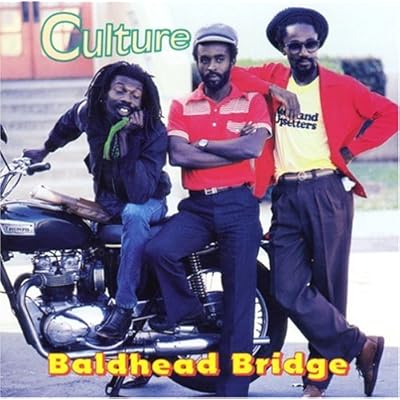
Their earliest Babylon song (going just by songs with "Babylon" in the title) was 1978's "So Long Babylon a Fool I (and I)", from the album Baldhead Bridge. To my ears, it's also their best--a slow elegy based on the older Nyabinghi drumming style, with some gentle horn and organ lines drifting along. (Nyabinghi drumming is built around three drums: the low Thunder, hitting on one and three; the mid-ranged Funde, sounding like a heartbeat; and the high Repeater, the song's lead instrument, improvising throughout. You can hear 'em all in this song! More familiar reggae beats and instrumentation grew out of this configuration.)
Lyrically, "So Long" has an ambiguous double-meaning. Sometimes Hill uses the title phrase to mean "farewell, auf wiedersehen, adieu"; sometimes he means, "MAN, we've been stuck in Babylon a long time!" He'd echo this theme of leaving in 2000's "Nah Stay Inna Babylon," and the "leave Babylon" strategy has been operative since the time of Marcus Garvey's Black Star Line (or since Israel's exile, depending how far back you wanna go). So there's one option.
Another option, also considered by Culture, is to "chant Babylon down." They advocate this move in 1997's not-so-ambiguously-titled "Chant Down Babylon," and also 1979's "Blood Inna Babylon." Note that they never advocate direct violence, and indeed I can't think of any reggae songs that do, though I'm sure they're out there. (Leave your requests and dedications in the comments, please!) Instead, Rastas tend to go for non-violent options. "Chanting down" is popular, and recalls Joshua circling the walled city of Jericho (though of course Joshua also proved to be a non-non-violent genocidal maniac). The chanting can also refer to calling down curses upon Babylon, as in "Blood": "I hail if Babylon kills one more Rastaman, I say / The sun will stop from shining / The grass will stop from growing." So ending Babylon is something we do, but we do it through Jah's hand.
If those don't suit ya, you can always simply MOCK Babylon. This seemed to be Hill's M.O. in the '80s, with 1980's "Babylon Can't Study" (...the Rastaman because he's bigger than Babylon) and 1982's "Babylon's Big Dog." Here's an interview with Hill that explains the inspiration for the latter tune:
“Well 'Babylon Big Dog' is a song created from the unnecessary worries that babylon gives me. It's like I was coming from a place in Jamaica called James Mountain, in a very old car belonging to one of my brethen called brother Honey... Instead of coming in, in peace, there was a murder somewhere down the road. And then we realised that Babylon [THE MAN] and his big dog [A COP] was there. As we pass through, babylon tried to catch us, but this old car was modified, and was too fast for them... So while we was chasing away from babylon, I just start singing the song and brother Honey crouch over the steering wheel and start pushing the old car down," Joe laughs again. "And they never catch us. So it really means it was making me feel more victorious making the song triumph over them."
And then sometimes you can simply ride it out. I'm thinking of '96's "Down In Babylon," which isn't so much about Babylon itself, as it is a lament for any sort of stable resistance to Babylon. Around a plaintive trombone solo, Hill asks, "Where are all the Rastamen who used to teach human rights and stand upright and lead and feed our nation?" [I paraphrase.] This presupposes that we're staying in Babylon, at least for the time being, and are organizing systems of our own to help bring about a society that Jah would like better.
(I'm too lazy to link to all these, but you know how to use Youtube.)
There may be other answers to the question, "What do we do about Babylon?" These four are certainly not mutually exclusive, but they also indicate that reggae answers its fundamental question more symbolically than politically. I may be wrong, but I'm not sure any reggae since Bob Marley has had measurable political effects. But that's not to say the situation's hopeless, that a symbol can't make a difference.
For one thing, the ideas of "leaving Babylon" and "chanting down Babylon" can empower individuals to change their everyday lives, even if it only means getting through the day a little happier. And for another thing, these symbols aren't just PREscriptive, they're also DEscriptive. Trevor McNaughton of the Melodians told me a couple years ago, "Babylon fall every day, man." You see this in every act of justice, whether it's one person sitting down to a meal with a homeless guy, or the SEC fining archenemies-of-the-people Goldman Sachs. God's/Jah's Kingdom breaks in where it will, and we do what we can to hasten it.
And in the meantime, Joseph Hill would advise, we can make fun of Babylon as we ride it out.
According to Rick Jackson and his nefarious "Country Hall of Fame," "Swingin'" is Anderson's signature song:
It doesn't really swing, though--lopes, struts, bounces, gallivants, rollicks, but there's no denying the fact that it's played straight and not swung. (Not that I'm complaining.) Likewise, Anderson plays his amusing story completely straight, seemingly oblivious to all the double- and triple-entendres he's pulling out of one innocent word. In that respect, Anderson's one-of-a-kind voice works to his advantage--it's so open and unusual, it allows him to play the part of The Wide-Eyed Rube while making jokes and social observations that are spot-on. (Rick Jackson and I also love Anderson's "Black Sheep." Describing his rich sister and her banker husband, Anderson sings, "They like to get together and talk about all the things they got." How perfect is that? And how many people like that do you know?)
Anyway, here's jazz critic Gary Giddins's mysterious definition of "swing": "a graceful way of advancing time that suggests ironic distance from time itself." I'm not sure how that applies to John Anderson--who is both graceful and ironic--but it's worth mulling over for the rest of the day. (For me. You don't have to mull.)
Morten Lauridsen's Lux Aeterna contains the most hopeful dissonances I've heard. Nearly everywhere you listen, voice parts are singing a step apart, or crossing each other's lines, yet the music rarely SOUNDS dissonant. Instead, it's full of joy and wonder, rendered complex by its unexpected harmonies. All this is an appropriate setting for the ancient words of "Veni, Sancte Spiritus", which speak of faith in the complex context of fallen humanity:
Without your divine will, there is nothing in man, nothing that is harmless.
Wash that which is unclean, water that which is dry, heal that which is wounded.
Bend that which is inflexible, warm that which is chilled, make right that which is wrong.
The "VSS" is the fourth movement of Lux Aeterna, immediately following the more famous "O Nata Lux", which our church choir is singing Sunday. (Holla!) (This video is NOT the VU Chorale, but the Chorale sounded just as good.) In no way have I given "O Nata Lux" the analysis it deserves, but here's one tentative harmonic observation. Lauridsen seems to realize that a major triad with the second thrown in sounds banal if it's overused--think, maybe, the piano chords in "Bui Doi" from Miss Saigon. (Don't get me wrong, I sort of love that song, but you have to admit it's total schlock.) A couple big arrival points in "ONL" use the major I added 2, but Lauridsen wisely steers clear the rest of the time. Instead, he employs the same chord IN FIRST INVERSION, or with an added fourth instead of a second, and creates eternal chords of mystical wonder. Indeed, Lauridsen's been called "the only American composer in history who can be called a mystic". I might add Morton Feldman, but his mysticism is different, more transcendentalist. Maybe Lauridsen's the only Christian mystic--though I've no idea whether he's a Christian or not.
I think I got a guitar technicality wrong: if Gary Lucas is swooping UP the fretboard, his pitch would go down, right? And vice-versa? Anyway, here's the song in question, "Let My People Go" (not exactly the same as the recording, still really impressive):
Bowman's impressive, too--now I'm concerned I gave him short shrift.
Note: this photo's linked from http://www.ramiroburr.com, which is the best English source of Latin music info I've found.
The lyrics of this song seem to be a zen koan. Or no--they're a pool! A reflective pool, still and beautiful, that conceals the teeming life at the heart of every relationship. Here's the refrain, translated with the help of Google, a Spanish-Spanish dictionary, and my own refined sense of poesy:
Y si estas Pensando en mí Yo también Pienso en ti Y los dos Y los dos Estamos en algo
Which is beautiful, and which translates as--what?--
And if you are thinking of me Then I'm also thinking of you And we two And we two We are in something
This is Cartesian, right? Only now, our existence is proven by the fact that we're thinking of one another? (But that title--is "algo" ("somthing") maybe used in some idiomatic way I don't understand?) And by our longing--the verse lyrics (see bottom) seem to indicate that thinking leads to longing, and longing lets us know we're alive.
Dig those rhythms! I count three distinct ones, drawing from soul, ska, and even the herky-jerk '60s country of "Harper Valley PTA." They're what drew me in in the first place--the lyrics were just a nice surprise.
Here's the verse, for your edification: Si no estas Pensando en mí No estas en nada
Hello, happy music lovers, and a joyful Eastertide to you all! Did you know that "Easter" is derived from Babylonian fertility goddess (and friend of the blog) Ishtar? At least, that's the gist of all the paranoid "Babylon" updates I seem to get every year around this time. Actually, this year it wasn't so bad--the tinfoil-hat crowd seems more concerned that Ahmadenijad is going to bomb the US Air Force base at newly-rebuilt Babylon, razing that ancient city for good and paving the way for Christ's millennial reign. (I think.) At which point, you'll only be able to listen to the choir of heavenly host OR the eternal screams of damnation, depending on whether you voted for Obama. So before this impending eschatological brouhaha, might I recommend you hurry up and listen to the following 15 singles and albums?
Singles: "Babylon"--Congorock I make no apology for this entry or my #2 album, below. It's not mindless boosterism--it's simply that I happened to hear them because of my "Babylon" alerts, and they're really good. Note that I'm making no mention of those scoundrels in SOJA.
"Speechless"--Lady Gaga In case there was any doubt about what a great songwriter she is, here's her sop to old dudes who can't stomach dance music. Worked on me! This is my favorite song of hers, though I like plenty of the others. I love her unhinged growl near the end, and the fact that the drummer seems to be having fun, bashing away. I also enjoy that, while claiming to be speechless, she shows no signs of shutting up anytime soon. (This paradox finds precedent, of course, in Psalm 137, "By the waters of Babylon," the original song about not being able to sing.)
"American Saturday Night"--Brad Paisley I won't lie, the happy consumerism of this ode to assimilation bothers me, insofar as it seems to elevate globalization over immigration, products over people. On the other hand, maybe that's just the baseline of his argument: "You Red-Staters keep talking about these 'damn foreigners', but they're great! At the very least, look at all the cool stuff they sell us." Or maybe I'm just sick of critics, including myself, imagining that Paisley is somehow their mediator with the "typical country audience." Maybe he's just a good songwriter who loves Amstel Light and plays some amazingly fluid guitar, of which this song has lots.
"Tik Tok"--Ke$ha See Album #1, below. (Heard this at the Middle School skate party last night!)
"Call Me Dragon"--These Monsters These monsters of post-rock have a sax player! Also, they rock. In fact, I'm not sure they qualify as "post-rock," and should instead be classified as "instrumental rock." You can't just call EVERY instrumental band post-rock; otherwise, you'd have to call the Ventures and the Surfaris post-rock, and that'd just confuse little kids. I dunno, this is all I've heard of them, so maybe in other songs they bring their formidable rockingness to bear on non-rock Aboriginal funeral chants or something. (Thanks, Castro!)
"Why Don't We Just Dance"--Josh Turner "Bricks and Mortar"--Editors "Chase the Tear"--Portishead "Ala Freakin' Bama"--Trace Adkins "Wrong Baby Wrong Baby Wrong"--Martina McBride "Rainy Days at the Beach"--Sable "A Little More Country Than That"--Easton Corbin Heard those last two just before the new decade commenced, driving through central Missouri, which unsurprisingly has better country radio than northern Illinois. Corbin's currently #1, so he counts for this year. I'm not sure about Sable--his song might be firmly entrenched in 2009. (It's gentle Buffett-country.)
Albums: Ke$ha--Animal When I posted this album list on this ILM thread, I mentioned that only the Ke$ha and WASP albums were consistently surprising and exciting. Ke$ha haterz cried foul. We discussed. If you wanna check out the discussion, go there and search by "WASP"--that'll get you where you're going.
The internet is, naturally, a glittery vomitorium of Ke$ha commentary. Much of it is really interesting. (Kogan's got a nice overview of links here.) Since nobody reads this, I'll go out on a limb and say that her singing is as important and challenging as Dylan's, Rotten's, Axl's. (This is what I was working toward in those ILM posts.) I need to do some more thinking about why, but basically it's this: her music is great; her singing is Wrong; the Wrongness of her singing is integral to her music's greatness. Which is to say, her music is NOT great in spite of her singing's Wrongness. Rather, she opens up previously unexplored vistas of Right Singing, showing how the rest of us have been wrong all along.
To do: elucidate what I mean by "Wrong." Obviously, I myself am prepared to be proven wrong at some point. Obviously, if you don't hear the greatness in her music, you might not care about her importance. But like Eminem a decade ago, her music is full of undeniable life that's going to take a while to explain. (And has anyone YET explained fully the greatness of The Marshall Mathers LP?)
Sure, all the songs sound the same. That's just so they can shift our attention to the details--musical and (if you're more linguistically gifted than I) narrative. Specifically, narratives about drugs and crime. Stomping through 15 waltzes and polkas with more taut muscle than their beer-hall cousins, Los Tucanes teach you to glory in their close harmonies, aggressive bateria fills, and the liquid accordion of Alfredo Gonzalez Gonzalez. Not to mention the gunfire and siren FX, never more than a song away. For fans of Morton Feldman and the Sinaloa mafia.
David Bowie A Reality Tour (Sony Legacy)
OK, maybe they're "bonus tracks," but the man does not know how to end a concert. After ripping through three Ziggy classics--and when was the last time you stopped and marveled at "Hang On To Yourself"?--Bowie and six-piece slog through two obscurities, only to close with "China Girl," which I wish was obscure. Fortunately, this travesty only occurs after two solid hours of hits, a cover (the Pixies' "Cactus"), and covers of covers, including a singalong "All the Young Dudes" that teases us with the drum intro from "Young Americans." Which you may wish he'd played instead of, oh, Outside's cabaret aria "The Motel." But for the most part, even his post-'80s obscurities sound good--especially the ready-set-GO! of "New Killer Star" and the NIN-meets-the-Who "I'm Afraid of Americans." MVP: Gail Ann Dorsey, who negotiates the world's most famous bassline while handling Freddy Mercury's vocal on "Under Pressure."
NOT WORTH IT:
All Time Low MTV Unplugged (Hopeless)
Sobbed the young punks, "There's a story at the bottom of this bottle." Thank God I gave up drinking for Lent.