According to Rick Jackson and his nefarious "Country Hall of Fame," "Swingin'" is Anderson's signature song:
It doesn't really swing, though--lopes, struts, bounces, gallivants, rollicks, but there's no denying the fact that it's played straight and not swung. (Not that I'm complaining.) Likewise, Anderson plays his amusing story completely straight, seemingly oblivious to all the double- and triple-entendres he's pulling out of one innocent word. In that respect, Anderson's one-of-a-kind voice works to his advantage--it's so open and unusual, it allows him to play the part of The Wide-Eyed Rube while making jokes and social observations that are spot-on. (Rick Jackson and I also love Anderson's "Black Sheep." Describing his rich sister and her banker husband, Anderson sings, "They like to get together and talk about all the things they got." How perfect is that? And how many people like that do you know?)
Anyway, here's jazz critic Gary Giddins's mysterious definition of "swing": "a graceful way of advancing time that suggests ironic distance from time itself." I'm not sure how that applies to John Anderson--who is both graceful and ironic--but it's worth mulling over for the rest of the day. (For me. You don't have to mull.)
Morten Lauridsen's Lux Aeterna contains the most hopeful dissonances I've heard. Nearly everywhere you listen, voice parts are singing a step apart, or crossing each other's lines, yet the music rarely SOUNDS dissonant. Instead, it's full of joy and wonder, rendered complex by its unexpected harmonies. All this is an appropriate setting for the ancient words of "Veni, Sancte Spiritus", which speak of faith in the complex context of fallen humanity:
Without your divine will, there is nothing in man, nothing that is harmless.
Wash that which is unclean, water that which is dry, heal that which is wounded.
Bend that which is inflexible, warm that which is chilled, make right that which is wrong.
The "VSS" is the fourth movement of Lux Aeterna, immediately following the more famous "O Nata Lux", which our church choir is singing Sunday. (Holla!) (This video is NOT the VU Chorale, but the Chorale sounded just as good.) In no way have I given "O Nata Lux" the analysis it deserves, but here's one tentative harmonic observation. Lauridsen seems to realize that a major triad with the second thrown in sounds banal if it's overused--think, maybe, the piano chords in "Bui Doi" from Miss Saigon. (Don't get me wrong, I sort of love that song, but you have to admit it's total schlock.) A couple big arrival points in "ONL" use the major I added 2, but Lauridsen wisely steers clear the rest of the time. Instead, he employs the same chord IN FIRST INVERSION, or with an added fourth instead of a second, and creates eternal chords of mystical wonder. Indeed, Lauridsen's been called "the only American composer in history who can be called a mystic". I might add Morton Feldman, but his mysticism is different, more transcendentalist. Maybe Lauridsen's the only Christian mystic--though I've no idea whether he's a Christian or not.
I think I got a guitar technicality wrong: if Gary Lucas is swooping UP the fretboard, his pitch would go down, right? And vice-versa? Anyway, here's the song in question, "Let My People Go" (not exactly the same as the recording, still really impressive):
Bowman's impressive, too--now I'm concerned I gave him short shrift.
Note: this photo's linked from http://www.ramiroburr.com, which is the best English source of Latin music info I've found.
The lyrics of this song seem to be a zen koan. Or no--they're a pool! A reflective pool, still and beautiful, that conceals the teeming life at the heart of every relationship. Here's the refrain, translated with the help of Google, a Spanish-Spanish dictionary, and my own refined sense of poesy:
Y si estas Pensando en mí Yo también Pienso en ti Y los dos Y los dos Estamos en algo
Which is beautiful, and which translates as--what?--
And if you are thinking of me Then I'm also thinking of you And we two And we two We are in something
This is Cartesian, right? Only now, our existence is proven by the fact that we're thinking of one another? (But that title--is "algo" ("somthing") maybe used in some idiomatic way I don't understand?) And by our longing--the verse lyrics (see bottom) seem to indicate that thinking leads to longing, and longing lets us know we're alive.
Dig those rhythms! I count three distinct ones, drawing from soul, ska, and even the herky-jerk '60s country of "Harper Valley PTA." They're what drew me in in the first place--the lyrics were just a nice surprise.
Here's the verse, for your edification: Si no estas Pensando en mí No estas en nada
Hello, happy music lovers, and a joyful Eastertide to you all! Did you know that "Easter" is derived from Babylonian fertility goddess (and friend of the blog) Ishtar? At least, that's the gist of all the paranoid "Babylon" updates I seem to get every year around this time. Actually, this year it wasn't so bad--the tinfoil-hat crowd seems more concerned that Ahmadenijad is going to bomb the US Air Force base at newly-rebuilt Babylon, razing that ancient city for good and paving the way for Christ's millennial reign. (I think.) At which point, you'll only be able to listen to the choir of heavenly host OR the eternal screams of damnation, depending on whether you voted for Obama. So before this impending eschatological brouhaha, might I recommend you hurry up and listen to the following 15 singles and albums?
Singles: "Babylon"--Congorock I make no apology for this entry or my #2 album, below. It's not mindless boosterism--it's simply that I happened to hear them because of my "Babylon" alerts, and they're really good. Note that I'm making no mention of those scoundrels in SOJA.
"Speechless"--Lady Gaga In case there was any doubt about what a great songwriter she is, here's her sop to old dudes who can't stomach dance music. Worked on me! This is my favorite song of hers, though I like plenty of the others. I love her unhinged growl near the end, and the fact that the drummer seems to be having fun, bashing away. I also enjoy that, while claiming to be speechless, she shows no signs of shutting up anytime soon. (This paradox finds precedent, of course, in Psalm 137, "By the waters of Babylon," the original song about not being able to sing.)
"American Saturday Night"--Brad Paisley I won't lie, the happy consumerism of this ode to assimilation bothers me, insofar as it seems to elevate globalization over immigration, products over people. On the other hand, maybe that's just the baseline of his argument: "You Red-Staters keep talking about these 'damn foreigners', but they're great! At the very least, look at all the cool stuff they sell us." Or maybe I'm just sick of critics, including myself, imagining that Paisley is somehow their mediator with the "typical country audience." Maybe he's just a good songwriter who loves Amstel Light and plays some amazingly fluid guitar, of which this song has lots.
"Tik Tok"--Ke$ha See Album #1, below. (Heard this at the Middle School skate party last night!)
"Call Me Dragon"--These Monsters These monsters of post-rock have a sax player! Also, they rock. In fact, I'm not sure they qualify as "post-rock," and should instead be classified as "instrumental rock." You can't just call EVERY instrumental band post-rock; otherwise, you'd have to call the Ventures and the Surfaris post-rock, and that'd just confuse little kids. I dunno, this is all I've heard of them, so maybe in other songs they bring their formidable rockingness to bear on non-rock Aboriginal funeral chants or something. (Thanks, Castro!)
"Why Don't We Just Dance"--Josh Turner "Bricks and Mortar"--Editors "Chase the Tear"--Portishead "Ala Freakin' Bama"--Trace Adkins "Wrong Baby Wrong Baby Wrong"--Martina McBride "Rainy Days at the Beach"--Sable "A Little More Country Than That"--Easton Corbin Heard those last two just before the new decade commenced, driving through central Missouri, which unsurprisingly has better country radio than northern Illinois. Corbin's currently #1, so he counts for this year. I'm not sure about Sable--his song might be firmly entrenched in 2009. (It's gentle Buffett-country.)
Albums: Ke$ha--Animal When I posted this album list on this ILM thread, I mentioned that only the Ke$ha and WASP albums were consistently surprising and exciting. Ke$ha haterz cried foul. We discussed. If you wanna check out the discussion, go there and search by "WASP"--that'll get you where you're going.
The internet is, naturally, a glittery vomitorium of Ke$ha commentary. Much of it is really interesting. (Kogan's got a nice overview of links here.) Since nobody reads this, I'll go out on a limb and say that her singing is as important and challenging as Dylan's, Rotten's, Axl's. (This is what I was working toward in those ILM posts.) I need to do some more thinking about why, but basically it's this: her music is great; her singing is Wrong; the Wrongness of her singing is integral to her music's greatness. Which is to say, her music is NOT great in spite of her singing's Wrongness. Rather, she opens up previously unexplored vistas of Right Singing, showing how the rest of us have been wrong all along.
To do: elucidate what I mean by "Wrong." Obviously, I myself am prepared to be proven wrong at some point. Obviously, if you don't hear the greatness in her music, you might not care about her importance. But like Eminem a decade ago, her music is full of undeniable life that's going to take a while to explain. (And has anyone YET explained fully the greatness of The Marshall Mathers LP?)
Sure, all the songs sound the same. That's just so they can shift our attention to the details--musical and (if you're more linguistically gifted than I) narrative. Specifically, narratives about drugs and crime. Stomping through 15 waltzes and polkas with more taut muscle than their beer-hall cousins, Los Tucanes teach you to glory in their close harmonies, aggressive bateria fills, and the liquid accordion of Alfredo Gonzalez Gonzalez. Not to mention the gunfire and siren FX, never more than a song away. For fans of Morton Feldman and the Sinaloa mafia.
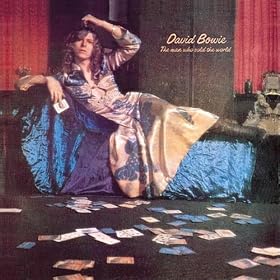
David Bowie A Reality Tour (Sony Legacy)
OK, maybe they're "bonus tracks," but the man does not know how to end a concert. After ripping through three Ziggy classics--and when was the last time you stopped and marveled at "Hang On To Yourself"?--Bowie and six-piece slog through two obscurities, only to close with "China Girl," which I wish was obscure. Fortunately, this travesty only occurs after two solid hours of hits, a cover (the Pixies' "Cactus"), and covers of covers, including a singalong "All the Young Dudes" that teases us with the drum intro from "Young Americans." Which you may wish he'd played instead of, oh, Outside's cabaret aria "The Motel." But for the most part, even his post-'80s obscurities sound good--especially the ready-set-GO! of "New Killer Star" and the NIN-meets-the-Who "I'm Afraid of Americans." MVP: Gail Ann Dorsey, who negotiates the world's most famous bassline while handling Freddy Mercury's vocal on "Under Pressure."
NOT WORTH IT:
All Time Low MTV Unplugged (Hopeless)
Sobbed the young punks, "There's a story at the bottom of this bottle." Thank God I gave up drinking for Lent.
For the first eight songs on this, his second hits collection, LL is as brash and funny as any man who's ever walked with big cats. Seriously, Mike Tyson in The Hangover has nothing on "I'm That Type of Guy" or "Big Ole Butt," which features a Red Lobster sex scene for the ages. LL's pillow talk ranged from the silky, milky "Around the Way Girl" to the alarming symbolist poetry of "Pink Cookies in a Plastic Bag Getting Crushed By Buildings." Maybe not a metaphor the ladies WANTED to hear, but you can't say it was one-dimensional.
Unfortunately, four of those good songs appeared on LL's first hits collection back in '97; more unfortunately, he's really fallen off since then. The last nine songs yield exactly two surprises. First, in "4,3,2,1" he manages to outrap Meth, Red, and DMX. Second, in "Paradise" he interrupts foreplay to brag to his girl that he tithes.* Even though his remaining ninety percent was enough to buy top-shelf beats from Timbaland and The-Dream, LL's latest rhymes have completely forgotten how to be funny, or even how to use metaphors. Come on, dude--you could even rap about your abs and NCIS for all I care. I'm sure the ladies would still love you.
*"And I breathe deep, I'm one with the universe Minimum, ten percent go to God first Lay back baby, close your eyes Ice on the pinky finger froze your thighs"
My revolutionary O.A.R. review is up at the Burnside Writers' Collective. With any luck, the headline--"In Which We Anger A Bunch Of Dudes Wearing American Eagle Rugby Shirts"--will prove accurate!
I originally posted this some years ago, after writing it for the "Guilty Pleasures" edition of the EMP Pop Music Conference. In the weird way things happen on the Internet, it soon evolved into what I assume was the world's largest message board about Carman's love life, with thousands of messages and no input from me. (Hate to add to nu-Idolator's hit count, but Dan Gibson preserved a little of it here.) I took it down a couple months ago, since it had turned into an outlet for people to be mean to one another. But it still reads pretty good (like mah girl cousin whose a teacher!), so I'm bringin' it back. Besides, it was a real golden goose for my blog traffic.
JUST KEEP IT CLEAN, CHILDREN! HE'S A REAL LIVE DUDE!
First, an invocation: “I’m telling you something’s wrong when the holiness don’t belong in living day to day, cos it ain’t fun! I wanna see me a godly man who’s not afraid to stand for what looks right! I wanna see me some--A LITTLE BIT MORE CONVICTION!”
Now, an accusation: the author of those words, Mr. Carman Licciardello, is a fundamentalist nutcase. He’s a flamboyant showman, merchandising huckster, author of romance novels and devotionals, and stager of the largest Christian concert (71,000 people) in history. Like all your favorite fundamentalists, he prefers things like Messages and Truth to Art, both when he’s reading the Bible and when he’s making his music. But somehow--and this is what I love about music--from this carnival barker springs the best pop song of 1985, “A Little Bit More Conviction,” from the album The Champion.
The song’s an ultraconservative jeremiad against what we Christians like to call “backsliders,” folks whose upright walk with the Lord has slid into a morass of temptation and sin. The song’s lyrics are barely articulate, its worldview absurdly uptight, its idea of what constitutes “sin” hopelessly square. How on earth can this song be so good?
To answer that, some justification. I currently value art that, above all else, communicates directly. In fact, I want art to communicate so directly that the concepts of “art” and “communication” fall to the side, and all that’s left is me and the work, whether words or performance or music or whatever. I don’t necessarily demand that the work speak clearly--any number of nitwit singer-songwriters can do that--but that it work some chemical change on me, get inside my mind, so that the work and I can chat with one another, confer back and forth, argue violently and come to blows if it seems like the thing to do. (If you’ve hung out with Ennis Del Mar in the movie of Brokeback Mountain or Nathan Zuckerman by way of Philip Roth, you may see what I mean.) Why would I merely wanna sit back and appreciate a piece of music, as though sagely and solemnly sucking on a pipe in my den, when there exists a different piece of music I can really interact with? This aesthetic criterion is nothing new and I don’t claim to be making Great Strides For Art here. I don’t even claim that this is the best way to evaluate art, or the only good way to live with it. I just wanted to let you know where I’m coming from before I start going on about Carman and this song of his, “A Little Bit More Conviction.”
So how can this song be good? The answer is partly instrumental--this song totally rocks. The drums slam, the rhythm guitar is evil, and the background vocals provide an eerie momentum, as though urging the persevering listener up through several levels of hell. Special credit goes to producer/keyboardist Keith Thomas, who would later produce the Amy Grant color-explosions “Baby Baby” and “Good For Me.” Here, his thundering keyboard riff and arpeggios echo the Rocky-ish triumphalism of the Champion album’s title song, which depicts the ultimate boxing match between Jesus and Satan. (That song could probably justify its own guilty pleasure conference.) Structurally, Thomas uses these individual components to build a precise, calculated, yet almost violent backdrop to Carman’s proclamations.
While unquestionably rock, the song shares little with other rock from 1985. It’s not guitar-saturated like the Replacements, Husker Du, or John Mellencamp; it’s not loose and jammy like the Mekons, the Fall, or Tom Waits. If anything, “A Little Bit More Conviction” most closely resembles the reduced-and-rockin’ ‘85 rap records from Run-DMC and LL Cool J. Like those, this song succeeds largely on the strength of its lead vocal, which can best be described as hard. Check out Carman’s growl when he gets to the second verse, “I saw two brothers go…” His persona here is a furious street preacher, so angered by the behavior of his Christian brothers and sisters that he hardly has time to form a cogent thought on the subject. Let’s listen.
[play the song]
So why do I like this song? Well, remember what I said earlier about directness. Carman works on me with this song. He doesn’t work on me rhetorically or morally; that is, I don’t really care what he tells me not to do, and I haven’t given his moral judgments the time of day for many years. Rather, his rhetoric creates a coherent persona that works on me aesthetically and, well, personally. When I listen to this song, I meet--as truly as I’m meeting people at this conference--a fascinating street preacher. I want to listen to him talk; I admire his cadence and the fluidity of his language; I like that, when he says “sexy movie show,” he’s refreshingly oblivious to any contemporary vernacular, even by 1985 standards. I like how the street preacher is against kids playing in the street, and how we don’t know exactly what he means by that: is he against gangs, or skipping family devotions, or kids getting hit by cars? Or is he just reaching back to some mythical golden age before the invention of TV? But didn’t children always play in the street back then? See, I really enjoy spending time with this incoherent bastard.
Since my enjoyment of this character is, admittedly, a little smug--essential to what I like about him is all the stuff he gets wrong--I can’t help but wonder how much he’d appreciate my appreciation. Because, let’s face it, the street preacher wants to evangelize me. Me!--a generally upright Christian guy who nonetheless drinks, dances, wishes his wife let him smoke, loves the “sexy movie show” Brokeback Mountain, and lets his seven-month-old son play in the street--this song, this guy wants me to set a better example! But do I listen? No; I’m back sagely sucking on my pipe in the den, or maybe just smiling and nodding during some meet-and-greet, appreciating the way the flamboyant preacher forces his agenda without actually heeding the Word he’s handing down.
Carman’s own extra-musical statements just make me feel more like an ass. As it turns out, Carman circa 1985 cared far more about his moral impact than his aesthetic impact. He told CCM magazine,
“You know, the fact that people are going to idolize you, the performer, instead of listening to the message you’re giving is unavoidable. It’s an occupational hazard. People come to concerts for all different kinds of reasons. Maybe because they like the way you dress, or the way you hold a certain note [that‘s me!]. When I’m on stage I can sometimes feel the carnal attitude of the people in the audience [that’s not me!], and I know I’ve got to work to turn that around.”
And in the liner notes of his previous album, Carman wrote, “This album is dedicated and carefully constructed to minister to the church by moving the inner man.” Assuming he and Thomas “carefully constructed” “A Little Bit More Conviction” the same way, does that mean the song succeeds or fails? It certainly moves my “inner man,” but only because I admire its construction, not because the construction moves my “inner man” to stop drinking, dancing, and generally setting what Carman thinks is a bad Christian example.
I disagree with Carman on many points, but he does embody a little of what’s best about American Christianity. His songs and writings advocate a personal, loving relationship with a god of grace who, in Carman’s words, “saves, delivers, and heals.” He realizes that Biblical scholarship and polite academic theologizing get you only so far, and so he strives to transform his life, and the lives of his audience, through direct relationship with Jesus. Essentially, he wants from Jesus what I want from art (and Jesus). He comes very close to advocating what Depeche Mode analyzed, a little facilely, as “your own personal Jesus, someone to hear your prayers, someone who cares.” If you’re literary critic Harold Bloom, you refer to this tendency more positively as “American gnosticism.”
Of course, Carman would recoil at being called a gnostic, and he’d be right. Mostly he’s a fundamentalist, what Bloom calls “a parody of gnosticism,” and Carman is more reductive in his scriptural analyses than Depeche Mode could dream of being. It’s one thing to give your love for Jesus priority over your understanding of the Bible; Carman tends to avoid understanding the Bible, lest it not support the beliefs he espouses. He’s got an annoying tendency of justifying sweeping moral statements with isolated Biblical passages that have no business supporting his claims.
For instance, in his book Raising the Standard, Carman proposes, “If you expose your mind and heart to a constant stream of sex, violence and cursing, you will eventually begin to act the same way.” That’s a big, controversial claim, backed up not statistically or anecdotally but psalmically: “David wrote in the psalms, ‘I will walk in my house with blameless heart. I will set before my eyes no vile thing.’ (Psalm 101:2-3).” From this Carman concludes, “The first step to moral purity in your body is to deal with your heart. And one of the first steps to doing that is to make a ‘covenant with your eyes’ (Job 31:1). You have to determine that you will not expose your heart, mind and spirit to those things that are an abomination to the Lord.”
Set aside the question of whether Carman’s proposition--essentially, “garbage in, garbage out”--is true or not. Instead, look at how he uses Hebrew scripture. Though he says, “David wrote in the psalms,” Carman, like many fundamentalists, reads the Bible as One Big Book, Written By God. Carman essentially reads this psalm and Job’s words as words to emulate, commands from great authorities speaking on God’s behalf. Job and David were blameless heroes of faith who recognized this eternal truth: looking at bad stuff leads to a sinful heart and dirty deeds. So if both David and Job advocate keeping your eyes pure--well, doesn’t that prove Carman’s “garbage in, garbage out” claim?
I’m oversimplifying a little--I’m sure Carman knows plenty more than I do about certain aspects of Biblical scholarship. But I do know that’s no way to read the Bible! First of all, Carman’s quotes come from vastly different sources. David’s psalm, while it has its liturgical uses, is the prayer of a 10th century B.C. king striving to get his country in order--a couple verses later he says, “One who secretly slanders a neighbor I will destroy,” and later still, “Morning by morning I will destroy all the wicked in the land,” statements we probably shouldn’t emulate. (Carman, to his credit, does not advocate the killing of gossip folks, or even abortion providers.) Job’s statement, on the other hand, is part of a painful drama that addresses the insolubility of human suffering and manages to make it beautiful. At one point Job insists to his three snarky holy-roller friends that his suffering couldn’t have been caused by anything he did, and as a miniscule fraction of that plea mentions this “covenant” with his eyes. When Carman strips these words of their context and lumps them together, he succeeds only in rendering them meaningless. This sorry excuse for an argument only demonstrates why you read the Bible, but you don’t use it as evidence.
But Carman doesn’t want literature, drama, or imaginative thought from the Bible. He wants theology and morality, and reads every book for its applicable message. Likewise, he constructs his songs to give me an applicable message, a moral force. In doing so--and this is another thing I love about art--the song “A Little Bit More Conviction” gets away from him and garners aesthetic force. Who knows how many authors, in the Christian canon or otherwise, have started writing a moral treatise and ended up turning out art that rewards contemplation?
Ironically, Carman’s very zeal to spread the Word may have helped him out aesthetically. In his desire to turn hearts and minds from backsliding, he accomplished the sort of direct communication that, while not guaranteeing a song’s success, sure as hell sets it on the right path. For fun, consider a statement from Chuck Eddy’s The Accidental Evolution of Rock ‘n‘ Roll. Chuck is analyzing the success of early rock music, which polite academics have been known to criticize for being manipulative, cynically profit-driven, and not proper art:
“Producers screwed around with voices and instruments in the studio until they got a saleable sound… [T]he profit motive made rock better. Short songs, tight arrangements, and gimmicky hooks helped sell records, but also made the music more immediate, and constituted a more vigorous revolt against outmoded urbane standards.”
Compare that to my favorite Britney Spears bitching in a 2003 Rolling Stone: “Anyone can write a boring artistic song. Pop music is the hardest shit to write.” Now apply those statements to Carman. Like early rockers or Britney, Carman’s goal is communication. I’m guessing Carman isn’t motivated by sales like many secular rockers, or by popularity like Britney (I doubt money has been her motivator for a while). Instead, he’s motivated by evangelistic message. Where Rick Rubin or Lieber and Stoller could measure their communicative effectiveness in terms of sales, Carman measures his in terms of souls. And since the stakes are so high, the message better be direct.
So what we’ve got here is not a failure to communicate; I get the message loud and clear, and I just sort of bat it aside. Instead, it’s a completely successful communication of something you often find in great art--an interesting, believable self. I want to leave you with a fun exercise to explore that self. Like Carman’s Bible thumping, this exercise employs texts from two vastly different sources; unlike Carman, you can use the entire texts, along with some total collective unconscious zeitgeist voodoo type shit. Sometime before you die, listen to “A Little Bit More Conviction” again, and immediately chase it with another ’85 tune, Depeche Mode’s “Blasphemous Rumors.” As you listen, pretend both songs have the same street-preacher narrator. Only when Depeche Mode catch up with him, he’s witnessed a teenage girl attempt suicide and find Jesus, only to get hit by a car and wind up dying on life support. Imagine this zealot finally realizing god’s “sick sense of humor,” and you’ll get a sense of the real spiritual usefulness of the Psalms and Job. Plus, you’ll discover a way of enjoying Carman’s tune 100% guilt-free.
JUST THE FACTS He writes and performs for audiences who pay only a free-will offering to see him, but charges $19.95 for a monthly membership to Carman.org, which gets you access to his family photos, the audio devotional archive, scheduled online chats with the man himself, and discounts at something called the “Megastore.” In the essential Encyclopedia of Contemporary Christian Music, theologian Mark Allan Powell marvels at Carman’s “penchant for over-the-top histrionics, … remarkable aptitude for media manipulation, and…frequent espousal of questionable theology…”, but wryly admits that the guy’s a great entertainer and that “he is considered to be extremely good-looking.”
This band is truly a subject for further research. If you came here to learn more about this mysterious mbaqanga band, I'm afraid I cannot help you. As far as I can tell, Udokotela Shange Namajaha recorded two fantastic songs for the above South African comp and quit the biz. I'm sure that's not the case, but who knows otherwise? Not the Internet! Not WorldCat!
Anyway, the bassline in "Awungilobolele" (I think it's a wedding song about a poor musician who can't afford to pay for his wife--not unlike Springsteen's "Rosalita," only COMPLETELY DIFFERENT) is something else--just try to resist bobbing up and down, floppily, while listening to it. The moment at the beginning where the guitar finds its groove, and the bass and thump kick in, is irresistible. And I can tell you a little bit about mbaqanga! The dude singing lead is the groaner, and the female harmonizers are characteristic. (Emphasis on the word "little.") Anyway, enjoy the tune!
"They Told Me You Had Been To Her" is a wild aria from Del Tredici's Final Alice, a one-soprano cantata based on the chaotic courtroom scene from Alice in Wonderland. Unfortunately, I can't find a sound clip online, so you're just gonna have to trust me on this. But trust me: THERE'S A THEREMIN! Also lots of loud brass playing in what sounds like completely different meters at the same time. I imagine it's a bear to conduct, so God bless Georg Solti for getting it done.
Del Tredici's an interesting guy. He's best known for his series of Alice pieces, one of which won a Pulitzer in 1980, and for helping bring tonality back to contemporary classical music. When he first abandoned 12-tone serialism to write Final Alice, he was a pretty polarizing figure among composers, many of whom viewed any deviation from atonal composition as apostasy. (Critic Kyle Gann has a nice article about that movement here.)
When you listen to the music, though, it makes total sense. Just think of the world conjured by Alice in Wonderland: bizarre but recognizable, full of both nonsense language and dry wit, morphing the everyday elements of Alice's subconscious into visions absurd and monstrous. Del Tredici's music is ideal text-painting. It's based on a theme that's SO tonal it's almost annoying--completely diatonic, it spends most of its time just outlining a major scale. (Catchy, though.) But then Del Tredici takes that theme and twists it beyond recognition, or throws up multiple statements of the theme that are out of phase with one another. Chaos and dissonance ensue, but all in the service of setting a scene. It's not unlike how, more than a century ago, Richard Strauss presaged serialism by using atonality to depict absurdities and monstrosities in his music. Only, in 1976, Del Tredici was moving in the opposite direction.
In this interesting Del Tredici interview, the gay composer admits that he identified with Lewis Carroll's "closeted" emotional life more than he identified with the books themselves. (Carroll secretly pined for the real-life Alice, and Del Tredici secretly pined for men.) He'd never read Alice all the way through, but something drew him to the books for inspiration. Apparently English people didn't appreciate how the Alice pieces drew attention to this aspect of Lewis Carroll's life. From the interview:
DAVID DEL TREDICI: In a wild kind of way the Alice pieces...are about being gay... In the sense that when they were done in England—this whole idea of having the love songs come out all tonal—they took great offense at my treatment of Lewis Carroll. They thought it was horrific that I let the erotic out of the bottle, or suggested that there was this whole other side to Lewis Carroll. In America we don't care. It's not really our book. Somehow it was more proprietary in England. I was amazed by this different aspect. My settings are also very emotional, which is not really the way the book is commonly perceived.
FRANK J. OTERI: In a weird way tonality at that point in time was the musical language that dare not speak its name.
DAVID DEL TREDICI: [laughs] I like that. That's exactly right. Great.
Now there's a thesis waiting to be written! Anyway, Final Alice is still in print and available through MY local library system, at least. Mr. Del Tredici's Myspace is musically underwhelming, though he does list as influences "Lots of Gay Poets" and "All things that have to do with leather." So there's that.
Now THERE'S a sentence I never thought I'd utter. It's right up there with "I really wanna see this movie Hot Tub Time Machine" and the dinner-table-with-toddler classic "Touch your own hot." But as far as I knew, WASP were one of those bands that just always sucked. It seemed like their purpose in life--people would ask them what they did for a living, and they'd say, "We suck." People: "I'm sorry?" WASP: "We SUCK (like a beast)." People: "No, I mean I'm sorry you suck." WASP: [either] "Ba-DUM bum!" [or] "No, it's cool--we're pretty wealthy."
Granted, "as far as I knew" was not very far. Aside from their public battles with the PMRC in the '80s, I only knew their music through Babylon research. Their OTHER Babylon song is this really-very-poor excuse for a decadent screed, "Sunset and Babylon," a pathetic attempt to sum up their "legacy" and sell a couple greatest hits albums. They even cut a video for it, complete with scandalous WASP-related headlines:
At this point WASP seemed washed up and almost theoretical. Blackie Lawless's key lines in "Sunset" are "My hand firmly wrapped around a fifth of Bacardi" and "Just come on down and we'll get crude." If anything, he needed to drink MORE. But since then, Blackie got religion and started recording concept albums. Believe me, I haven't kept up, so feel free to fill in any blanks in the comments. But if WASP's recent album titles are to be believed, Blackie is now in the unusual position of being either the antichrist or the world's messiah. He is an Unholy Terror, a Dominator, who is busily Dying for the World while recording a two-part album called The Neon God. Heavy shit.
Maybe I need to go back and listen to all of them, because new one Babylon is REALLY GOOD. Like, one of the best new albums I've heard this year. (And I'm counting it for this year, even though it came out last year. Time cannot contain me.) More on the whole album later, but its concept is "Blackie sings the Book of Revelation," which everyone knows is the most kickass book of the Bible, except maybe Daniel. Well, and then you've got all the genocidal mayhem of Joshua and Samuel, and Job arguing with God, and the borderline-nihilism of Ecclesiastes--let's say most kickass book of the New Testament.
"Babylon's Burning" packs in all your favorite unsavory elements from Revelation. You've got Babylon, of course, and its attendant whore; you've got 666 and the seven seals and a seven-headed beast; there's even a horseman, though I'm not sure where the other three went to. (Maybe they're still hanging with Aphrodite's Child.) It's all pretty straightforward and Blackie makes no attempt at interpreting this complex apocalyptic symbolism.
No, he wisely saves that for the video. Ah, now I get it! The "Babylon" that's burning is every modern totalitarian government! They stifle freedom! They murder dissenters! They are typified by the evil faces of their leaders, who appear in an ominous filmic parade behind the band: Hitler, Stalin, Ahmadinejad, Putin, and--my word, is that Obama? Why yes, as it turns out, the new improved Blackie Lawless is on record comparing Obama to Hitler, and, um, denigrating him for being a socialist Robin Hood. (Didn't we used to LIKE Robin Hood?)
By showing Obama amid all these dictators, Blackie is dangerously close to making a good point. If he were making said point, it might be that our society is ALSO a Babylon; indeed, that ANY civilization apart from God's Kingdom occupies the symbolic position of Babylon; and that ALL rulers and regimes, no matter how much they might superficially differ from Blackie's parade of despotic wackjobs, are in fact running a system that's incompatible with the Kingdom.
As it is, Blackie's video is not making that good point. Rather, it's making the RETARDED point that Obama--unlike any previous American president OR sitting rich world leader--is a totalitarian dictator. I mean, come on Blackie! How hard would it have been to throw Bush's face up there? Or Nicolas Sarkozy, or Angela Merkel, or Stephen Harper--you KNOW we can't trust that guy! Obama is less socialist than ANY OF THEM, and saying even that much traps us inside the weird thought territory where any incremental socialism equals totalitarian brutality, and...
Oh Blackie. You see what you do to me? Here I am getting all worked up over this little song of yours, and it's really good! Congratulations! And if you were considering a second career in politics, here's another sentence I never thought I'd say: Blackie Lawless, you should keep your day job.
A beautiful song about sickness, death, and anger; a Christian ballad that portrays only desperation and refuses to show the consolation. In a CCM market that's full of pat answers and rehashed statements of easy faith, this song sounds miraculous. It sarcastically badgers God like a movie cop: "Am I getting through tonight?" When it ends, we have no idea how the parents' prayer will be answered--just like when most of our own prayers end. And it was a big hit. I still wonder if Mr. Schultz feels like he got away with something--but how could you hear this song and not be moved?
Before I'd ever heard "He's My Son," I thought it'd be a melodramatic statement placed into the mouth of God, probably focusing on the horrors of the crucifixion and all the bad stuff we've done to Jesus. Needless to say, I was relieved when it turned out to be one of the best songs about parenting ever recorded. But Christians are crafty--we read all sorts of free-lunch symbolic associations into our music, and this one is no exception. If you want "He's My Son" to be about parents at the end of their rope, it is. But if you'd rather imagine that it's narrated by God or Mary, as our thoughtful Youtube poster has done--well, that reading pretty much falls apart. HOWEVER, you can certainly compare the anguish of a parent with a sick kid to the anguish Mary (and God) must have felt 2,000 years ago. It doesn't hurt, and it might even help. I'm just glad Mr. Schultz trusted his audience to make that connection and didn't spell it out in his lyrics. The song would have lost most of its power as a result.
I like PJ Harvey, but she sometimes sounds stifled--by her devotion to the blues, by her own exquisite longings, by the sense that she's trying to live up to someone else's sound. Too many slow songs; too much atmospheric "building".
Not this song, though--this is pure untrammeled cocksmanship. Loose, funny, rocks like a force ten hurricane and lands a bunch of good lines. It's as irreducible and absurd as anything by Dylan or Howlin' Wolf (who she covered in '93) or Beefheart (who she interpolated in '95)--certainly more so than "Down By the Water," or the rest of her interminable "bluesy" album To Bring You My Love. (Except "Meet Ze Monsta"--that one's pretty cool.)
Best of all is her voice--Ms. Harvey's got one of those voices that can do about six different things, and each thing sounds better than the last. This song features her aggressive rockin' voice, with some desperate squeaking on top. (Not sure who's doing the squeaking in this video; I actually heard this song today on her 4-Track Demos album, where it's all her.) Her delivery of the line "Hey, I'm the kingoftheWORLD!" falls at some sweet spot in her range that's endlessly listenable.
Upon further lyrical review, I've discovered that, if Boy WERE to walk around in public singing this song, I would be deeply embarrassed. Let's hope it doesn't come to that.
Ice Cube's rapping is instantly recognizable. His voice's unique timbre probably played a big role in making him a huge success--even my wife likes his voice*, and she (wisely) takes much more offense at his lyrics than I do. But your instrument is only as good as you can play it, and he's a master at "playing" his voice. As he chomps off consonants and articulates every last vowel in his diphthongs, his words take on a physical presence that you can seemingly hold in your hands and study. However you feel about the sentiment, there's no denying the splendor of a couplet like:
Notice what makes that couplet so appealing--the rhyme is asymmetrical. That is, "ban the A.K." is said straight, beats 1-2-3; while "any fucking way" is syncopated, beats 1-2&-4. So he sets up an expected rhyme pattern, and then he delivers that rhyme, but differently than we expect. Perhaps this is to show that he is THE MACK. And at this point, the Flowtation Device would like to go out on a limb and say that this aspect of Ice Cube's flow--asymmetrical rhyming and the delayed delivery of syllables--is his most salient musical feature.
I don't know enough to say whether he pioneered this device, or if not, who he stole it from, so if my gentle reader(s) know of examples that predate 1990, please let me know in the comments. For now, suffice it to say that this device is all over his music, and all over this irresistible song.
Often Mr. Cube will simply delay the expected delivery of a syllable by half a beat. (Actually, the very first line of the song delays the very first "nigga" by a full beat, from its expected landing on beat 1 to beat 2. This is atypical.) For instance, here's the second couplet:
The rhyme is asymmetrical, although this time, the rhyme "m" lands half a beat earlier than its corresponding "him." But notice how Cube delays it from beat 3 to the "and" of beat 3. You expect to hear "NINE_DOUBleM.*.", and instead he gives you "NINE_DOUBle=m*."
I don't know about you, but whenever I think of Ice Cube's flow, this is the feature that sticks out. He does it again and again, starting with the next line:
You get the idea. Of course, he doesn't do it all the time. That'd get old pretty quickly. So for instance, in the middle of Verse 1 we get the (still) wonderful:
Mr. Cube could've easily delayed the second syllable of "Brougham" by half a beat. Go ahead, try it! "DROP.TOP.BROU_=gham"--it's fun! (I admit a propensity to sort of mutter these things to myself while wandering the neighborhood with my boy. Not the cussing, of course.) The problem with using such a device all the time is that overuse leads to diminished impact. It's like when a clear-voiced American Idol candidate discovers that she can growl out certain lines of songs. It's effective the first time, but by the third instance you wish she'd learn some new tricks. Ice Cube's delaying device doesn't lend itself to fatigue that quickly, but he's wise to maintain his straightforward, on-the-beat "DROP.TOP.BROU.GHAM."s at least half the time.
Ice Cube's car?
One more thing to add about Cube's "delay" device--it give him a more legato flow. On occasion he'll break before a delayed syllable, but usually he holds out the leading syllable a beat and a half before his next articulation. The clearest example of this is in Verse 2, around 1:30 or so, when we get another instance of the rare delay-by-a-whole-beat:
Listen to that "-ssssss" in the word "ass"! If my choir were singing an arrangement of this song, they'd be in trouble for that! (Actually, I'd be in WAY MORE trouble.) Ice Cube is allowed, though--I'm not eager to be ganked or shanked.
Now of course, the subject matter of this song is problematic at best, piggish and sexist and violent and prudishly anti-dancing at worst. Here at the Flowtation Device, a more-or-less strictly musical enterprise, we try not to judge, but sooner or later the strictly musical analysis must be brought to bear on a song's subject matter. Alas, we're not quite ready to do that today.
Let me just say this--this song is EXHILARATING. I say that as a comfortably middle-class white suburban dad, but I imagine it was no less true for young inner-city black Comptonites of the early '90s. Musically, the exhilaration comes from all the aspects of Ice Cube's flow discussed above, along with the incredibly funky Bomb Squad beat that, if dated, only sounds that way because no other production team has yet touched their sound. (It's ironic that Cube's so disparaging of black people who dance, considering he basically dances with his voice throughout this song.) Lyrically, it's exhilarating as a kind of "art of permission", in the same way that Where the Wild Things Are or The Daily Show are exhilarating. It gives voice to impulses and profanities that we necessarily suppress so that our society can function civilly and morally. But society DOESN'T always function civilly and morally--keep in mind that this song came out a year before Rodney King's beating and the riots that followed, and that Ice Cube was from the same town. I'm not excusing lines like "bitch killa, cap peela" as mere metaphors for his machismo or rapping skills--even if that's what they are, they're grisly and unfortunate metaphors. But there's no denying the exhilaration, musically AND lyrically, that comes from hearing Ice Cube land all these great lines. And to paraphrase the Rev. James Cone, those who decry revolutionary violence (um... if that's what this is--it's certainly what it WANTS to be) are typically those who want to stay in power, NOT those on the underside of society.
*After double-checking, I learn it's actually Ice-T's voice that she likes. My bad.
Into Eternity blend virtuosic math-rock switchbackery with virtually every kind of metal you can name (except Doom; I don't think they're Doom). In addition, their vocals are multitracked into a fiendish barbershop quartet of radness*. I was impressed when, back in '05, Mercenary had their clean guy sing at the same time as their death guy; but Into Eternity have TWO distinct clean ranges (high and REALLY high), plus a high raspy death voice and a low growly death voice. Somehow, all four of these vocals are covered by three guys, so it's hard to know who's doing what, but I'll say that's designated frontman Stu Black squealing out "DROWNING ME!!!" during the choruses. That part makes me giggle. And maybe that's guitarist/founder Tim Roth doing the low growls; they sound EXTREME and everything, but also matter-of-fact, as though this guy joined the Muppet Band:
"You are all... WEIRDOS."
As an added Youtube bonus, here's Mr. Roth teaching us how to play his wonderful riffs. (Thankfully he's not singing--not that he's a bad singer, but you SO don't want to hear the idiotic words of this song.) I like how he's not tied to any one particular metal genre--note the part where Roth describes his riff as "kinda death- or black-metal-sounding or whatever." Despite this indifference to nomenclatural niceties, I find no online evidence that metal fans hate him for it, or that they think it makes him suck. And hey--nice of him to teach his trade secrets for free. Imagine if Liszt had had access to Youtube!
* I apologize if I've misled you into thinking that all four voices sound simultaneously. They don't. My bad. In this and several other ways, Into Eternity are nothing like a barbershop quartet.
Basically this is a Ne-Yo song sung by Mary J. Blige. Great idea, if you ask me, since Ne-Yo and his regular production partners Stargate were my favorite musicians to emerge last decade. (I think. Unless the White Stripes count.) Mary J. even seems to imitate Ne-Yo's singing style in this song--her voice is smooth and restrained, but she throws in little vibrato quavers at the end of each line. Maybe this approach is simply endemic to Ne-Yo songs, encoded in the way they're written. Have a listen:
Ne-Yo, in turn, seems to have picked up this style from Michael Jackson's softer side, particularly the song "Human Nature." In fact, I hear much of his/Stargate's catalog as teasing out the implications of "Human Nature"--the music, not the words. The beats may be different, but the singing always comes from MJ.
And then there's the chord progressions! "Human Nature" provides a wealth of unusually beautiful chord progressions to play with. This particular song, "I Feel Good," explores the way "Human Nature" centers around a minor ii chord ("does hedoitthat way..."). Ne-Yo's own "When You're Mad" plays with the keyboard riff's IV/V/flat-III-Maj7/IV progression. "Sexy Love" takes up the IV/V/I6/IV from the verses. Um, I'm pretty sure there are others that I won't analyze today. Not bad for a song written by Steve Porcaro, aka "One of the Guys from Toto"! (Maybe "Human Nature" is just teasing out the implications of "Africa" or something. The thought gives me pause.) Anyway, I won't post all that stuff cause who knows what four Youtube embeds would do to your computer, but go to Youtube! Go on! All these songs are there! Trust me, you'll feel good.