Song of the decade? Ahhh, if we must. Somewhat surprising, then, that it wasn't a bigger hit: #30 on the Billboard Hot 100, #10 on Hot Rap Tracks, and only the third-biggest hit off The Black Album, behind "Dirt off Your Shoulder" (maybe understandable) and "Change Clothes" (really?). Indeed, I remember opening my ears wide whenever I listened to '04 radio, trying to catch a glimpse of Rick Rubin's massive beats or power chords. It was like seeking the attributes of some rare bird--a giant redheaded woodpecker, maybe, or a bluebird, amid countless robins and wrens. Amid the Hoobastank. (I remember Scott Seward complaining on ILX, in a now-unsearchable post, memorable for its pathos, that he kept hearing "The Reason" when all he wanted to hear was "99 Problems.") But whether because of its language or because the world wasn't ready, we didn't hear it nearly enough.
Jay-Z himself goes back and forth on the issue: "Got beef with radio; if I don't play they show, they don't play my hits--well I don't give a shit, so..." Which is it, Jay? Beef or not giving a shit? Can we safely say that this is the dialectic that defines the song? Do I even know what a dialectic is? Does that matter? (If a dialectic falls on ignorant ears, does it still exist?) "99 Problems" raises many questions, not least of which is: Is there really a Wilson Pickett sample in this song?
The songs credited for samples, presumably for the drum sounds, are Billy Squier's "The Big Beat" and Mountain's "Long Red," which have been used on 99% of rap songs in the world. (Not sure about the cowbell.) The title and lead couplet come from Ice T's slightly more--shall we say?--pedantic '93 non-hit "99 Problems":
*.*.*.IFyou / HAVin'GIRL_PROBlemsIfeel / BADforYOUson*iGOT_ /
NINEtyNINE_PROBlemsBUTa / BITCHain't-one*
At the beginning of Verse 3, Jay also quotes a Bun B verse:
*.*.*.*once / UPon-aTIME_NOTtoo / LONG_Ago*aNIGga /
LIKEmySELF.HADtoSTRONG_ / ARM_Ahoe*.THISis /
NOTaHOE_INtheSENSEof / HAVin'ApusSY.*but(a) /
PUSsyHAVin'noGODdam-sense / -.TRYan'PUSHme*. /
(FORMATTING NOTE: Since underlining appears to be impossible, I'm using unorthodox italics to indicate triplets, as above.)
You can read the title couplet a couple ways: Jay's got lots of problems, but his woman's not one of them (this was during the winky-winky period of his relationship with Beyonce); or, he can easily overcome those "bitches"--foes, critics, radio, magazines, cops, Bun B's "pussies havin' no goddam sense"--who are the cause of his problems. Hence the dialectic: Jay spends the entire song in an extended reverie of beef, but his swagger and humor are such that you never doubt he'll overcome. He ends Verse 2, for instance, in a state of uncertainty--he's got drugs in his trunk and the cop says, "We'll see how smart you are when the canines come." Eek! But we know he'll make it out of the situation, because it took place back in '94, and 10 years later he's a business, man. He's SuperJay! He doesn't have to give a shit, so...
Here's one of two great scenes in Jay's concert movie documentary Fade to Black (the other is when an prancing Timbaland plays beats for Jay, finally arriving at the one for "Dirt Off Your Shoulder"): Jay wants to reconnect with the Old School, so he goes to Rick Rubin's house, raps some Chuck D, says hi to a tickled Mike D (strange to think Jay looking up to the Beastie Boys, but there you go), and lays down "99 Problems." Check out the part 3 minutes in, where Jay imitates the cop's voice, working to perfect his comic pronunciation of "lawyer":
Jay's working method is reputedly this: he listens to the beat, goes off in a corner somewhere, and emerges with a fully-formed lyric that exists only inside his head. (And I'm happy when I can do the Jumble without a pencil!) I can't make too many claims, in part because this is the only Jay song I've looked at so far, in part because artistic intent is a mysterious nebulous cloud of pixie dust, but it seems like such a technique might make him more sensitive to how his lyrics interact with the beat. For instance?
For instance: if you go back to the song itself, at around 2:20 you'll hear just Rick Rubin's basic beat pattern, sans lyrics, guitar, or cowbell. Here's the flowtated beat pattern, without differentiation between the drum sounds (lines equal hits, dots and asterisks equal rests):
-.-_-.*. / *_-_-_-.
Notice that the second bar of the pattern has no downbeat. This drum pattern occurs throughout most of the song, with only a few bars of exception. Now, take a look at Jay's first four lines, flowtated:
*rap*paTROL_ONthe / GAT_PAtrol-.*foes /
-thatWANTtoMAKE.SUREmy / CAS_KET'Sclosed-.*rap /
*criTICSthatSAY_HE'Smon / EYcash-hoes*i'mFROMthe /
HOOD_STUpidWHATtype*of / FACTS_AREthose-.*if /
Notice that, in every second bar, Jay raps a syllable on the downbeat. In lines 1, 2, and 4, he even waits until beat 2 to hit his second syllable, leaving a small (eighth-rest) gap. The effect of this is that, in every second bar, the drum eighth-beats cascade out from Jay's initial syllable. This continues pretty much throughout the song, with only a couple exceptions. Go back and listen, it's beautiful.
Now, remember Rick Rubin's power chords! They hit on the downbeat of every other line (with, of course, some end-of-line pickups and more variation toward the song's end). See above, how Jay avoids rapping on the downbeat of lines 1 and 3? It's almost as though he's getting out of the way of those power chords! In fact, he does the same thing, with only one exception, for every power-chord downbeat in Verse 1. (Verses 2 and 3 are a different story, maybe to increase the excitement, the headlong rush to the end of the song?)
Somebody--Kyle? my wife?--is going to ask me whether I SERIOUSLY BELIEVE that Jay did this stuff intentionally. Well, who cares? I mean, I doubt he anally reasoned out where he was going to place every syllable, and maybe he wasn't aware of the effects he was creating in partnership with the beat. On the other hand, as he has warned me in song, I'd be a fool to underestimate the intelligence that Jay-Z has. He obviously possesses great sensitivity for what he's doing musically, whether intuitively or otherwise. He's a virtuoso.
That virtuosity is further on display in the way he commands some special effects. As I said before, this is the only Jay rap I've looked at closely, so I can't tell you offhand what Krimsian flow he normally uses. (Adam Krims's three flow styles, remember, are sung, speech-effusive, and percussion-effusive.) I suspect he's often speech-effusive because he's from New York and people say he's great, but that's all I got. This song, though, is mostly in the old-school "sung" style. It has regular rhymes on beat 2& or beat 3 of every second bar--same as the title couplet's "son" and "one"--and it doesn't stray too far from that. There aren't even many internal rhymes scattered about. The sung flow sounds--well, like singing, right? It fits a neat beat, it features regular rhymes, and it's not all that much like regular speech. When you appreciate a sung flow--and who hasn't?--I mean, think anyone on Sugarhill Records--you suspend your disbelief. But Jay's virtuosity allows him to break through that suspension in a couple interesting ways.
He uses triplets! The rap is overwhelmingly comprised of eighth-beats, so when Jay whips out the triplet, you know he means it. And basically, he means it to be funny. He's either expressing frustration:
(Verse 1) GOTbeef /
*withRAdiOifIdon't / PLAYthey-show*theyDON'T- /
PLAYmy-hits-.WELLidon't / GIVE(a)shit*so-.*. /
(Verse 3) THISis /
NOTaHOE_INtheSENSEof / HAVin'ApusSY.*but(a) /
PUSsyHAVin'noGODdam-sense / -.TRYan'PUSHme*. /
--or he's imitating spoken dialogue, as in Verse 2, the delicious encounter between him and the Richard Pryor-esque cop:
(Jay:) DOi /
LOOKlikeaMIND_REAderSIR. / Idon't-know*.
(the cop, who gets the best line in the song:) AREyou /
CAR'yin'aWEAponONyouiKNOWa / LOTofYOUare-.
Jay's other tactic to draw our attention from the regular beat is to employ an uninterrupted string of eighth beats. There are only three bars in the song that contain eight uninterrupted syllables. In context, here's Verse 1's, which occurs near the end of the verse, right before the title line (a climax point):
ORun /
DERstandTHEinTELLiGENCEthat / JAY-Zhas
Verse 2's represents some naturalistic dialogue, and also a moment of rhetorical triumph for our narrator:
ANDi /
KNOWmyRIGHTSsoYOUgon'NEEDa / WARrantFORthat*.
Verse 3's occurs right when the beat breaks down and somebody screams "Whooo!" It's exciting:
andONly /
THINGthat'sGONnaHAPpenISi / 'MAget-toCLAPpin'
Finally, that carefully worked-over "lawyer" line. It's the only point in the song where Jay deviates from his regular rhyme scheme, of rhyming on beat 2& or 3 of every second bar. Instead, we get this drawled exemplar of naturalisme:
AREN'T_YOU_SHARPasAtack / *.YOUsomeTYPE_OFlaw /
-y'orSOMEthin'SOMEbodYim / PORtantORsomeTHIN'
That's the line that made Mike D, and me, grin upon first hearing. Jay breaks free of the pattern we've come to expect, and for a moment it seems like there's nothing he can't do with a beat. So we grin at his virtuosity, we grin at his impression of a white cop, and we grin at the dialectic of Jay-Z brazenly asserting his rights to a racial profiler WHILE he's got raw in his trunk. He's got beef but he doesn't give a shit. And his performance on this song is a glimpse at how that kind of forceful insouciance--and his career since '94--might be possible.
Wednesday, October 14, 2009


Tuesday, October 13, 2009
Best Thing I Heard Today: Hole doing "Awful"
Even though her voice often resembles a vacuum cleaner, I could listen to Courtney Love sing pretty songs all day long. Here's one:
She sounds good on unpretty songs, too, but the contrast of her roar with pop chords is hard to resist. "Awful"'s album Celebrity Skin falls into the category of "Albums that are way better than I remember them." (It's been a pleasant surprise that there are more of those than I expected. I think my tastes have relaxed.) (I just got to the "H"s!)

Below is the same tune on Letterman, if you want to see them performing with a slight drop in sound quality:
She sounds good on unpretty songs, too, but the contrast of her roar with pop chords is hard to resist. "Awful"'s album Celebrity Skin falls into the category of "Albums that are way better than I remember them." (It's been a pleasant surprise that there are more of those than I expected. I think my tastes have relaxed.) (I just got to the "H"s!)

Below is the same tune on Letterman, if you want to see them performing with a slight drop in sound quality:
Tuesday, October 06, 2009
Best Thing I Heard Today: the Stones doing "It's All Over Now"
You should never trust singers. Mick Jagger you can trust though, because he admits the girl made him cry. That's why he has now jettisoned all emotion, his voice turning as hard as his heart, or as hard as the guitar tone in the intro and outro.
First the 45, then live, for some Satanic dancing and tambourine playing:
First the 45, then live, for some Satanic dancing and tambourine playing:
Monday, October 05, 2009
Best Thing I Heard Today: Merle Haggard doing "Cherokee Maiden"
In lieu of the un-Youtubable Merle version, may I direct your attention to this also really-good version by George Strait, live in '99? Thank you.
"Cherokee Maiden," written by the freakishly prolific Cindy Walker, was a hit for Bob Wills and his Playboys in '41, and Merle took it to the top of the country charts 35 years later. (So what would that be like today on the pop charts? A disco or glam revival? Both are easily imaginable, and in fact may have already happened.) The words are cute, nostalgic, and not-at-all racist; the music's straight-up jazz, with a Bo-Diddley-beat for an intro, no doubt meant to recreate in exacting detail a native Cherokee tribal ceremony. No word on whether the maiden's parents approve of this courtship, or why the lovers had to part in the first place, but Merle seems nothing but respectful.
Merle's had a long and varied career, hitting #1 with songs from all sorts of country subgenres: electrified Bakersfield outlaw songs, slow honky-tonk waltzes, even some synthy pop-country things in the '80s. He's got one of my favorite voices, so rich and smooth I sometimes think he'd sound more natural doing the Great American Songbook in supper clubs than songs about prisons and outlaws. But whatever, he's created his own Great American Songbook with all the songs he's written and appropriated, and to my mind his golden voice sounds best singing Western Swing, as popularized by his idol, Bob Wills.
Here's the pinnacle of Merle's slavish Wills obsession, from 1970:

That album makes me as happy as anything. It does NOT, however, contain "Cherokee Maiden," which hit in '76, from this album:

What else can I link you to? Here's Asleep at the Wheel--the New Jack Western Swing revivalists?--doing "Cherokee Maiden" for their second Wills tribute in '99. This unembeddable song got 'em a Grammy for Best Country Song by a Duo or Group. Also pretty good--I think it's impossible to ruin this song--but it doesn't have Merle's voice. Here you go; here's the second best thing I heard today:
"Cherokee Maiden," written by the freakishly prolific Cindy Walker, was a hit for Bob Wills and his Playboys in '41, and Merle took it to the top of the country charts 35 years later. (So what would that be like today on the pop charts? A disco or glam revival? Both are easily imaginable, and in fact may have already happened.) The words are cute, nostalgic, and not-at-all racist; the music's straight-up jazz, with a Bo-Diddley-beat for an intro, no doubt meant to recreate in exacting detail a native Cherokee tribal ceremony. No word on whether the maiden's parents approve of this courtship, or why the lovers had to part in the first place, but Merle seems nothing but respectful.
Merle's had a long and varied career, hitting #1 with songs from all sorts of country subgenres: electrified Bakersfield outlaw songs, slow honky-tonk waltzes, even some synthy pop-country things in the '80s. He's got one of my favorite voices, so rich and smooth I sometimes think he'd sound more natural doing the Great American Songbook in supper clubs than songs about prisons and outlaws. But whatever, he's created his own Great American Songbook with all the songs he's written and appropriated, and to my mind his golden voice sounds best singing Western Swing, as popularized by his idol, Bob Wills.
Here's the pinnacle of Merle's slavish Wills obsession, from 1970:
.jpg)
That album makes me as happy as anything. It does NOT, however, contain "Cherokee Maiden," which hit in '76, from this album:
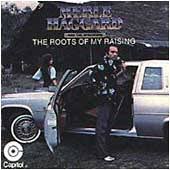
What else can I link you to? Here's Asleep at the Wheel--the New Jack Western Swing revivalists?--doing "Cherokee Maiden" for their second Wills tribute in '99. This unembeddable song got 'em a Grammy for Best Country Song by a Duo or Group. Also pretty good--I think it's impossible to ruin this song--but it doesn't have Merle's voice. Here you go; here's the second best thing I heard today:
Wednesday, September 30, 2009
Best Thing I Read Recently: "Surfacing" by Margaret Atwood (and 2009's Summer of Discontent) (BEWARE: SPOILERZ!)
"When they say Freedom they never quite mean it, what they mean is freedom from interference." --from Surfacing, 1972, p.56 or so

That line really resonated when I read it during August of 2009. Fondly recall with me the Freedom Fighters of '09's Summer of Discontent--yelling about government takeovers of healthcare; carrying guns to town hall meetings just to demonstrate that they could; divining a creeping fascism in everything from the President addressing schoolchildren, to the government channeling money toward road construction projects. All these protests meant to combat government "interference" in people's everyday lives, I suppose; all of them evinced a pretty shallow understanding of Freedom.
I'm convinced the Freedom quote could serve as an epigraph for this entire mysterious book, Ms. Atwood's second novel, but of course it doesn't--it appears on p.56 or so, and "they" are specific libertarian Canadian settlers of ages past, the precursors to Atwood's unnamed narrator and her parents: godless pacifist survivalists who have disappeared from their daughter's life. When we meet our narrator, she's returning to the remote cabin of her childhood, hidden way out in the Quebec bush, to search for her father who's gone missing. You might say she's feeling ambivalent about "their" legacy.
Atwood's narrator implies, on p.56 or so, that capital-F "Freedom" encompasses more than simply the Libertarian "freedom from interference" sought by the survivalists of yore. My implication, from August '09, is that there are more things in heaven and earth than are dreamt of in small-government ideas of freedom. You could argue, of course, that freedom from interference is a necessary precursor to capital-F Freedom--the freedom to do--what?? (In fact, you should argue it!-- because if the government's interfering in our lives by putting senior citizens to death and, I dunno, declaring war on Christmas or whatever other nefarious ways they encroach on our rights, then how can we envision the Freedom to do anything more? Right? If Grandma can't celebrate Christmas because she's visiting the Death Panel for "the holidays"?) But the two freedoms are certainly not the same thing, and I betchya any number of historical mystics and artists would tell you that Freedom is possible even in the presence of interference.
The Freedom to do what? Here's something closer to Freedom: after a week's stay in the family cabin, Atwood's Narrator abandons the three city slicker friends who've accompanied her. While her friends return to town, Narrator declares, "There are no longer any rational points of view," and slips into an extended forest reverie that comprises the last eighth of the book. During this period she summons and speaks with her dead parents, digs a burrow near the woodpile and sleeps inside it naked, and basically reverts to an animal-or-Nell-like state. Ms. Atwood gives her thoughts like these:
"I stay on the bank, resting, licking the scratches; no fur yet on my skin, it's too early."
"From the lake a fish jumps.
An idea of a fish jumps."
"I'm ice-clear, transparent, my bones and the child inside me showing through the green webs of my flesh, the ribs are shadows, the muscles jelly, the trees are like this too, they shimmer, their cores glow through the wood and bark."
"I lean against a tree, I am a tree leaning."
"I am not an animal or a tree, I am the thing in which the trees and animals move and grow, I am a place."
What I get from stuff like this, beyond the gnarled perfection of its construction, is Atwood celebrating her Freedom as a writer. We live in a world full of unpaid Web writing, where people who can publish whatever they want nevertheless often sound like they're churning out ad copy or auditioning for Entertainment Weekly--I do not exempt myself! With Internet Freedom ours for the taking, why do we not all make observations like "I am the thing in which the trees and animals move and grow, I am a place"? The last eighth of this book is WEIRD, punctuated but WEIRD, and we should seek observations like these, that defy normal linear thought, on a daily basis. They further life and are the antidote to endless healthcare debates.
Or abortion debates; this book is also about abortion, partly. (As if you needed more incentive!)
By celebrating Freedom, I'm not saying I necessarily want to read your "creative" and deeply-felt free verse online, especially if the words are grouped into weird shapes. Atwood, who realizes she can write whatever she wants, gets away with these flights because she also crafts such compelling sentences and articulates such an unforgettable vision. Likewise, Atwood's Narrator doesn't just meld her body to the woods on a whim. She's the only one of her friends who knows how to fish, navigate the forest, forage for food, etc. Her skill set gets her through; her craft enables her Freedom.
But even though her anti-rational Freedom depends on years of childhood nature education, it also flies in the face of much of her parents' belief system. They were rational atheists; Narrator consults the gods and her own spiritual power. She destroys much of what they'd left in the cabin, and burns pages from her father's beloved books. Likewise, this Freedom doesn't just fly in the face of the shadowy American imperialists who keep boating around the lake throughout Surfacing. The most villainous character is Narrator's friend David, a left-wing avant-garde filmmaker who keeps decrying "capitalist pigs" and spouting meaningless nonsense, until we finally witness his casual emotional brutality. Narrator even considers them kindred spirits for a while, until she rejects him, as she must reject all rational points of view.
And so what's she left with? The trees, for one thing. Last sentence: "The lake is quiet, the trees surround me, asking and giving nothing." Open to almost any random page and you'll fall into a nature poem. I'll demonstrate:
p. 85--"We wavered around the stone point where the trail goes; then we were in the archipelago of islands, tips of sunken hills, once possibly a single ridge before the lake was flooded."
p. 141--"The shape of a heron flying above us the first evening we fished, legs and neck stretched, wings outspread, a blue-gray cross, and the other heron or was it the same one, hanging wrecked from the tree."
p. 29--"The lake jiggles against the shore, the waves subside, nothing remains but a faint iridescent film of gasoline, purple and pink and green."
I could keep going! But you get the idea. The entire book is suffused with the sights and smells of the woods, and it captures all the skanky itchiness, the death and decay and human stains on the water, along with the more typical pastoral beauty.
And finally, our Narrator is also left with a choice: return to civilization or stay with the trees? Hard to say what she'll choose, but she seems to realize that the Freedom she's tasted isn't an either-or proposition. As with God, it's easier to say what Freedom isn't than what it is. You could even make the case that, if you're able to pin it down with words, it's not the real thing. Rational points of view have their place, whether in political debate or scientific exploration or arts criticism. But if we confuse them with the ultimate, the thing itself, the capitalized words, we do so at our peril.
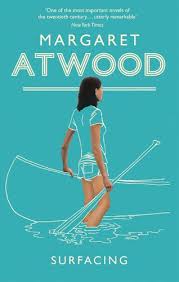
That line really resonated when I read it during August of 2009. Fondly recall with me the Freedom Fighters of '09's Summer of Discontent--yelling about government takeovers of healthcare; carrying guns to town hall meetings just to demonstrate that they could; divining a creeping fascism in everything from the President addressing schoolchildren, to the government channeling money toward road construction projects. All these protests meant to combat government "interference" in people's everyday lives, I suppose; all of them evinced a pretty shallow understanding of Freedom.
I'm convinced the Freedom quote could serve as an epigraph for this entire mysterious book, Ms. Atwood's second novel, but of course it doesn't--it appears on p.56 or so, and "they" are specific libertarian Canadian settlers of ages past, the precursors to Atwood's unnamed narrator and her parents: godless pacifist survivalists who have disappeared from their daughter's life. When we meet our narrator, she's returning to the remote cabin of her childhood, hidden way out in the Quebec bush, to search for her father who's gone missing. You might say she's feeling ambivalent about "their" legacy.
Atwood's narrator implies, on p.56 or so, that capital-F "Freedom" encompasses more than simply the Libertarian "freedom from interference" sought by the survivalists of yore. My implication, from August '09, is that there are more things in heaven and earth than are dreamt of in small-government ideas of freedom. You could argue, of course, that freedom from interference is a necessary precursor to capital-F Freedom--the freedom to do--what?? (In fact, you should argue it!-- because if the government's interfering in our lives by putting senior citizens to death and, I dunno, declaring war on Christmas or whatever other nefarious ways they encroach on our rights, then how can we envision the Freedom to do anything more? Right? If Grandma can't celebrate Christmas because she's visiting the Death Panel for "the holidays"?) But the two freedoms are certainly not the same thing, and I betchya any number of historical mystics and artists would tell you that Freedom is possible even in the presence of interference.
The Freedom to do what? Here's something closer to Freedom: after a week's stay in the family cabin, Atwood's Narrator abandons the three city slicker friends who've accompanied her. While her friends return to town, Narrator declares, "There are no longer any rational points of view," and slips into an extended forest reverie that comprises the last eighth of the book. During this period she summons and speaks with her dead parents, digs a burrow near the woodpile and sleeps inside it naked, and basically reverts to an animal-or-Nell-like state. Ms. Atwood gives her thoughts like these:
"I stay on the bank, resting, licking the scratches; no fur yet on my skin, it's too early."
"From the lake a fish jumps.
An idea of a fish jumps."
"I'm ice-clear, transparent, my bones and the child inside me showing through the green webs of my flesh, the ribs are shadows, the muscles jelly, the trees are like this too, they shimmer, their cores glow through the wood and bark."
"I lean against a tree, I am a tree leaning."
"I am not an animal or a tree, I am the thing in which the trees and animals move and grow, I am a place."
What I get from stuff like this, beyond the gnarled perfection of its construction, is Atwood celebrating her Freedom as a writer. We live in a world full of unpaid Web writing, where people who can publish whatever they want nevertheless often sound like they're churning out ad copy or auditioning for Entertainment Weekly--I do not exempt myself! With Internet Freedom ours for the taking, why do we not all make observations like "I am the thing in which the trees and animals move and grow, I am a place"? The last eighth of this book is WEIRD, punctuated but WEIRD, and we should seek observations like these, that defy normal linear thought, on a daily basis. They further life and are the antidote to endless healthcare debates.
Or abortion debates; this book is also about abortion, partly. (As if you needed more incentive!)
By celebrating Freedom, I'm not saying I necessarily want to read your "creative" and deeply-felt free verse online, especially if the words are grouped into weird shapes. Atwood, who realizes she can write whatever she wants, gets away with these flights because she also crafts such compelling sentences and articulates such an unforgettable vision. Likewise, Atwood's Narrator doesn't just meld her body to the woods on a whim. She's the only one of her friends who knows how to fish, navigate the forest, forage for food, etc. Her skill set gets her through; her craft enables her Freedom.
But even though her anti-rational Freedom depends on years of childhood nature education, it also flies in the face of much of her parents' belief system. They were rational atheists; Narrator consults the gods and her own spiritual power. She destroys much of what they'd left in the cabin, and burns pages from her father's beloved books. Likewise, this Freedom doesn't just fly in the face of the shadowy American imperialists who keep boating around the lake throughout Surfacing. The most villainous character is Narrator's friend David, a left-wing avant-garde filmmaker who keeps decrying "capitalist pigs" and spouting meaningless nonsense, until we finally witness his casual emotional brutality. Narrator even considers them kindred spirits for a while, until she rejects him, as she must reject all rational points of view.
And so what's she left with? The trees, for one thing. Last sentence: "The lake is quiet, the trees surround me, asking and giving nothing." Open to almost any random page and you'll fall into a nature poem. I'll demonstrate:
p. 85--"We wavered around the stone point where the trail goes; then we were in the archipelago of islands, tips of sunken hills, once possibly a single ridge before the lake was flooded."
p. 141--"The shape of a heron flying above us the first evening we fished, legs and neck stretched, wings outspread, a blue-gray cross, and the other heron or was it the same one, hanging wrecked from the tree."
p. 29--"The lake jiggles against the shore, the waves subside, nothing remains but a faint iridescent film of gasoline, purple and pink and green."
I could keep going! But you get the idea. The entire book is suffused with the sights and smells of the woods, and it captures all the skanky itchiness, the death and decay and human stains on the water, along with the more typical pastoral beauty.
And finally, our Narrator is also left with a choice: return to civilization or stay with the trees? Hard to say what she'll choose, but she seems to realize that the Freedom she's tasted isn't an either-or proposition. As with God, it's easier to say what Freedom isn't than what it is. You could even make the case that, if you're able to pin it down with words, it's not the real thing. Rational points of view have their place, whether in political debate or scientific exploration or arts criticism. But if we confuse them with the ultimate, the thing itself, the capitalized words, we do so at our peril.
Thursday, September 24, 2009
Best Thing I Heard Today: Glenn Gould playing Goldberg Variations 15-19
....ALTHOUGH, I don't care so much for this version of #15 (it lasts the first five minutes of the Youtube below)--too austere for my romantic softhead, plus it has some incongruous staccato phrasing at about 2:00. That said, I may play it for Good Friday next year, as Gould suggests in the very entertaining, and completely staged, interview found here:

If you're approaching this without liner notes, the austere #15 is a reverse canon at the fifth, #16 is the "French Overture," #17 is a goofy little virtuosic thing that makes you cross your hands, #18 is the amazing canon at the sixth (one of two that I have actually played for church), and #19 sounds doable, hmmm... If you're listening for the canons, they occur in the right hand while the left hand accompanies. I recommend you buy the score, it could keep you occupied for the rest of your life if you let it. Anyhow, listen away:
And here's part of the aforementioned "interview", completely scripted by Gould, with writer Tim Page, that explains how he linked and chopped up the rhythmic pulses that run through #16, 17, and 18. It's fascinating, the amount of thought that must go into performing this music! Not to mention writing it--J.S. Bach is, for me, the most humbling composer of all time.

If you're approaching this without liner notes, the austere #15 is a reverse canon at the fifth, #16 is the "French Overture," #17 is a goofy little virtuosic thing that makes you cross your hands, #18 is the amazing canon at the sixth (one of two that I have actually played for church), and #19 sounds doable, hmmm... If you're listening for the canons, they occur in the right hand while the left hand accompanies. I recommend you buy the score, it could keep you occupied for the rest of your life if you let it. Anyhow, listen away:
And here's part of the aforementioned "interview", completely scripted by Gould, with writer Tim Page, that explains how he linked and chopped up the rhythmic pulses that run through #16, 17, and 18. It's fascinating, the amount of thought that must go into performing this music! Not to mention writing it--J.S. Bach is, for me, the most humbling composer of all time.
Wednesday, September 23, 2009
The Flowtation Device Presentz: Mos Def's "Quiet Dog (Bite Hard)"
Mr. Def! I hate this game, sir--
This game makes my tongue quite lame, sir!

Mos Def's "Quiet Dog", from his latest LP The Ecstatic, is first and foremost the party-starter of the year--but SECOND and not quite to the fore, it's a total old-skool throwback. I say this not just because Mr. Def quotes two lines from the Sugarhill Gang's "Rapper's Delight," thow that's the obvious giveaway, but also because his entire rap springs from those lines like water from Moses's stones. Like a good old-skoolchild, he doesn't cuss. But the real fingerprints are rhythmic:
Mr. Def opens with a variation on the "up jumps the boogie" chant and closes with an extrapolation of the line "ya don't stop the rock." Their rhythmic characteristics are similar, so we'll focus on the first. (Incidentally, for some family fun, if you rap "Quiet Dog" over the Chic bassline from "Rapper's Delight," it fits.) Here's Sugarhill's "up jumps the boogie" line, flowtated:
BANG.BANG.BOOgieSAIDup / *jump*thaBOOgieTOthe / RHYthmOFtheBOOgieTHEbeat / -
And here's Mr. Def's virtually identical take on same:
BANG_TOtheBOOgieSAYup / *jump*theBOOgieTOthe / RHYthmOFtheBOOgieTObe / -
This line has a couple noteworthy characteristics, which Mr. Def will fully exploit during the course of his "boogie to be."
First! Notice in the first two measures how we contrast strong unsyncopated syllables occurring ON THE BEAT with strong syncopated syllables occurring off the beat. That is, Sugarhill's "BANG.BANG.BOOgie" and Def's "BANG_TOtheBOOgie" contrast with the second bar's "up / *jump*thaBOOgie". This contrast forms the basis of Def's first flow pattern, which he uses for all of verse 1 and for a couple lines near the beginning of verse 2, only transposed to the second halves of the bars:
SIM_PLEthePLAIN_NESS_ / PROmiNENTbas-ic-zu /
-lu-arRANGE_MENT_ / ROCKin'Amaze-ment-fly /
So "PLAIN_NESS_" and "RANGE_MENT_" are on the beat ("BANG.BANG."), while their rhymes "bas-ic-" and "maze-ment-" are off the beat ("up*jump*"). I should note that the horizontal lines (_ and -) in Def's rap simply indicate that he's flowing more legato than the staccato Sugarhills, whose breaks are indicated by dots (. and *). I should also note that, for purposes of comparison, if you offset Mr. Def's barlines half a measure, you'll see that his unsyncopated/syncopated flow pattern corresponds neatly to the germinal "up jump the boogie" line:
PLAIN_NESS_PROmiNENTbas / -ic-zu
RANGE_MENT_ROCKin'Amaze / -ment-fly
corresponds to
BANG_TOtheBOOgieSAYup / *jump*the
Second! The characteristic syncopation of Sugarhill's "tha / BOOgieTOtheRHYthmOFthe / BOOgieTHEbeat-" is caused by a run of syllables ending on an offbeat, which imbues the final offbeat with an unusual implicit stress. See, for example, "Quiet Dog"'s first verse, the first four lines, second half of each line:
PROmiNENTbas-
ROCKin'Amaze-
HEAvenTOpave-
NOthin'TOplay-
As Mr. Def proceeds, we get longer syllabic runs, most of which end on offbeats, culminating at the end of verse 1 with my favorite (I keep reciting it around Zack, he keeps yelling at me):
*laDIESandGENTleMEN_ / MIStasANDmisTRESes-. /
COUSinsOTHerANToANDsyn / Onyms-
This passage combines the two key rhythmic characteristics. "GENTleMEN_ / MIStasANDmisTRESes-" is our "BANG.BANG.BOOgie" line, contrasting rhyming ONBEAT and offbeat syllables. "COUSinsOTHerANToANDsyn / Onyms-" is our "RHYthmOFtheBOOgieTObe" line, ending a run of syllables on an offbeat. Whoa, now! That's just Mos Def testing your equilibrium!
In verse 2, Mr. Def introduces a new four-bar flow pattern with the lines:
DUDES_AIN'T_THROWin'THEYyawn / -in'*theyNEEDtoGEToff
-it-soWACK.RAPis / ALLyouCANcall-it*there /
He rhymes "yawnin'" (end of beat 4 in bar 1) and "off it" (end of beat 4 in bar 2), and then postpones the next rhyme, "call it," by two beats, so it's at the end of beat 2 in the fourth bar. Since all three rhymes occur on offbeats, we're into different flow territory than before, when he was contrasting rhyming ONBEATS and offbeats.
He's still playing with ONBEATS and offbeats, though, just unrhymed ones. Dig the configuration. You could theoretically replace the above two lines ("dudes ain't throwin'" etc...) with this:
BANG_TOtheBOOgieSAYup / *jump*theBOOgieSAYup /
*jump*theBANG_TOthe / BOOgieSAYup*jump*. /
So the rhymes, in the position of "up*jump", fall after four beats, after three beats, and after five beats--and you can feel the extra length in each ultimate rhymed line. This allows Mr. Def to play with longer syllabic runs as he closes out his four-bar patterns (ENgineLIKEi / ROLLoutTHEsta-tion). I don't know my poetics, but there's probably some technical term for this kind of tension-building rhythmic pattern.
I situate this song in the old-skool because of Def's "sung" flow. Sung style, according to rap theorist Adam Krims, exhibits "rhythmic repetition, on-beat accents, regular on-beat pauses, and strict couplet groupings." Krims's book, Rap Music and the Poetics of Identity, is likely to be useful to The Flowtation Device at some point. His other flow types are "speech-effusive," typified by Wu-Tang, and "percussion-effusive," typified by Outkast--but all we need to know here is that the "sung" stuff is old-skool. Of course, the fact that Def is quoting and building on Sugarhill rhymes kind of makes that point painfully obvious. It'll be interesting to see what a percussion-effusive (I think) rapper like Busta Rhymes does when HE interpolates a Sugarhill song, as in "Woo-Hah!! Got You All In Check".
Until then, dig this song like there's no tomorrow, because it is beautiful!
This game makes my tongue quite lame, sir!
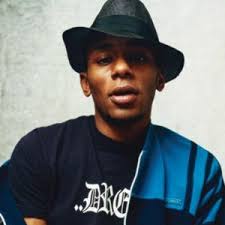
Mos Def's "Quiet Dog", from his latest LP The Ecstatic, is first and foremost the party-starter of the year--but SECOND and not quite to the fore, it's a total old-skool throwback. I say this not just because Mr. Def quotes two lines from the Sugarhill Gang's "Rapper's Delight," thow that's the obvious giveaway, but also because his entire rap springs from those lines like water from Moses's stones. Like a good old-skoolchild, he doesn't cuss. But the real fingerprints are rhythmic:
Mr. Def opens with a variation on the "up jumps the boogie" chant and closes with an extrapolation of the line "ya don't stop the rock." Their rhythmic characteristics are similar, so we'll focus on the first. (Incidentally, for some family fun, if you rap "Quiet Dog" over the Chic bassline from "Rapper's Delight," it fits.) Here's Sugarhill's "up jumps the boogie" line, flowtated:
BANG.BANG.BOOgieSAIDup / *jump*thaBOOgieTOthe / RHYthmOFtheBOOgieTHEbeat / -
And here's Mr. Def's virtually identical take on same:
BANG_TOtheBOOgieSAYup / *jump*theBOOgieTOthe / RHYthmOFtheBOOgieTObe / -
This line has a couple noteworthy characteristics, which Mr. Def will fully exploit during the course of his "boogie to be."
First! Notice in the first two measures how we contrast strong unsyncopated syllables occurring ON THE BEAT with strong syncopated syllables occurring off the beat. That is, Sugarhill's "BANG.BANG.BOOgie" and Def's "BANG_TOtheBOOgie" contrast with the second bar's "up / *jump*thaBOOgie". This contrast forms the basis of Def's first flow pattern, which he uses for all of verse 1 and for a couple lines near the beginning of verse 2, only transposed to the second halves of the bars:
SIM_PLEthePLAIN_NESS_ / PROmiNENTbas-ic-zu /
-lu-arRANGE_MENT_ / ROCKin'Amaze-ment-fly /
So "PLAIN_NESS_" and "RANGE_MENT_" are on the beat ("BANG.BANG."), while their rhymes "bas-ic-" and "maze-ment-" are off the beat ("up*jump*"). I should note that the horizontal lines (_ and -) in Def's rap simply indicate that he's flowing more legato than the staccato Sugarhills, whose breaks are indicated by dots (. and *). I should also note that, for purposes of comparison, if you offset Mr. Def's barlines half a measure, you'll see that his unsyncopated/syncopated flow pattern corresponds neatly to the germinal "up jump the boogie" line:
PLAIN_NESS_PROmiNENTbas / -ic-zu
RANGE_MENT_ROCKin'Amaze / -ment-fly
corresponds to
BANG_TOtheBOOgieSAYup / *jump*the
Second! The characteristic syncopation of Sugarhill's "tha / BOOgieTOtheRHYthmOFthe / BOOgieTHEbeat-" is caused by a run of syllables ending on an offbeat, which imbues the final offbeat with an unusual implicit stress. See, for example, "Quiet Dog"'s first verse, the first four lines, second half of each line:
PROmiNENTbas-
ROCKin'Amaze-
HEAvenTOpave-
NOthin'TOplay-
As Mr. Def proceeds, we get longer syllabic runs, most of which end on offbeats, culminating at the end of verse 1 with my favorite (I keep reciting it around Zack, he keeps yelling at me):
*laDIESandGENTleMEN_ / MIStasANDmisTRESes-. /
COUSinsOTHerANToANDsyn / Onyms-
This passage combines the two key rhythmic characteristics. "GENTleMEN_ / MIStasANDmisTRESes-" is our "BANG.BANG.BOOgie" line, contrasting rhyming ONBEAT and offbeat syllables. "COUSinsOTHerANToANDsyn / Onyms-" is our "RHYthmOFtheBOOgieTObe" line, ending a run of syllables on an offbeat. Whoa, now! That's just Mos Def testing your equilibrium!
In verse 2, Mr. Def introduces a new four-bar flow pattern with the lines:
DUDES_AIN'T_THROWin'THEYyawn / -in'*theyNEEDtoGEToff
-it-soWACK.RAPis / ALLyouCANcall-it*there /
He rhymes "yawnin'" (end of beat 4 in bar 1) and "off it" (end of beat 4 in bar 2), and then postpones the next rhyme, "call it," by two beats, so it's at the end of beat 2 in the fourth bar. Since all three rhymes occur on offbeats, we're into different flow territory than before, when he was contrasting rhyming ONBEATS and offbeats.
He's still playing with ONBEATS and offbeats, though, just unrhymed ones. Dig the configuration. You could theoretically replace the above two lines ("dudes ain't throwin'" etc...) with this:
BANG_TOtheBOOgieSAYup / *jump*theBOOgieSAYup /
*jump*theBANG_TOthe / BOOgieSAYup*jump*. /
So the rhymes, in the position of "up*jump", fall after four beats, after three beats, and after five beats--and you can feel the extra length in each ultimate rhymed line. This allows Mr. Def to play with longer syllabic runs as he closes out his four-bar patterns (ENgineLIKEi / ROLLoutTHEsta-tion). I don't know my poetics, but there's probably some technical term for this kind of tension-building rhythmic pattern.
I situate this song in the old-skool because of Def's "sung" flow. Sung style, according to rap theorist Adam Krims, exhibits "rhythmic repetition, on-beat accents, regular on-beat pauses, and strict couplet groupings." Krims's book, Rap Music and the Poetics of Identity, is likely to be useful to The Flowtation Device at some point. His other flow types are "speech-effusive," typified by Wu-Tang, and "percussion-effusive," typified by Outkast--but all we need to know here is that the "sung" stuff is old-skool. Of course, the fact that Def is quoting and building on Sugarhill rhymes kind of makes that point painfully obvious. It'll be interesting to see what a percussion-effusive (I think) rapper like Busta Rhymes does when HE interpolates a Sugarhill song, as in "Woo-Hah!! Got You All In Check".
Until then, dig this song like there's no tomorrow, because it is beautiful!
Tuesday, September 22, 2009
YOU WILL DANCE NOW: Taylor Dayne and the Art of the Imperative

On her first album, Tell It To My Heart, Taylor Dayne was blunt and demanding. She titled three of her four top 10 hits imperative sentences. The popularity of "Prove Your Love":
"Don't Rush Me":
and the title song:
--may demonstrate that, in the year of wimpy Bush vs. soft Dukakis, there was a hunger for direct imperative stuff--especially since 1988 also saw Chicago's "Look Away," Steve Winwood's "Roll With It," and Billy Ocean's lascivious "Get Outta My Dreams, Get Into My Car." Either that, or the Imperative was simply Taylor's strongest mode.
As Imperative Hits go, hers are unequivocal. Really, the list of artists who've hit so early in their careers with three Imperatives is shorter than Gillette's ex-boyfriend. Consider Taylor Dayne's Imperative Peers:
The Beatles demand, unequivocally, that we (or "baby") "Twist and Shout," but only after they've politely requested "Love Me, Do," and "Please Please Me." Such nice boys!
Sad-eyed Bobby Vee begs "Take Good Care of My Baby," "Run To Him," and most pathetically, "Please Don't Ask About Barbara," who's no doubt being "taken care of" by someone else. Even the promising "Punish Her," which initially conjures images of Barbara being subjected to some creepy S&M scenarios in the Vee dungeon, cops out by encouraging only that we "kill her with kindness" and "punish her with so much affection that she will cry for the love she threw away." I'd surmise that even a small amount of Vee's affection would resemble punishment.
Dionne Warwick resides a little closer to Taylor's territory. "Don't Make Me Over" is a "Tell It To My Heart" for the early '60s, sung by a woman confidently arguing with the lover who'd change her identity. Sure it's wispy and she's at his command, but she likes who she is. "Walk On By" is heartbroken but resolute. "Reach Out For Me," though, regresses to nursemaidery.
So it's our melancholy Dayne who pulls off the unprecedented feat of three Imperative Hits, early in her career, that do not mince words. Which isn't to say that they're consistent with one another, because "Don't Rush Me" works a wary counterpoint with the other two. Imagine a courtroom trial, albeit one that completely disregards normal legal procedure. Taylor opens her case--True Love vs. Wary Cad--with "Tell It To My Heart," only to have her lover counter-argue "Don't Rush Me" two songs later. But two songs after that, Taylor rebuts with "Prove Your Love," with which she presumably wins the argument, because all of a sudden we're off to side 2 for some top-notch filler.
Taylor Dayne had little to do with the Latin freestyle scene, but freestyle's sonic fingerprints are all over these three songs. The three Imperatives, especially "Tell" and "Prove," boast jagged synths that swirl around the melodies, bright synths that outline the melodic contours, and tinkly synths that highlight the melodic highlights. The beats drive and the keys are minor. None of this would sound out of place on an album by Expose or Pajama Party, and though Taylor doesn't touch Hispanic rhythmic elements in any of her songs, there are plenty of complex polyrhythms. If further evidence is needed, she still gets love on freestyle message boards.
This album was the first high-profile production job for Ric Wake, who also didn't have anything to do with freestyle but knew that its sound would sell Taylor's commanding persona. Taylor and Ric would jettison many of the freestyle elements on Taylor's big-league Diane-Warren-laced followup album, Can't Fight Fate. Indeed, '87 to '90 were freestyle's peak in the mainstream spotlight before it descended again to its vibrant underground, with the guys from Linear in hot pursuit. Ric would go on to immense mainstream success with Mariah Carey, Celine Dion, Jennifer Lopez, and the Chicago soundtrack, not to mention Kathy Troccoli (whose "Everything Changes" sounds a lot like Taylor). None of them have anything to do with freestyle.
Neither does most Tell It To My Heart's side 2, on which Taylor's powerful voice tackles a cover of Honey Cone's "Want Ads," the girl-groupy "Where Does That Boy Hang Out," and something approaching a Celtic folk ballad, "Upon the Journey's End." There's also an ethereal Kate Bush-sounding thing called "Carry Your Heart," which is lyrically your typical "I'll be there for you" song, but musically pretty spacey for a dance album. This isn't the stuff you pay to hear, but as far as filler goes, it's fun and varied. And it all beats the non-Imperative ballad off side 1, "I'll Always Love You":
--which was somehow the second biggest hit from the album.
Taylor Dayne's voice is, of course, a volcanic force, reminiscent of Tina Turner's, with a hard edge and some weirdly-shaped vowels that she enjoys exploiting. Wise move, then, to pair it with some searing freestyle songs. Tell It To My Heart is the album that introduces Taylor as a singer who knows exactly what she wants, at least during the span of a song, and will settle for nothing less. As we'll see if I'm not lazy, her followup album is both more resigned and more powerful, as she settles into the role of divine diva-goddess and marshals her power accordingly.
Wednesday, September 02, 2009
The Flowtation Device presents: Eminem's "Lose Yourself" verse 3 (EXPLICIT LYRIX)
In case you haven't been sufficiently encouraged to lose yourself, here's the final clarion call, the piece de resistance, the part that demonstrates not just Eminem's facility with the words, but his ability to shape those words into forms and structures. There are four distinct areas in this verse, each with its own rhythm and rhyme scheme. I've colored them differently, and I hope to high heaven they show up when I post this.
A couple random items. In his review of the Marshall Mathers LP (which does NOT contain "Lose Yourself"), Toure said Eminem "is, simply, better than any other MC in hip-hop except for Jay-Z." (What makes Jay-Z better I'm not sure--listening with Zeegy in the car today (WHICH I REALLY NEED TO STOP DOING), I determined that Jay's flow is not as anally structured as Em's, which may be why I've never liked him as much. However, Jay seems to rap around the beat more, which I would theoretically prefer. I really can't wait to analyze "99 Problems," among others.) Toure also liked that Eminem "rarely uses the same rhyme pattern twice." My analysis is not yet extensive enough to corroborate this claim, but four different patterns in one verse is pretty good, I'd say. (But then, listening to Jay-Z, I'm not sure how long he sticks with a pattern. Sometimes it seems like he changes every couple lines, which I'm not sure is a good or a bad thing.)
Also, in the purple stretch, note how the line about "goddam food stamps" offsets the "NINEto"/"TYPEof"/"DIApers" scheme by a bar. Nice! Also, in the penultimate bar check how "THEonLYopPORtuNIty" flip-flops the stresses, so that weak syllables land on the beat and strong syllables off the beat. Very Alanisian, and makes my head spin. (Adds to the urgency of the sentiment? Sure.) (He may have done that in verse one, too.) And--you can smack me if you want--at roughly the Golden Mean we encounter the longest run of uninterrupted eighth-note syllables: "aFAther / ANDaPRIMaDONnaBAby / MOMmaDRAmaSCREAmin'ONher / TOOmuch". Not sure that's the climax message-wise, but formally? Nice!
As a reminder, THE KEY:
CAPS = syllable on beat
small = syllable on offbeat
* = beat without syllable
. = offbeat without syllable
/ = barline separating groupings of (usually) four beats
-- = beat bearing second half of "carryover" syllable (syllable with duration of more than one half beat)
_ = offbeat bearing second half of "carryover" syllable (I'm finding this hard to put into words) (just look at the example)
STRESS or stress = syllable with unusual vocal stress (I still haven't gotten the hang of deploying these consistently)
(parenthetical) = syllable with duration of less than one-half beat; pickup syllable
To experience the system in all its glory, you should play the third verse of Eminem's "Lose Yourself"--starting at 3:08--while reading the lyrics as notated below.* . * . * . NOmore / --games--i'm(a)CHANGE_ * what / YOUcall--rage-- . TEARthis /
MOTHerFUCKin'ROOFoff--like / TWOdogs--caged-- . Iwas /
PLAYin'INtheBEginNING_(the) / MOODall--changed-- . I'VEbeen /
CHEWEDup--andSPITout--and / BOOEDoff--stage-- . BUTi /
KEPT--RHYmin'ANDstepped--right / --in(the)NEXT_CYpher * . /
BESTbeLIEVE_SOMEboDY'Spay / IN'thePIED_PIper * . /
ALLthePAIN_INside--amp / --liFIED_BYthe * . /
FACTthatI_CAN'Tget--by / --withMY_NINEto * five /
--andI_CAN'Tpro--vide / --theRIGHT_TYPEof-- . /
LIFEforMY_FAM'lyCAUSEman / --theseGOD_DAM_FOODstamps /
--don'tBUY_DIApers--and / --there'sNO_MOVieTHERE'Sno /
--mekHI_PHIfer-- . / THISisMY_LIFEandTHESEtimes /
--areSO_HARD_ * and(it's) / GETtin'EVenHARDerTRY'N'to /
FEEDandWAterMYseed--plus / * . TEEterTOTterCAUGHTup /
BEtween--bein'--aFAther / ANDaPRIMaDONnaBAby /
MOMmaDRAmaSCREAmin'ONher / TOOmuch * forMEtoWANna /
STAYinONEspot * anOTHer / DAYofMONot * on(y's)GOTten /
ME . TOthePOINTi'mLIKEa / SNAilI'VEgot * toFORmu /
LATEaPLOT_ORendUPin / JAilORshot * sucCESS_ /
ISmyONlyMOTHerFUCKin' / OP_TION_FAilURE'Snot /
* . MOMiLOVEyouBUTthis / TRAI_LER'Sgot * toGO_ /
IcanNOT_GROWold--in / SA_LEM'Slot * soHEREi /
GOit'sMYshot * . FEET_ / FAIL_MEnot * thisMAYbe /
THEonLYopPORtuNIty / --that(i)GOT
Tuesday, September 01, 2009
Surfing with the Transplants
I have no idea what "California Babylon" has to do with the movie Domino, but I love how the opening drumroll sounds like a Motown song, and how the piano in the background sounds like "Rock the Casbah":
The Transplants are Tim from Rancid, Travis from Blink, and a punk rapper, Ron Aston, who's not bad. (Tim may be the worst singer in the world, and any increased Tim-focus on a Rancid album, as opposed to gang shouts or wicked bass playing or a cavalcade of great songs, really bums me out. But you should definitely listen to Out Come the Wolves and the 2000 Rancid before you die, cos they've got all that good stuff.) Here they sort of bridge the gap between Babylon-as-corrupt-system, as expounded by the Rastas who show up in Verse 1, and Babylon-as-decadent-civilization, represented by the violence in Verse 2 and the drug-addicted transplant girl in Verse 3.
Since these guys are punks, they know something about reggae, so they identify the origins of their "California Babylon" with the rastas:
"Union boy standing next to the rastas
There's gonna be a strike and you ain't gonna stop us."
In verse 1, Babylon is the system that supports oppressive employers and low wages and necessitates unions. But in verse 2, which is probably sheer reportage and not advocacy, Ron observes the thinness of the line between violent thugs and those who resist the powers of Babylon. And then in verse 3, "California Babylon" turns into a cautionary tale, in the tradition of MC Hammer's "Crime Story" and Marky Mark's "Wildside." Let's call it a "Little Tiffany, Only 13" song. In this one little Tiffany, only 17, moves to the city, the place of big dreams, and does a lot of drugs. Three different verses, a different situation in each verse, but all somehow representative of "Babylon."
The Transplants seem to imply a link between the system that keeps the workers down, the system that encourages street violence, and the system that makes impressionable girls think they can become stars by engaging in the most decadent trappings of the star life. No doubt they're on to something, but they leave it to us to connect the dots.
Very well. The union boys and the Rastas, the coalition of organized labor, are striking against their unjust employer, whoever that may be--Borders? the Congress Hotel? You name it. Maybe Dennis Kucinich shows up to throw in his support. We dunno. But because of their already sub-living-wages, and because now they're striking and not making any money and there's "no sign of hope", AND because it's a freakin' Rastafarian sacrament, the union boys and the Rastas start to sling dope (verse 2). But they do not achieve a mellow high. Rather, they hit police with crowbars.
Apparently the police are unable to detain these unionized faithful, who strike by day and establish an entrepreneurial drug biz by night. The drug slangers incorporate the "glamor" of "Hollywood" into their sales pitch, and successfully hook a nubile midwestern transplant (like Donna Summer or Axl Rose in the "On the Run" chapter of Chuck Eddy's Accidental Evolution of Rock 'n' Roll--look it up!). But it was the substandard wages of Babylon System that forced our organized trapstars into the seedy underbelly of society. It was Babylon System's false promise of glamor that hooked our nubile midwestern transplant, made her want to be a star, and led her into the underbelly. AND it's the Babylon System that hypocritically moralizes against and prosecutes those ensnared in the underbelly. Babylon's all, "Accept our substandard wages and conform to our image of what's beautiful and successful, or we'll arrest your ass--if you're lucky!"
The Transplants are unmoved and unsurprised. "Don't say that you don't understand. Don't say that you can't comprehend. This is California Babylon, my man." This is simply how it works.
Waitress out dressed like nurses in bondage
Brought me the check, said I want you to sign this
Union boy standing next to the rastas
Theres gonna be a strike and you aint gonna stop us
Three men standing and they love what they do
You wont see it coming, cause they wanna surprise you
Consider it done, theyre gonna stand right by you
American punks dont care about you
Hollywood what you gonna do? [x2]
Dont say that you dont understand
Dont say that you cant comprehend
Dont say that you dont understand, this is california babylon, my man
You can take away the nights with sights with bright lights
Seeks still ride, engage in street fights
Two to the head, pull around, hes dead
Suspect fled, caught up with bloodshed
No sign of hope, we fight and sling dope
Junkies to our left, no fix, they cant cope
Violence wont cease, hand me the crow piece
No peace or sleep, we fight with police
This is the city thatll make all your dreams come true
So pay attention
[chorus]
At last she had arrived, we turned in exhausted
Cocaine in her pocket, she can get busted
Once again she passes, now shes gone
Now shes with her friend, her beautiful young
She showed up on the scene, she was 17
Now shes 21, she does some more coke, she does some more coke
She drinks some whiskey and she smokes some dope
She thinks shes a star [x4]
Do you know who you are? [x4]
lyrics copyright 2002 by Armstrong/Aston, posted for educational purposes only
The Transplants are Tim from Rancid, Travis from Blink, and a punk rapper, Ron Aston, who's not bad. (Tim may be the worst singer in the world, and any increased Tim-focus on a Rancid album, as opposed to gang shouts or wicked bass playing or a cavalcade of great songs, really bums me out. But you should definitely listen to Out Come the Wolves and the 2000 Rancid before you die, cos they've got all that good stuff.) Here they sort of bridge the gap between Babylon-as-corrupt-system, as expounded by the Rastas who show up in Verse 1, and Babylon-as-decadent-civilization, represented by the violence in Verse 2 and the drug-addicted transplant girl in Verse 3.
Since these guys are punks, they know something about reggae, so they identify the origins of their "California Babylon" with the rastas:
"Union boy standing next to the rastas
There's gonna be a strike and you ain't gonna stop us."
In verse 1, Babylon is the system that supports oppressive employers and low wages and necessitates unions. But in verse 2, which is probably sheer reportage and not advocacy, Ron observes the thinness of the line between violent thugs and those who resist the powers of Babylon. And then in verse 3, "California Babylon" turns into a cautionary tale, in the tradition of MC Hammer's "Crime Story" and Marky Mark's "Wildside." Let's call it a "Little Tiffany, Only 13" song. In this one little Tiffany, only 17, moves to the city, the place of big dreams, and does a lot of drugs. Three different verses, a different situation in each verse, but all somehow representative of "Babylon."
The Transplants seem to imply a link between the system that keeps the workers down, the system that encourages street violence, and the system that makes impressionable girls think they can become stars by engaging in the most decadent trappings of the star life. No doubt they're on to something, but they leave it to us to connect the dots.
Very well. The union boys and the Rastas, the coalition of organized labor, are striking against their unjust employer, whoever that may be--Borders? the Congress Hotel? You name it. Maybe Dennis Kucinich shows up to throw in his support. We dunno. But because of their already sub-living-wages, and because now they're striking and not making any money and there's "no sign of hope", AND because it's a freakin' Rastafarian sacrament, the union boys and the Rastas start to sling dope (verse 2). But they do not achieve a mellow high. Rather, they hit police with crowbars.
Apparently the police are unable to detain these unionized faithful, who strike by day and establish an entrepreneurial drug biz by night. The drug slangers incorporate the "glamor" of "Hollywood" into their sales pitch, and successfully hook a nubile midwestern transplant (like Donna Summer or Axl Rose in the "On the Run" chapter of Chuck Eddy's Accidental Evolution of Rock 'n' Roll--look it up!). But it was the substandard wages of Babylon System that forced our organized trapstars into the seedy underbelly of society. It was Babylon System's false promise of glamor that hooked our nubile midwestern transplant, made her want to be a star, and led her into the underbelly. AND it's the Babylon System that hypocritically moralizes against and prosecutes those ensnared in the underbelly. Babylon's all, "Accept our substandard wages and conform to our image of what's beautiful and successful, or we'll arrest your ass--if you're lucky!"
The Transplants are unmoved and unsurprised. "Don't say that you don't understand. Don't say that you can't comprehend. This is California Babylon, my man." This is simply how it works.
Waitress out dressed like nurses in bondage
Brought me the check, said I want you to sign this
Union boy standing next to the rastas
Theres gonna be a strike and you aint gonna stop us
Three men standing and they love what they do
You wont see it coming, cause they wanna surprise you
Consider it done, theyre gonna stand right by you
American punks dont care about you
Hollywood what you gonna do? [x2]
Dont say that you dont understand
Dont say that you cant comprehend
Dont say that you dont understand, this is california babylon, my man
You can take away the nights with sights with bright lights
Seeks still ride, engage in street fights
Two to the head, pull around, hes dead
Suspect fled, caught up with bloodshed
No sign of hope, we fight and sling dope
Junkies to our left, no fix, they cant cope
Violence wont cease, hand me the crow piece
No peace or sleep, we fight with police
This is the city thatll make all your dreams come true
So pay attention
[chorus]
At last she had arrived, we turned in exhausted
Cocaine in her pocket, she can get busted
Once again she passes, now shes gone
Now shes with her friend, her beautiful young
She showed up on the scene, she was 17
Now shes 21, she does some more coke, she does some more coke
She drinks some whiskey and she smokes some dope
She thinks shes a star [x4]
Do you know who you are? [x4]
lyrics copyright 2002 by Armstrong/Aston, posted for educational purposes only
Friday, August 28, 2009
Surfing with Aphrodite's Child
OH MAN, if you thought January Tyme were hip...
666 is the most notable album by Aphrodite's Child, and it's a concept album based on the book of Revelation, not unlike the album W.A.S.P. will unveil this fall:

Oh that's right! They're a WHOLE other story.
Aphrodite's Child were an early-'70s Greek prog band, notable for showcasing some early work by Vangelis, who'd later secure his retirement with the Chariots of Fire and other soundtrax. But here he's just rocking like a mother. The St. Louis Real Rock station, KSHE, still plays "Loud Loud Loud" into "Four Horsemen" off this album, and not always during designated deep cutz hours, so you KNOW it drops bombs.
Here, lead singer Demis Roussos is singing like an angel. Specifically, he's embodying the angel in Revelation 18, who utters the famous and mighty shout, "Fallen! Fallen is Babylon the Great!" The rest of AC's lyrics, pasted at bottom, take some fairly large liberties with the rest of the Biblical text. That is to say, the wander rather far afield from John the Revelator's original words. Which is to say, they're pretty much totally made up. But that's OK. For our purposes, made-up Babylon words are more interesting.
That leaves us with a couple things to consider. First, where'z Babylon? Biblical scholars take different views, big surprise, but the consensus mainly boils down to a two-step interpretation:
1. Babylon is a symbol of civilization opposed to God's people; and
2. At the time of John's revelation, the biggest enemy to God's people was Rome, i.e. the Roman Empire.
Note that point 2 is a corollary of point 1. Which means that it's a mistake to characterize Babylon as Rome in every time and place. Since the fall of the Roman Empire in the 400s, the people who define John's Babylon as Rome typically mean the Roman Catholic Church, and thus denigrate Catholics with the book of Revelation as their scriptural "evidence." No no no. Point 1 is the key--John's Babylon the Great is a more general symbol, of those forces which oppose God's people and, in true apocalyptic fashion, will be obliterated by the Kingdom of God.
Equally problematic are those scriptural interpreters who wayyyy over-literalize John's Babylon as, you know, BABYLON, or Iraq. This leads to the problematic interpretations that our invasion of Iraq is either hastening the Kingdom of God, by leading to Babylon's fall; or postponing the Kingdom of God, by securing Babylon so it doesn't fall; or exempting Americans from the Kingdom of God, because we're occupying and thus identifying ourselves with Babylon. No no no. Our invasion of Iraq has to do with our oil interests and some misplaced naivete about democracy. It only relates to Babylon inasmuch as "Babylon" can be seen to symbolize "Empire," and inasmuch as our invasion of Iraq was an imperial move. The second inasmuch is debatable, the first not so much, but John's Babylon the Great is not modern-day Iraq and has nothing to do with specific Gulf Wars.
Of course, even if you only accept point 1, that John's Babylon is a general symbol of opposition to God's people, you could still create plenty more problems for yourself and the world, because God's people can be whoever you want them to be, and thus their opponents can be whoever you're pissed off at. I wrote elsewhere that John's "Whore of Babylon" symbol has been variously decoded as Islam, Satanism, Jerusalem, the Soviet Union, the United States, the Statue of Liberty, anyone who's not a Jehovah's Witness, and both Barack Obama and John McCain. No no no. Well, maybe. As much as I hate the concepts of "paying your dues" and "earning the right" to do something--because such concepts would probably prevent me from writing about any of this stuff--you've got to pay your dues to Biblical scholarship before you can earn the right to just go around calling people "Babylon." Otherwise you're not a prophet, you just have bad manners.
For instance, the book of Revelation didn't just fall out of God's brain (or whatever God thinks with) into John's pen (or whatever John wrote with). John's Revelation is the culmination of the turn-of-millennium apocalyptic genre, the other most well-known example of which is the Old Testament book of Daniel, which also traffics in Babylon symbolism. Apocalyptic was a genre just like the Western is a genre. In each Apocalyptic work, there are certain things you can count on, and certain unique details that set the work apart and emphasize the expected elements. The Apocalyptic version of the Western's "high noon showdown" might be the Kingdom of God's complete obliteration of God's enemies, which tend to be oppressive regimes characterized as whores or beasts or other monstrosities. The unique element in John's apocalypse, and the element that makes it the culmination of the genre, is Jesus. This is what makes it so meaningful to Christians, and what makes it a book of hope, despite all the nasty stuff that goes down. But that doesn't change the fact that John was essentially writing genre fiction.
Why should any of this concern our study of Babylon songs? Excellent question! I think I'm basically saying that Babylon the Biblical symbol has the same generally applied meaning as Babylon the pop music symbol, and that you literalize the symbol, or even narrow its meaning--"Babylon = Rome"-- at your peril. On the other hand, we go to religious literature for truth. We go to pop music for truth sometimes, but sometimes we go for other things--laughs, titillation, a break from boredom. And what could be less boring than, say, a man named Dirt guest-rapping on a POD song and literalizing Babylon to demonstrate that America invaded Iraq by divine mandate? The peril is not the same for musicians, because the job description isn't the same. Nobody with political clout is going to Dirt for military advice, but I fear they sometimes consult John's Revelation, without knowing how to read it.
Lord, I was born a rambling man. The OTHER thing to consider, besides "where'z Babylon", is what Aphrodite's Child do with it. They basically turn it into a sex anthem. (Bear in mind I read EVERYTHING as a sex anthem.) "We don't know the reason [the world's ending], but I need you madly [and I don't want to die a virgin] and you need me too and we need each other..." Hold up there, hairy Greek man! You ever consider that there's no place for fornicators in the Kingdom? Oh, you have? Just wanted to make sure, scumbag!
No no no, I'm sure they need each other because they're part of the church and we're all the body of Christ and they recognize their inter(co?)dependency in this time of earthly apocalyptic turmoil. That's my generous out-of-context reading. I so need to get this album. And the forthcoming W.A.S.P. (So nice we got to show it twice!)
Fallen fallen fallen
is Babylon the great!
Space is getting bounded,
time is getting late!
Masters fall and wonder,
people rise and wait
Fallen fallen fallen
is Babylon the great!
You don't need a coin,
I don't have to shine
We don't know the reason
But I need you madly
and you need me too
and we need each other...
and we need each other...
and we need each other..
666 is the most notable album by Aphrodite's Child, and it's a concept album based on the book of Revelation, not unlike the album W.A.S.P. will unveil this fall:

Oh that's right! They're a WHOLE other story.
Aphrodite's Child were an early-'70s Greek prog band, notable for showcasing some early work by Vangelis, who'd later secure his retirement with the Chariots of Fire and other soundtrax. But here he's just rocking like a mother. The St. Louis Real Rock station, KSHE, still plays "Loud Loud Loud" into "Four Horsemen" off this album, and not always during designated deep cutz hours, so you KNOW it drops bombs.
Here, lead singer Demis Roussos is singing like an angel. Specifically, he's embodying the angel in Revelation 18, who utters the famous and mighty shout, "Fallen! Fallen is Babylon the Great!" The rest of AC's lyrics, pasted at bottom, take some fairly large liberties with the rest of the Biblical text. That is to say, the wander rather far afield from John the Revelator's original words. Which is to say, they're pretty much totally made up. But that's OK. For our purposes, made-up Babylon words are more interesting.
That leaves us with a couple things to consider. First, where'z Babylon? Biblical scholars take different views, big surprise, but the consensus mainly boils down to a two-step interpretation:
1. Babylon is a symbol of civilization opposed to God's people; and
2. At the time of John's revelation, the biggest enemy to God's people was Rome, i.e. the Roman Empire.
Note that point 2 is a corollary of point 1. Which means that it's a mistake to characterize Babylon as Rome in every time and place. Since the fall of the Roman Empire in the 400s, the people who define John's Babylon as Rome typically mean the Roman Catholic Church, and thus denigrate Catholics with the book of Revelation as their scriptural "evidence." No no no. Point 1 is the key--John's Babylon the Great is a more general symbol, of those forces which oppose God's people and, in true apocalyptic fashion, will be obliterated by the Kingdom of God.
Equally problematic are those scriptural interpreters who wayyyy over-literalize John's Babylon as, you know, BABYLON, or Iraq. This leads to the problematic interpretations that our invasion of Iraq is either hastening the Kingdom of God, by leading to Babylon's fall; or postponing the Kingdom of God, by securing Babylon so it doesn't fall; or exempting Americans from the Kingdom of God, because we're occupying and thus identifying ourselves with Babylon. No no no. Our invasion of Iraq has to do with our oil interests and some misplaced naivete about democracy. It only relates to Babylon inasmuch as "Babylon" can be seen to symbolize "Empire," and inasmuch as our invasion of Iraq was an imperial move. The second inasmuch is debatable, the first not so much, but John's Babylon the Great is not modern-day Iraq and has nothing to do with specific Gulf Wars.
Of course, even if you only accept point 1, that John's Babylon is a general symbol of opposition to God's people, you could still create plenty more problems for yourself and the world, because God's people can be whoever you want them to be, and thus their opponents can be whoever you're pissed off at. I wrote elsewhere that John's "Whore of Babylon" symbol has been variously decoded as Islam, Satanism, Jerusalem, the Soviet Union, the United States, the Statue of Liberty, anyone who's not a Jehovah's Witness, and both Barack Obama and John McCain. No no no. Well, maybe. As much as I hate the concepts of "paying your dues" and "earning the right" to do something--because such concepts would probably prevent me from writing about any of this stuff--you've got to pay your dues to Biblical scholarship before you can earn the right to just go around calling people "Babylon." Otherwise you're not a prophet, you just have bad manners.
For instance, the book of Revelation didn't just fall out of God's brain (or whatever God thinks with) into John's pen (or whatever John wrote with). John's Revelation is the culmination of the turn-of-millennium apocalyptic genre, the other most well-known example of which is the Old Testament book of Daniel, which also traffics in Babylon symbolism. Apocalyptic was a genre just like the Western is a genre. In each Apocalyptic work, there are certain things you can count on, and certain unique details that set the work apart and emphasize the expected elements. The Apocalyptic version of the Western's "high noon showdown" might be the Kingdom of God's complete obliteration of God's enemies, which tend to be oppressive regimes characterized as whores or beasts or other monstrosities. The unique element in John's apocalypse, and the element that makes it the culmination of the genre, is Jesus. This is what makes it so meaningful to Christians, and what makes it a book of hope, despite all the nasty stuff that goes down. But that doesn't change the fact that John was essentially writing genre fiction.
Why should any of this concern our study of Babylon songs? Excellent question! I think I'm basically saying that Babylon the Biblical symbol has the same generally applied meaning as Babylon the pop music symbol, and that you literalize the symbol, or even narrow its meaning--"Babylon = Rome"-- at your peril. On the other hand, we go to religious literature for truth. We go to pop music for truth sometimes, but sometimes we go for other things--laughs, titillation, a break from boredom. And what could be less boring than, say, a man named Dirt guest-rapping on a POD song and literalizing Babylon to demonstrate that America invaded Iraq by divine mandate? The peril is not the same for musicians, because the job description isn't the same. Nobody with political clout is going to Dirt for military advice, but I fear they sometimes consult John's Revelation, without knowing how to read it.
Lord, I was born a rambling man. The OTHER thing to consider, besides "where'z Babylon", is what Aphrodite's Child do with it. They basically turn it into a sex anthem. (Bear in mind I read EVERYTHING as a sex anthem.) "We don't know the reason [the world's ending], but I need you madly [and I don't want to die a virgin] and you need me too and we need each other..." Hold up there, hairy Greek man! You ever consider that there's no place for fornicators in the Kingdom? Oh, you have? Just wanted to make sure, scumbag!
No no no, I'm sure they need each other because they're part of the church and we're all the body of Christ and they recognize their inter(co?)dependency in this time of earthly apocalyptic turmoil. That's my generous out-of-context reading. I so need to get this album. And the forthcoming W.A.S.P. (So nice we got to show it twice!)
Fallen fallen fallen
is Babylon the great!
Space is getting bounded,
time is getting late!
Masters fall and wonder,
people rise and wait
Fallen fallen fallen
is Babylon the great!
You don't need a coin,
I don't have to shine
We don't know the reason
But I need you madly
and you need me too
and we need each other...
and we need each other...
and we need each other..
Friday, August 14, 2009
Surfing With David Gray
I trust you've heard this one. What I DON'T trust is you telling me, "Oh yeah, dude, I know exactly what this song's about," because you don't. No one does. It belongs to the world of myth, and we can't fully understand, at least not in ways expressible in words that are not the words of the song. Probably not even Mr. Gray, if asked on an edition of VH1 Storytellers to explain his song, could explain his song, but that's what he gets for grappling with myth.
If it weren't played on Hot AC radio formats, or if I weren't so prejudiced against same, I'd call it "visionary" or something. I do love Mr. Gray's visions of changing colors and the chemicals rushing through his bloodstream. Often when I get up in the morning, I feel that chemicals are rushing through my bloodstream and the ghosts of electricity are howling in the bones of my face. This is before I drink my coffee, so I don't think the chemicals in Davey's blood have anything to do with "drugs" or "meth" or anything seedy like that.
Though maybe... in verse 1 he's watching late night TV and thinking of HER; verse 2 he's "running wild" on "reds" (not unlike Faster Pussycat--hmmm...) and thinking of HER; verse 3 he's finally detoxed, strolling through nature, and he gets home and SHE appears ("I turn around to see you smiling there in front of me").
But is it really HER? I don't think so. He's just hallucinating HER, because the pleading refrain is the same both times, before SHE appears and after "SHE" appears, and it doesn't seem recontextualized at all, the way final refrains are often recontextualized in country songs--so if the smiling person in front of Mr. Gray really is HER, it's not that great a final refrain.
Maybe what's preventing her from loving him is some excess of caution, and he wants her to let go, to embrace her inner Babylon by just ignoring all the superego crap that gets in the way of their love. "Let go your heart! Let go your head! And FEEL it now!" Because really--he's a doled-out British singer-songwriter recording albums in his bedroom, probably got bad teeth--what's she doing with him? And he doesn't give himself much credit for his behavior in the relationship. He's a fool, he made bad mistakes, he's afraid to own up, but why can't she just LOVE HIM? Get rid of your puritanical Judeo-Christian hangups and get all Babylon with me, baby!
At least, that's how I hear it. I don't think he lives in Babylon, either literally or figuratively. Babylon isn't the place where the lights change colors. Even in the hustle of verse 2, with its running, changing, pushing, rushing, there's a kind of stasis--we're seeing the activity from within the stillness of his head. It's like one of those time-lapse photos where the car headlights and taillights are smeared into blurry lines.
Rather, Babylon is where he wants to be, and where he wants HER to want to be, and he holds out Babylon as an incantation--"Look, this is where you could be. Let go." Babylon is the culmination of every verse and refrain, and should be the culmination of his life with HER. Is it the antithesis of his everyday "correct, better, or Right civilization" (our working definition of Babylon)? He certainly offers no other explanation for his use of the word. It's more like he's trying in vain to explain to HER why they should get back together, and in desperation he reaches into the pop/rock canon and pulls out the word that most closely resembles his feelings about what's gone wrong and why, and about how the situation could turn around--and he throws the word at her and us. It's lyrical shorthand borne of helplessness. He can think of no rational reason, or even emotional reason ("let go your heart"), for them to be together, but nonetheless their togetherness must be--and so, in a flash, Faster Pussycat and the Dolls and Boney M and Garveyism and hopefully-not-Steely-Dan-but-maybe-even-they flash through his mind and he spits out the only word that will stand a chance of making her appear on the stairs:
"Babylon!"
And he hopes she understands.
Thursday, July 23, 2009
Surfing with P.O.D.
You knew they had to have one of these, right? I mean, dreadlocked Christians? Where else are they gonna sing about? Newark?
"Breathe Babylon" is from P.O.D.'s pre-famous '96 album Brown, though once they became famous I think they re-recorded it, or at least gussied it up somehow. According to The Encyclopedia of Contemporary Christian Music, "Breathe Babylon" is a "fan favorite." I don't quite understand that, but it's not an uninteresting song. (High praise indeed!) Notably, it connects the Babylon symbol to present-day Iraqi warfare in a most disturbingly militant way.
The Babylon in verse one is pretty consistent with Rastafarian use--an evil society of "graven images, golden idols, and false icons" that runs counter to God's "spiritual wisdom." P.O.D. will set up spiritual time bombs to destroy it. That's cool--but in verses two and three they start to draw out some political implications from their reading, and things get dicey. I think most of this is the fault of "Dirt," the guest rapper who does verse two:
"Decadent culture make you forget your spiritual priority" is standard symbolic stuff, but then our friend Dirt starts getting all righteous Rambo. Soldiers who are being "used by God" will "destroy you like Medo-Persia," which was the ancient empire that finally took down historical Babylon. But is Dirt merely advocating spiritual warfare?
I don't think so! Later in the verse he crows, "Present day Iraq still lies in ruins... Bumrushed, get crushed by us, this rescue invasion." I see. So back in '96, the key agents of God seem to have been George HW Bush and his neo-con cronies, who were doing God's work in the Middle East and received, as a divine reward, secured oil interests. And in the final verse, we learn that the people of God yearn for a "true democracy." Sounds like W was taking notes.
What on earth are these guys talking about? In a later song, "Tell Me Why," POD seem to take a more pacifist and questioning stance--"Why must we kill in the name of what we think is right?" That's more resonable--it's not that you never fight, but at least you give it some thought, question the whole enterprise, and don't claim that a 2,500-year-old prophet sanctioned your murder of some everyday Arab shmucks. So maybe "Babylon"'s militance is just Dirt talking--you know, you give the guy a verse, you don't really wanna interfere. But I'd like to think that this ominous bit--
Look to the sky, heed the warning
The shadow is coming, the shadow is coming--
is P.O.D.'s exhortation to all the faithful, including their own sinful asses, and not just a (Toby) Keithian heads up to the Muslim world.
"Breathe Babylon" is from P.O.D.'s pre-famous '96 album Brown, though once they became famous I think they re-recorded it, or at least gussied it up somehow. According to The Encyclopedia of Contemporary Christian Music, "Breathe Babylon" is a "fan favorite." I don't quite understand that, but it's not an uninteresting song. (High praise indeed!) Notably, it connects the Babylon symbol to present-day Iraqi warfare in a most disturbingly militant way.
The Babylon in verse one is pretty consistent with Rastafarian use--an evil society of "graven images, golden idols, and false icons" that runs counter to God's "spiritual wisdom." P.O.D. will set up spiritual time bombs to destroy it. That's cool--but in verses two and three they start to draw out some political implications from their reading, and things get dicey. I think most of this is the fault of "Dirt," the guest rapper who does verse two:
"Decadent culture make you forget your spiritual priority" is standard symbolic stuff, but then our friend Dirt starts getting all righteous Rambo. Soldiers who are being "used by God" will "destroy you like Medo-Persia," which was the ancient empire that finally took down historical Babylon. But is Dirt merely advocating spiritual warfare?
I don't think so! Later in the verse he crows, "Present day Iraq still lies in ruins... Bumrushed, get crushed by us, this rescue invasion." I see. So back in '96, the key agents of God seem to have been George HW Bush and his neo-con cronies, who were doing God's work in the Middle East and received, as a divine reward, secured oil interests. And in the final verse, we learn that the people of God yearn for a "true democracy." Sounds like W was taking notes.
What on earth are these guys talking about? In a later song, "Tell Me Why," POD seem to take a more pacifist and questioning stance--"Why must we kill in the name of what we think is right?" That's more resonable--it's not that you never fight, but at least you give it some thought, question the whole enterprise, and don't claim that a 2,500-year-old prophet sanctioned your murder of some everyday Arab shmucks. So maybe "Babylon"'s militance is just Dirt talking--you know, you give the guy a verse, you don't really wanna interfere. But I'd like to think that this ominous bit--
Look to the sky, heed the warning
The shadow is coming, the shadow is coming--
is P.O.D.'s exhortation to all the faithful, including their own sinful asses, and not just a (Toby) Keithian heads up to the Muslim world.
Tuesday, July 07, 2009
Surfing with Everlast and JoJo Gunne
Unfortunately this live video lacks Carlos Santana's axe-for-hire, the only worthwhile aspect of the song, but anyway--here's "Babylon Feeling" off Everlast's Eat at Whitey's:
I admit as much as the next guy that House of Pain was pretty much beyond reproach, but Everlast's career as VH1 bluesman seems to be marked by two aesthetic misconceptions:
1. that blues songs must be slow and boring, and...
2. that bluesmen can get away with singing slow boring songs because they could, if heckled, beat up the rest of us.
In "Babylon Feeling", Everlast details his experiences meeting allegorically named women. The woman named Babylon "hooks [him] to the gills" with "all of her forbidden thrills," she breaks his heart and steals his will, par for the course with Babylon cliches. But hold on!--he meets other women too:
...There's Destiny, who elevates his soul, frees his mind, and shows him all his fates, which his "stream of conscious" navigates. (Right before my favorite line in the song, "I orbit around the sun at high velocity." Hey, me too!)
...There's Confidence, who inspires nothing of the kind in our friend Everlast. Rather, she points out all his flaws, makes his spirit tense, and makes his arms "heavy" ("Yeah, my greatest flaw is that I work out too much." Hey, me too!).
...There's also a little bit of Alive (Mambo No. FIVE!) (unless her name is "A Lie", but "Alive" fits the rhyme scheme better), who for some reason controls him with her fear and makes his lust thrive. Doesn't sound like living to me, but I'm sure he had his reasons.
So after walking us through his pilgrim's progress, Everlast begs womankind in general to save his soul and, in the tradition of Eddie Money, take him home, and he sums it up by explaining that he's got a "Babylon feeling." It seems like all these women, no matter what their symbolic attributes, remind him of his Mambo No. 1, a Babylon Jezebel who needs men like fish need bicycles and leaves our hero to ramble on, through deepest depths of Mordor or wherever. Dealing with women gives Everlast the same feeling he gets from the woman named Babylon, who boasts "forbidden thrills," perhaps somewhere deep inside her pants. All I really get out of this song is that Everlast has trouble finding the clitoris women who make him feel good about himself, and he probably gets off on sex being dirty and guilty. He's not the first.
F'rinstance, there is Jo Jo Gunne's 1972 "Babylon":
THIS VIDEO HAS BEEN REMOVED BY THE USER. (sorry)
The Jo Jos were a spinoff of psychy rockers Spirit, whose "Fresh Garbage" I'm constantly being hounded to play at Lot 49 concerts. What do we know about Jo Jo's Babylon? She sings the sweetest song. She's taken multiple lovers. Her house is in flames, the pain of which goes straight to her heart. She herself is a fiery lady who almost--almost--drives Jo Jo crazy. (Imagine!) The Jo Jos probably named this woman "Babylon" for the same reason Anonymous named a murderous robber "Babylon" in his 17th or 18th century Child Ballad: it's got symbolic heft and speaks of "forbidden thrills" (as in Everlast). And also, very conveniently, when Babylon is the name of a woman, you get some free lunch symbolic associations with the Whore of Babylon from St. John's Revelation.
So maybe Everlast and Jo Jo Gunne just don't like Roman Catholicism. They're not the first.
I admit as much as the next guy that House of Pain was pretty much beyond reproach, but Everlast's career as VH1 bluesman seems to be marked by two aesthetic misconceptions:
1. that blues songs must be slow and boring, and...
2. that bluesmen can get away with singing slow boring songs because they could, if heckled, beat up the rest of us.
In "Babylon Feeling", Everlast details his experiences meeting allegorically named women. The woman named Babylon "hooks [him] to the gills" with "all of her forbidden thrills," she breaks his heart and steals his will, par for the course with Babylon cliches. But hold on!--he meets other women too:
...There's Destiny, who elevates his soul, frees his mind, and shows him all his fates, which his "stream of conscious" navigates. (Right before my favorite line in the song, "I orbit around the sun at high velocity." Hey, me too!)
...There's Confidence, who inspires nothing of the kind in our friend Everlast. Rather, she points out all his flaws, makes his spirit tense, and makes his arms "heavy" ("Yeah, my greatest flaw is that I work out too much." Hey, me too!).
...There's also a little bit of Alive (Mambo No. FIVE!) (unless her name is "A Lie", but "Alive" fits the rhyme scheme better), who for some reason controls him with her fear and makes his lust thrive. Doesn't sound like living to me, but I'm sure he had his reasons.
So after walking us through his pilgrim's progress, Everlast begs womankind in general to save his soul and, in the tradition of Eddie Money, take him home, and he sums it up by explaining that he's got a "Babylon feeling." It seems like all these women, no matter what their symbolic attributes, remind him of his Mambo No. 1, a Babylon Jezebel who needs men like fish need bicycles and leaves our hero to ramble on, through deepest depths of Mordor or wherever. Dealing with women gives Everlast the same feeling he gets from the woman named Babylon, who boasts "forbidden thrills," perhaps somewhere deep inside her pants. All I really get out of this song is that Everlast has trouble finding the clitoris women who make him feel good about himself, and he probably gets off on sex being dirty and guilty. He's not the first.
F'rinstance, there is Jo Jo Gunne's 1972 "Babylon":
THIS VIDEO HAS BEEN REMOVED BY THE USER. (sorry)
The Jo Jos were a spinoff of psychy rockers Spirit, whose "Fresh Garbage" I'm constantly being hounded to play at Lot 49 concerts. What do we know about Jo Jo's Babylon? She sings the sweetest song. She's taken multiple lovers. Her house is in flames, the pain of which goes straight to her heart. She herself is a fiery lady who almost--almost--drives Jo Jo crazy. (Imagine!) The Jo Jos probably named this woman "Babylon" for the same reason Anonymous named a murderous robber "Babylon" in his 17th or 18th century Child Ballad: it's got symbolic heft and speaks of "forbidden thrills" (as in Everlast). And also, very conveniently, when Babylon is the name of a woman, you get some free lunch symbolic associations with the Whore of Babylon from St. John's Revelation.
So maybe Everlast and Jo Jo Gunne just don't like Roman Catholicism. They're not the first.
Tuesday, June 30, 2009
Surfing with Sheryl Crow (and, if you'd like, Nick Cave)
I love embedding! Unfortunately, Sheryl Crow's hippie label has requested that I not embed her video for 2008's "Shine Over Babylon", from the album Detours. Here's the url:
http://www.youtube.com/watch?v=o4Gbphh4U1Y&feature=fvst
So I'm going to embed this Nick Cave video, instead! It's completely unrelated, but it's way cooler and employs a similar directorial strategy. Play 'em simultaneously!
Now, the reason they called it Super Tuesday 2008: not only because it was the first step on the Obaman road to X-Treme wealth redistribution, but because we got not ONE but THREE new albums by rich hippiez--Lenny Kravitz, Jax Johnson, and the aforeviewed Ms. Crow. FOUR if you count K.D. Lang, which I don't because just being a lesbian doesn't make you a hippie, and it's rude to suggest otherwise.
So anyway, on the aforementioned album by Ms. Crow there's the aforeviewed song, which I don't mind admitting that I hate unreservedly. But since it's been Babylon's highest profile in a while, it's good we discuss it here.
In Billboard, they asked Ms. Crow what the song meant. In words not quite as idiotic as what you'd find in a Jewel interview, but pretty close, Crow sed:
"Babylon represents so many different scenarios throughout history; in the book of Revelations [sic] it's kind of represented as the end of the world, Babylon is in Iraq, and also Babylon represents total chaos in the Bible. The Tower of Babel was where we were all relegated to speaking different languages. We were all made separate, we were all rendered somewhat helpless.
"The idea of shining over all that chaos, of rising to our better selves, being able to look at it and find out, figure out, who we are, that's the idea of it. Even though the song somewhat sounds like an apocalyptic diatribe, it is meant to be hopeful." [Billboard 1/26/08]
Hopeful how, exactly? Are we to look forward to a Glorious Revelation when Sheryl Crow rises like some gleaming Messiah over the chaos of everyday life, bronzed skin shining like that "golden cow" in verse 2? Haste the day!
Let's look at her Billboard quote first. I certainly can't blame anyone for not being as obsessed with this stuff as I am, so I'll try to get off my High Horse. Basically, Sheryl's understanding of Babylon jibes with what we've got going more generally--"a civilization that runs counter to some better or more correct civilization." Sheryl's incorrect "Babylon" civilization is the entire post-Babel world, where there is chaos and everyone speaks different languages. Her more correct civilization, one which may be attained through "shine" (Sarah Michelle Gellar to blog!), is the pre-Babel state of everyone speaking the same language. "Rising to our better selves," "finding out who we are," and what have you. (This is why I associate the woman with "hippies".)
Since Sheryl seems to have latched on to the Tower of Babel story as her primary source of meaning, we should refamiliarize ourselves with the tale. (goes, gets Bible...) It's a tale oft told. (flips through pages...) Homogeneous population learns to build buildings, becomes proud of itself, starts to build a really tall building, and is thwarted by God, who craftily turns them heterogeneous. (You might call God a "hetero-GENIUS"!) My Concordia Self-Study Bible, which destroys its editorial credibility by attributing this tale to the pen of Moses, interprets this story as a pedestrian tale of God vs. Pride (if that tower got built, "there would be no limit to humanity's unrestrained rebellion against God"--eek!).
(Careless foray into alternate and preferable views of Bible history: My playa Harold Bloom, on the other hand, recognizes that this is a literary adaptation of a story out of oral history, and that it wasn't written by Moses but by the J writer, probably around the era of King David. In the Book of J, according to Bloom, the character of Yahweh is "an antithetical imp or sublime mischief-maker, in no way morally or spiritually superior to the builders of Babel, except insofar as his own tongue certainly is not baffled... He blesses or he scatters; we are scattered unless, like Abram, we hear and answer a call." And that fabulous trapstar Gerhard von Rad concurs that the Babel story leaves us hanging for the emergence of Abram's profound new God revelation, an event that, thanks to some thoughtful redacting work, follows the story of Babel in the text. Well, first you get one of those boring Priestly genealogies, but THEN you get Abram's profound new God revelation. Which, let's face it, is why you're reading in the first place.)
But Sheryl Crow hasn't been reading her Babel story THAT closely, or she'd see that Babel didn't result in anything close to "total chaos." Obviously there were still nations that could communicate among themselves; they were just separate from the other nations. And if Sheryl read a little bit further, say into 2 Kings, she'd see that the civilization of Babylon, far from being chaotic, was a well-oiled military machine that trounced our protags pretty good for a while. So when she wants to "shine over Babylon," she wants to offer hope to all those who are down and out; and she's basing her image of "Babylon" not on a concrete historical or literary source, but rather on the cultural definition of "Babylon" that we've been dealing with all along. Let's say it together: "a civilization that runs counter to some better or more correct civilization."
Fine! No problemo! That's what all these other metal yaks and my beloved impenetrable Pajama Party are doing too, right? So I should cut Sheryl some slack for using an under-researched historical metaphor. But should I cut her slack for brainless sub-Dylan malarkey like this?:
"Buying bread and paying for none
Creatures of a waning sun
Teacher's hands are overrun
Clowns and gypsies have all but gone"
I'm not even sure what the first line is supposed to evoke, but presumably it's meant to evoke SOMETHING, since it makes no literal sense. Like, are we buying bread with our souls? Is this some sort of Dio-esque diabolical barter system? Second line works, third line is overly literal for the context, and the fourth line comes from the "Ploys of Desperation" chapter of Songwriting for Dummies:
"If you're desperate for a line, pretend you're writing 'Desolation Row.' Who's gonna complain?" [Songwriting for Dummies 2006 ed.]
More problematic is this:
"Freedoms etched on Sacred pillars
Hollow stones of mindless filler
Can lead to madman oil drillers
Won't be long before we all are killers"
This is obviously about GW Bush's Iraq, and Crow wants to solve this problem, too, by shining over Babylon--which she acknowledges in her interview "is in Iraq." Say what you will about Bush's oil motives getting us into Iraq, or the fictional WMDs; wasn't the main ideological reason for invading that country that the neo-cons ALSO wanted to "shine over Babylon"? That we would bring the shining light of freedom, liberty, and democracy to their doorstep? Be viewed as a great liberator?
I mean, I appreciate that Sheryl wants to spread goodwill and cheer, but the way you do it isn't by shining, or even "wanting to shine", over the chaotic milieu inhabited by your proletariat public. And it's CERTAINLY not by rhyming "Alexandria," "ganja," "hand ya," and "damned ya". I mean, HERE'S Sheryl Crow de facto shining over Babylon, in happier-if-still-imperially-ambitious Clintonian times:
I'd even take something that "sounds like an apocalyptic diatribe." But I'm not your damn charity case, Sheryl Crow! and Babylon doesn't need you, either!
http://www.youtube.com/watch?v=o4Gbphh4U1Y&feature=fvst
So I'm going to embed this Nick Cave video, instead! It's completely unrelated, but it's way cooler and employs a similar directorial strategy. Play 'em simultaneously!
Now, the reason they called it Super Tuesday 2008: not only because it was the first step on the Obaman road to X-Treme wealth redistribution, but because we got not ONE but THREE new albums by rich hippiez--Lenny Kravitz, Jax Johnson, and the aforeviewed Ms. Crow. FOUR if you count K.D. Lang, which I don't because just being a lesbian doesn't make you a hippie, and it's rude to suggest otherwise.
So anyway, on the aforementioned album by Ms. Crow there's the aforeviewed song, which I don't mind admitting that I hate unreservedly. But since it's been Babylon's highest profile in a while, it's good we discuss it here.
In Billboard, they asked Ms. Crow what the song meant. In words not quite as idiotic as what you'd find in a Jewel interview, but pretty close, Crow sed:
"Babylon represents so many different scenarios throughout history; in the book of Revelations [sic] it's kind of represented as the end of the world, Babylon is in Iraq, and also Babylon represents total chaos in the Bible. The Tower of Babel was where we were all relegated to speaking different languages. We were all made separate, we were all rendered somewhat helpless.
"The idea of shining over all that chaos, of rising to our better selves, being able to look at it and find out, figure out, who we are, that's the idea of it. Even though the song somewhat sounds like an apocalyptic diatribe, it is meant to be hopeful." [Billboard 1/26/08]
Hopeful how, exactly? Are we to look forward to a Glorious Revelation when Sheryl Crow rises like some gleaming Messiah over the chaos of everyday life, bronzed skin shining like that "golden cow" in verse 2? Haste the day!
Let's look at her Billboard quote first. I certainly can't blame anyone for not being as obsessed with this stuff as I am, so I'll try to get off my High Horse. Basically, Sheryl's understanding of Babylon jibes with what we've got going more generally--"a civilization that runs counter to some better or more correct civilization." Sheryl's incorrect "Babylon" civilization is the entire post-Babel world, where there is chaos and everyone speaks different languages. Her more correct civilization, one which may be attained through "shine" (Sarah Michelle Gellar to blog!), is the pre-Babel state of everyone speaking the same language. "Rising to our better selves," "finding out who we are," and what have you. (This is why I associate the woman with "hippies".)
Since Sheryl seems to have latched on to the Tower of Babel story as her primary source of meaning, we should refamiliarize ourselves with the tale. (goes, gets Bible...) It's a tale oft told. (flips through pages...) Homogeneous population learns to build buildings, becomes proud of itself, starts to build a really tall building, and is thwarted by God, who craftily turns them heterogeneous. (You might call God a "hetero-GENIUS"!) My Concordia Self-Study Bible, which destroys its editorial credibility by attributing this tale to the pen of Moses, interprets this story as a pedestrian tale of God vs. Pride (if that tower got built, "there would be no limit to humanity's unrestrained rebellion against God"--eek!).
(Careless foray into alternate and preferable views of Bible history: My playa Harold Bloom, on the other hand, recognizes that this is a literary adaptation of a story out of oral history, and that it wasn't written by Moses but by the J writer, probably around the era of King David. In the Book of J, according to Bloom, the character of Yahweh is "an antithetical imp or sublime mischief-maker, in no way morally or spiritually superior to the builders of Babel, except insofar as his own tongue certainly is not baffled... He blesses or he scatters; we are scattered unless, like Abram, we hear and answer a call." And that fabulous trapstar Gerhard von Rad concurs that the Babel story leaves us hanging for the emergence of Abram's profound new God revelation, an event that, thanks to some thoughtful redacting work, follows the story of Babel in the text. Well, first you get one of those boring Priestly genealogies, but THEN you get Abram's profound new God revelation. Which, let's face it, is why you're reading in the first place.)
But Sheryl Crow hasn't been reading her Babel story THAT closely, or she'd see that Babel didn't result in anything close to "total chaos." Obviously there were still nations that could communicate among themselves; they were just separate from the other nations. And if Sheryl read a little bit further, say into 2 Kings, she'd see that the civilization of Babylon, far from being chaotic, was a well-oiled military machine that trounced our protags pretty good for a while. So when she wants to "shine over Babylon," she wants to offer hope to all those who are down and out; and she's basing her image of "Babylon" not on a concrete historical or literary source, but rather on the cultural definition of "Babylon" that we've been dealing with all along. Let's say it together: "a civilization that runs counter to some better or more correct civilization."
Fine! No problemo! That's what all these other metal yaks and my beloved impenetrable Pajama Party are doing too, right? So I should cut Sheryl some slack for using an under-researched historical metaphor. But should I cut her slack for brainless sub-Dylan malarkey like this?:
"Buying bread and paying for none
Creatures of a waning sun
Teacher's hands are overrun
Clowns and gypsies have all but gone"
I'm not even sure what the first line is supposed to evoke, but presumably it's meant to evoke SOMETHING, since it makes no literal sense. Like, are we buying bread with our souls? Is this some sort of Dio-esque diabolical barter system? Second line works, third line is overly literal for the context, and the fourth line comes from the "Ploys of Desperation" chapter of Songwriting for Dummies:
"If you're desperate for a line, pretend you're writing 'Desolation Row.' Who's gonna complain?" [Songwriting for Dummies 2006 ed.]
More problematic is this:
"Freedoms etched on Sacred pillars
Hollow stones of mindless filler
Can lead to madman oil drillers
Won't be long before we all are killers"
This is obviously about GW Bush's Iraq, and Crow wants to solve this problem, too, by shining over Babylon--which she acknowledges in her interview "is in Iraq." Say what you will about Bush's oil motives getting us into Iraq, or the fictional WMDs; wasn't the main ideological reason for invading that country that the neo-cons ALSO wanted to "shine over Babylon"? That we would bring the shining light of freedom, liberty, and democracy to their doorstep? Be viewed as a great liberator?
I mean, I appreciate that Sheryl wants to spread goodwill and cheer, but the way you do it isn't by shining, or even "wanting to shine", over the chaotic milieu inhabited by your proletariat public. And it's CERTAINLY not by rhyming "Alexandria," "ganja," "hand ya," and "damned ya". I mean, HERE'S Sheryl Crow de facto shining over Babylon, in happier-if-still-imperially-ambitious Clintonian times:
I'd even take something that "sounds like an apocalyptic diatribe." But I'm not your damn charity case, Sheryl Crow! and Babylon doesn't need you, either!
Thursday, June 18, 2009
Surfing with Power Metal
Two tunez today, one OK, one better! I post the first merely to demonstrate that EVERYBODY has a Babylon song. The song itself is, by any reasonable human standard, ridiculous. But then again, so is most of what Rush Limbaugh says, and he too has a sizable cult.
Yes yes, they play their guitars with untold skill. But the singing! I mean, is that what that is? It sounds like karaoke. At first I thought the above youtube clip was a rerecording by the person that posted it, in which case, you know, pretty good, better than I could do. Except the singing sounds like a demo, WHICH I have learned through some hasty research (I actually googled "dragonforce discography"--you see the depth of my commitment) is almost the case--they recorded Valley of the Damned as a demo in 2000, then rerecorded and rereleased it in 2003. And look, I know nobody listens to this band for their vocal prowess, but come on. Bad lyrics I'm used to. But you don't often hear a singer combine tunelessness, pitchiness, stiffness, and lack of personality to this degree.
Make no mistake, the lyrics are also really bad. They include the word "thee," which seems to've been picked to rhyme with "ecstasy"--both poor choices. (I think Cradle of Filth also enjoy a good "thee.") They're incoherent, not unheard of in rock/roll or the Babylon canon. Unfortunately, they're boring as all get out, and I've resolved to no longer think about them.
Um, but that is some wicked guitar that I'll never in my life be able to play. Kudos, guys.
Someone needs to tell Dragonforce that this is how you do it:
By "do it," of course, I mean "sing a bombastic power metal song that makes symbolic use of a dead Near-Eastern civilization." Well done, German people in Edguy! I mean, this is so much better than Dragonforce's "Disciples of Babylon," particularly in the important areas of singing ability and lyrical non-retardedness. In fact, Edguy have a unique take on Babylon. It's the place where they're safe and free, just like in the New York Dolls' "Babylon," but it's not some debauched land of immorality. Babylon seems to simply equal home for Edguy. This is almost a country song. (At least in terms of the lyrics.) (In terms of the shredding, it's more bluegrass.)
See, Edguy have been out in "a world of hate pollution" (the summer festival circuit?), and they're fed up. Life is "too short to get burned," so they're ready to stand up and "face the wind" (which recalls our hellish-Babylon friends in January Tyme and Rainbow...) and go back to the homeland. When they're home, they apparently spend their time building towers: "No one can prevent me from raising towers in Babylon!" It's almost as though they want to get back to their day jobs in construction--though you and I both know they're alluding to the Tower of Babel story in the book of Genesis.
But here's the point most commonly derived from the Tower of Babel story: Man's "towers in Babylon" were an affront to God, an overstepping of human bounds, an enormous act of hubris. To put it mildly, Edguy are pro-hubris. To Edguy, "raising towers in Babylon" is a reassertion of who they truly are. Especially with all the triumph in the music--the singer who sounds like he should be on Broadway, the soaring melody, the drums and guitar that speed home like Edguy's tour bus--how could you NOT side with the band? Especially when they throw in the following line:
"You tell me what you'd do if you were me
but you are you and I am I;
Lucky you, but this time I say: 'No!'"
A liberating line if you imagine saying it to your parents or your boss. But Edguy are addressing whatever force would prevent them from raising their towers. Probably God. (Possibly erectile dysfunction, but then I'd have to rethink this whole thing.) And this is one thing that makes the song unique. Normally anti-God metal songs are angry or creepy. This one's a joyful singalong. Black metal bands like Celestial Bloodshed should TOTALLY try this tactic. Of course, it's likely the song is less "anti-God" than "anti-haters." That is, it's against anyone who'd stand in the way of your dreams, with the Tower of Babel the archetypal example of a dream project that went sour.
And here's the other thing that makes the song unique--in most "don't stand in the way of my dreams" songs, the singer has to leave home to raise his tower. In this one, he has to RETURN home. As Edguy powerfully proclaim, to God or their workaholic agent or whoever:
"Pounding thoughts of home they make me know: 'I will return!'
I don't want to hurt you but you'll have to learn:
You are you and I am I!!!"
Why don't you make that your mantra for the next couple days? "You are you and I am I!!!!" Let me know how it goes.
Yes yes, they play their guitars with untold skill. But the singing! I mean, is that what that is? It sounds like karaoke. At first I thought the above youtube clip was a rerecording by the person that posted it, in which case, you know, pretty good, better than I could do. Except the singing sounds like a demo, WHICH I have learned through some hasty research (I actually googled "dragonforce discography"--you see the depth of my commitment) is almost the case--they recorded Valley of the Damned as a demo in 2000, then rerecorded and rereleased it in 2003. And look, I know nobody listens to this band for their vocal prowess, but come on. Bad lyrics I'm used to. But you don't often hear a singer combine tunelessness, pitchiness, stiffness, and lack of personality to this degree.
Make no mistake, the lyrics are also really bad. They include the word "thee," which seems to've been picked to rhyme with "ecstasy"--both poor choices. (I think Cradle of Filth also enjoy a good "thee.") They're incoherent, not unheard of in rock/roll or the Babylon canon. Unfortunately, they're boring as all get out, and I've resolved to no longer think about them.
Um, but that is some wicked guitar that I'll never in my life be able to play. Kudos, guys.
Someone needs to tell Dragonforce that this is how you do it:
By "do it," of course, I mean "sing a bombastic power metal song that makes symbolic use of a dead Near-Eastern civilization." Well done, German people in Edguy! I mean, this is so much better than Dragonforce's "Disciples of Babylon," particularly in the important areas of singing ability and lyrical non-retardedness. In fact, Edguy have a unique take on Babylon. It's the place where they're safe and free, just like in the New York Dolls' "Babylon," but it's not some debauched land of immorality. Babylon seems to simply equal home for Edguy. This is almost a country song. (At least in terms of the lyrics.) (In terms of the shredding, it's more bluegrass.)
See, Edguy have been out in "a world of hate pollution" (the summer festival circuit?), and they're fed up. Life is "too short to get burned," so they're ready to stand up and "face the wind" (which recalls our hellish-Babylon friends in January Tyme and Rainbow...) and go back to the homeland. When they're home, they apparently spend their time building towers: "No one can prevent me from raising towers in Babylon!" It's almost as though they want to get back to their day jobs in construction--though you and I both know they're alluding to the Tower of Babel story in the book of Genesis.
But here's the point most commonly derived from the Tower of Babel story: Man's "towers in Babylon" were an affront to God, an overstepping of human bounds, an enormous act of hubris. To put it mildly, Edguy are pro-hubris. To Edguy, "raising towers in Babylon" is a reassertion of who they truly are. Especially with all the triumph in the music--the singer who sounds like he should be on Broadway, the soaring melody, the drums and guitar that speed home like Edguy's tour bus--how could you NOT side with the band? Especially when they throw in the following line:
"You tell me what you'd do if you were me
but you are you and I am I;
Lucky you, but this time I say: 'No!'"
A liberating line if you imagine saying it to your parents or your boss. But Edguy are addressing whatever force would prevent them from raising their towers. Probably God. (Possibly erectile dysfunction, but then I'd have to rethink this whole thing.) And this is one thing that makes the song unique. Normally anti-God metal songs are angry or creepy. This one's a joyful singalong. Black metal bands like Celestial Bloodshed should TOTALLY try this tactic. Of course, it's likely the song is less "anti-God" than "anti-haters." That is, it's against anyone who'd stand in the way of your dreams, with the Tower of Babel the archetypal example of a dream project that went sour.
And here's the other thing that makes the song unique--in most "don't stand in the way of my dreams" songs, the singer has to leave home to raise his tower. In this one, he has to RETURN home. As Edguy powerfully proclaim, to God or their workaholic agent or whoever:
"Pounding thoughts of home they make me know: 'I will return!'
I don't want to hurt you but you'll have to learn:
You are you and I am I!!!"
Why don't you make that your mantra for the next couple days? "You are you and I am I!!!!" Let me know how it goes.
Thursday, May 28, 2009
Surfing with January Tyme.

January Tyme's "Ancient Babylon" may be the coolest artyfact thus far. A band named January Tyme, led by a belter named "January Tyme" who predates Pearl E. Gates, Poly Styrene, AND Roxy Epoxy! Loose, psychy Jefferson Airplane wannabees from a 1970 album that's nowhere! Well, nowhere except the shelves of the invaluable public servants at the "Faintly Blowing" blogspot, and emusic, where I found it.
First line's a classic:
"Grab your bloody heart and ride the wind with me
To a Hades where the red man sets you free!"
So right off the bat we get two prime Babylonian tropes--Babylon is Hades, and Babylon sets you free. Not a combination we're used to making--hell is a place where the red man traps you, right? There's no escape! And yet they make it sound so appealing. We can easily imagine this song as the red man's seductive ploy to get us onto his pitchfork. Mother Tyme and her backing boys alternate couplets that give us a taste of the fantastical hell awaiting...
"Come and sail with me to Ancient Babylon
Let your troubles flee and [something] in the song"
Wait, so it's Ancient Babylon? And not Hades? That would make me much more comfortable with the whole situation, if I knew the red man was luring me, not to hell, but to a millennia-dead civilization with fairly loose sexual mores and a sophisticated legal code. Tell me, red man, what sort of housing will I get in Babylon?
"Where the castles float upon the sky..."
Why do they float?
"You will never ask the reason why!"
Oh. Sorry.
But how will we get there?
"Just a little taste of what will get you there (THERE NOW!)"
From your previous statements, can I assume that we'll be "sailing" on "the wind"? I remember from sailing school that sailing "on the wind" is always close-hauled, but that was a long time ago and I'm afraid I won't be much help, I mean I'm willing to learn...
"The black stallion seems to vanish in the air!"
OK. So no ship then?
That's fine, I do better with horses anyway. Say, red man, what the heck animal is that on the album cover? Do they raise those things in Babylon? You know, I'm really curious to meet with the locals, discuss their agrarian society, learn about everyday life...
"Now the pretty princess turns to queen--
Dancing naked fury she must be seen!"
I see. Well, don't worry about my agenda. So we'll be meeting with the ruling class? Hey, I'm all for that. And if Sarah Palin had danced some naked fury, she might've helped her ticket, knowwhatimsayin'? Let me ask you, do you think she's actually got a shot at leading her decrepit party in '012...
"Come and kneel before the god of fire!
He will give you the riches you desire!!"
Oh... are we doing something else now? And you know something, red man, up until now I WOULD NOT have guessed that you were the god of fire. I had you pegged for a tour guide lacky, but this is a real eye-opener--as eye-opening as the sudden revelation that you're a winged, hydra-headed beast whose powerful jaws are drenched in the blood of the saints. I mean--hehheh--I'm not sure how to deal with this--um, can you excuse me a minute...?
"I love the way you laugh at my insanity
If only you could see me cry...."
Yeah, that's gotta suck... Ah, look, I had something I really needed to do this evening... Lea has a meeting, and we couldn't find anyone to watch Zeegy, and so I've gotta pick him up, and is there any way we could hunt down that black stallion so I could run home? I don't want to give you any trouble, or interrupt you from devouring Mother Teresa there... (Hi, Ms. Mother! Big fan! Can you help me out here?)
"When the shadow lives, reducing you to flame,
This time Babylon will not receive the blame!"
Maybe you know more about Christians than I do, but I SERIOUSLY DOUBT that'll be the case. [muffled by the satanic maw, which is also made of FIRE!!!!!!]
Right, so keep an eye out for this one. It's up there with a lot of Airplane and Great Society tunez, only more evil. And note that it came out in 1970, so it predates Rainbow's "Babylon-as-hell" tune by eight years. Pioneers!
Tuesday, May 19, 2009
Surfing with Dio
If you dare:
Since this is the most unspeakably awesome song in the history of mankind--well, in the history of Babylon songs--well, I'm not sure it beats the Pajama Party, but anyway, it's Really Good--I've no idea why we haven't covered it yet. Basically, our industrious friend RJ Dio is the devil and Babylon is hell. How do I know? At the end of the song, he proclaims "The devil is me/ And I'm holding the key/ To the gates of sweet hell/ Babylon."
I normally hate it when singers spell out things that are better left implicit in their texts. You know, at the end of "Missing You," when John Waite cries out "I been lying to myself!"? I want to slap him. Or when, in "King of Pain," the Police backup singers (the Deputies?) sing "That's my soul up there" after every line? I want to, um, freeze them in a waterfall like dead salmon. No, not threatening enough? Well fine, I want to stick them in a room with this demented DIO SATAN who will BIND them, SELL THEM AS SLAVES, REMOVE THEIR VEILS WITH A SABER DANCE, and then DRAG THEM AWAY TO BABYLON, all while making the whole excursion sound appealing. This is the deranged eternal punishment I wish upon the Police, and upon any other singer that doesn't trust the subtlety of their material.
Except I don't mind it so much with RJ, because his song is the mother of everything that rocks the bells. Both in this solo live version I've been listening to, and in the Rainbow original above, he rides what's almost a funk groove, based on a harmonic minor melody over what I think is a Phrygian (=Stygian?) riff, with a flat second. So the harmonies sound vaguely Middle Eastern, and you can TOTALLY envision a diabolical seven-veiled dance going down with heads on platters, plus he mentions a genie and a magic carpet ride, which was probably more sinister in the days before the Disney "Aladdin." And I don't care what anyone sez, Dio's a great singer. Sui generis, oui?
He presents a Faustian, Crossroads-style bargain for the listener. "Look away from the sea," he woos, "I can take you anywhere/ Spend a vision with me/ A chase with the wind." Sounds appealing! Sounds a little like a Chicago song. But then, once you've moved closer to him and seen the Gates of Babylon, all turns sour. "The power of what has been before/ Rises to trap you within." Oh crap! "A magic carpet ride, a genie, maybe more/ A city of heavenly sin." What have I done?!? Well, here's what you've done, in hard insistent triplet syllables: "Sleep with the devil and then you must pay...." (guitar chords buildingggg.....) "Sleep with the devil the devil will take you aWAY!" That, my friends, is badass.
Verse two opens with the demonic couplet, "You can see but you're blind/ Someone turned the sun around." Stop and ponder that line for a moment. Have you ever considered such awesome power? ("Someone"--how coy!) Awesome not just because this power is able to turn the sun around, but also because doing so obliterates all we know about astrophysics. Why would turning the sun around make you blind? It would throw the earth off its orbit, sure, and probably kill all living things, but is the other side of the sun that much brighter than the one we're used to? But see, we're no longer on earth, necessarily--we're out now on some cosmic magic carpet ride, with a man who has just revealed himself to be the devil, and our whereabouts hover between the earth we know and the cosmos of sun, city of heavenly sin, and hell. No moorings, no bearings, but dangerously close to Babylon.
Dio doesn't need subtlety here because he starts off so temptingly. When he sings his Chicago verse and then draws out the line "mooooove closer to me," it's hard to resist. But once he pulls off the Dio mask to reveal the devil inside (albeit one who probably doesn't look a whole lot different), his theft of your soul becomes blatant, and he cackles his delight. And let's face it, if you're cackling your delight over a soul you just won and a terrified little head that'll wind up on a platter, you don't need subtlety. You can just come right out and reveal that you're the devil, this is hell, you've greedily devoured John Waite AND the Police, and who's gonna do anything about it?
Since this is the most unspeakably awesome song in the history of mankind--well, in the history of Babylon songs--well, I'm not sure it beats the Pajama Party, but anyway, it's Really Good--I've no idea why we haven't covered it yet. Basically, our industrious friend RJ Dio is the devil and Babylon is hell. How do I know? At the end of the song, he proclaims "The devil is me/ And I'm holding the key/ To the gates of sweet hell/ Babylon."
I normally hate it when singers spell out things that are better left implicit in their texts. You know, at the end of "Missing You," when John Waite cries out "I been lying to myself!"? I want to slap him. Or when, in "King of Pain," the Police backup singers (the Deputies?) sing "That's my soul up there" after every line? I want to, um, freeze them in a waterfall like dead salmon. No, not threatening enough? Well fine, I want to stick them in a room with this demented DIO SATAN who will BIND them, SELL THEM AS SLAVES, REMOVE THEIR VEILS WITH A SABER DANCE, and then DRAG THEM AWAY TO BABYLON, all while making the whole excursion sound appealing. This is the deranged eternal punishment I wish upon the Police, and upon any other singer that doesn't trust the subtlety of their material.
Except I don't mind it so much with RJ, because his song is the mother of everything that rocks the bells. Both in this solo live version I've been listening to, and in the Rainbow original above, he rides what's almost a funk groove, based on a harmonic minor melody over what I think is a Phrygian (=Stygian?) riff, with a flat second. So the harmonies sound vaguely Middle Eastern, and you can TOTALLY envision a diabolical seven-veiled dance going down with heads on platters, plus he mentions a genie and a magic carpet ride, which was probably more sinister in the days before the Disney "Aladdin." And I don't care what anyone sez, Dio's a great singer. Sui generis, oui?
He presents a Faustian, Crossroads-style bargain for the listener. "Look away from the sea," he woos, "I can take you anywhere/ Spend a vision with me/ A chase with the wind." Sounds appealing! Sounds a little like a Chicago song. But then, once you've moved closer to him and seen the Gates of Babylon, all turns sour. "The power of what has been before/ Rises to trap you within." Oh crap! "A magic carpet ride, a genie, maybe more/ A city of heavenly sin." What have I done?!? Well, here's what you've done, in hard insistent triplet syllables: "Sleep with the devil and then you must pay...." (guitar chords buildingggg.....) "Sleep with the devil the devil will take you aWAY!" That, my friends, is badass.
Verse two opens with the demonic couplet, "You can see but you're blind/ Someone turned the sun around." Stop and ponder that line for a moment. Have you ever considered such awesome power? ("Someone"--how coy!) Awesome not just because this power is able to turn the sun around, but also because doing so obliterates all we know about astrophysics. Why would turning the sun around make you blind? It would throw the earth off its orbit, sure, and probably kill all living things, but is the other side of the sun that much brighter than the one we're used to? But see, we're no longer on earth, necessarily--we're out now on some cosmic magic carpet ride, with a man who has just revealed himself to be the devil, and our whereabouts hover between the earth we know and the cosmos of sun, city of heavenly sin, and hell. No moorings, no bearings, but dangerously close to Babylon.
Dio doesn't need subtlety here because he starts off so temptingly. When he sings his Chicago verse and then draws out the line "mooooove closer to me," it's hard to resist. But once he pulls off the Dio mask to reveal the devil inside (albeit one who probably doesn't look a whole lot different), his theft of your soul becomes blatant, and he cackles his delight. And let's face it, if you're cackling your delight over a soul you just won and a terrified little head that'll wind up on a platter, you don't need subtlety. You can just come right out and reveal that you're the devil, this is hell, you've greedily devoured John Waite AND the Police, and who's gonna do anything about it?
Subscribe to:
Posts (Atom)